Heather
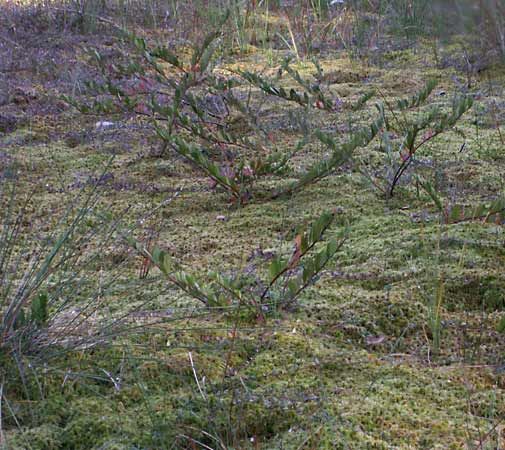
Heather (Calluna vulgaris) is a low evergreen shrub that is widespread across western Europe, Asia, North America, and Greenland. It serves as the primary…
Where are heather plants commonly found in the wild?
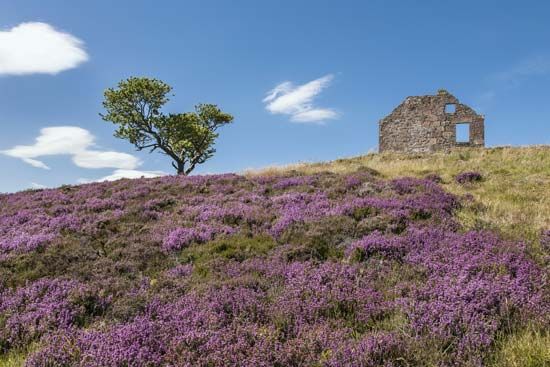
Heather (Calluna vulgaris) is a low evergreen shrub that is widespread across western Europe, Asia, North America, and Greenland. It serves as the primary vegetation on many wastelands throughout northern and western Europe.1
While often confused with true heaths (Erica species), which are also sometimes referred to as heather, these plants have different distributions. Most true heath species are indigenous to South Africa, particularly the southwestern Cape region, though some are found in the Mediterranean and northern Europe. Specific varieties, such as the purple or bell heather (Erica cinerea), are common in Great Britain and western Europe, while others like the tree heath (E. arborea) are native to the Mediterranean region and parts of Africa.2
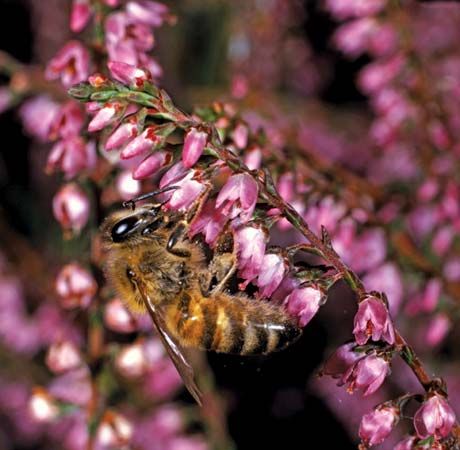
How many species of heather exist, and what are some notable varieties?
It is important to clarify that “heather” typically refers to a single species, Calluna vulgaris, whereas the term is often loosely applied to the genus Erica, which contains approximately 800 species of plants commonly known as heaths.23
The Genus Erica (Heaths)
The genus Erica comprises about 800 species of evergreen shrubs. Notable varieties include:3
- Purple or bell heather (Erica cinerea): Common in Great Britain and western Europe.3
- Cross-leaved heath or bog heather (E. tetralix): A British species.3
- Cornish heath (E. vagans): Found in Great Britain and western Europe.3
- Fringed or Dorset heath (E. ciliaris): Native to western England and Ireland.3
- Tree heath or giant heather (E. arborea): Found in the Mediterranean and Africa; its roots are used to make briarwood pipes.3
- Southern African species: Includes E. melanthera, E. verticillata, and E. ventricosa.3
Heather (Calluna vulgaris)
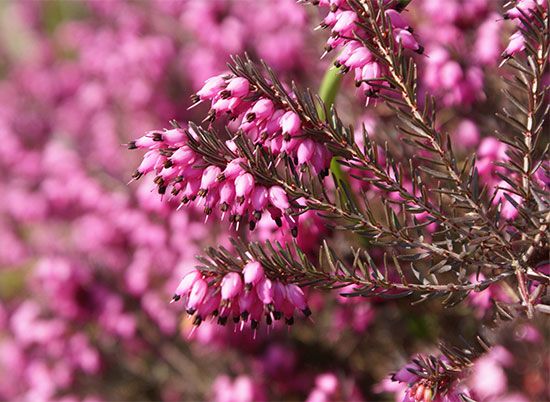
While sometimes grouped with Erica, Calluna is a distinct genus. It consists of the single species Calluna vulgaris, known as Scotch heather. It is distinguished from true heaths by its calyx lobes, which are longer than its petals.12
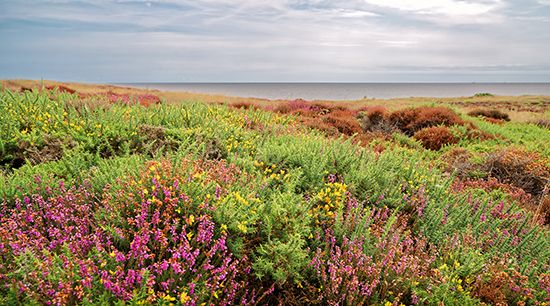
How is heather used in gardening and landscaping?
In gardening and landscaping, both heather (Calluna vulgaris) and various species of heath (Erica) are valued as ornamental plants. Because they are low-growing evergreen shrubs, they are frequently utilized to provide year-round ground cover and texture in garden beds.
Gardeners often favor these plants for their:
- Aesthetic Appeal: They produce delicate, bell-shaped flowers in shades of pink, purple, and white, which can provide long-lasting color in a landscape.
- Versatility: While many species are hardy and suitable for outdoor planting in temperate climates, certain southern African varieties are specifically cultivated in cool greenhouses or in the milder outdoor conditions of southwestern North America.
- Low Maintenance: As hardy shrubs, they are well-suited for rock gardens, borders, or as mass plantings on slopes where they can help stabilize the soil.
While they are primarily grown for their ornamental value, they are distinct from the wild-harvested heather historically used for fuel, bedding, or construction materials.
What medicinal or practical uses have been found for heather throughout history?
Throughout history, heather (Calluna vulgaris) has served a variety of practical and cultural purposes, particularly in northern and western Europe.
Practical and Construction Uses
The plant’s durability and abundance made it a versatile resource for traditional life:
- Construction: Scottish Highlanders historically used heather stems to build huts, cementing them with a mixture of peat mud and organic materials like straw or grass. This method remains in use today for constructing temporary sheds, which are often roofed with heather.1
- Household Tools: The stems were commonly fashioned into brooms and brushes, while the long, trailing shoots were woven into baskets.1
- Fuel and Bedding: Heather was frequently used as bedding. Additionally, when harvested with the peat surrounding its roots, it served as an effective fuel source.1
Culinary Uses
Beyond its structural applications, heather has a long-standing tradition in beverage production. Heather ale is a traditional Scottish drink brewed using an extract of heather blossoms, typically combined with honey, spices, hops, and yeast.5
Sources
Published on · 3 min read