Helleborine
Helleborine refers to any of the orchids belonging to two distinct but similar genera: Cephalanthera and Epipactis. These plants are members of the…
What is helleborine and which plant family does it belong to?
Helleborine refers to any of the orchids belonging to two distinct but similar genera: Cephalanthera and Epipactis. These plants are members of the Orchidaceae family, which is one of the largest families of angiosperms in the world.12
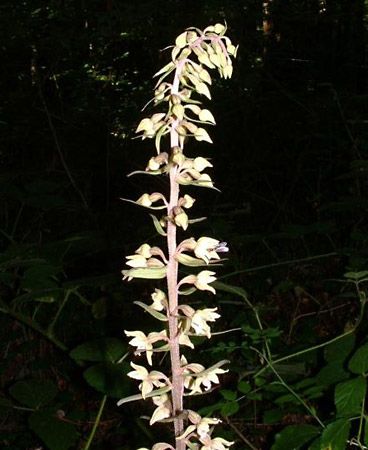
Plants within these genera typically feature tall, thin stems and crinkled leaves. While Cephalanthera species are generally terrestrial orchids that produce erect, stalkless flowers, Epipactis species are characterized by small, stalked flowers that grow in a drooping fashion on flexible spikes. These plants are primarily found in north temperate regions, though some Epipactis species also inhabit tropical Africa and Mexico. Notably, some species, such as the broad-leaved helleborine, have been introduced to various parts of the world, including the United States.1
What are the distinctive physical characteristics of helleborine plants?
Helleborine plants, comprising the genera Cephalanthera and Epipactis, share several distinctive physical traits while exhibiting key differences in their floral structures.1
General Characteristics
Both genera are characterized by tall, thin stems and crinkled, plicate (folded) leaves that often clasp the stem. Most species are terrestrial and possess rhizomes for growth.13
Floral Differences
The primary physical distinction between the two genera lies in their flowers:
- Cephalanthera: These orchids produce large, stalkless flowers that are held in an erect position. In species like the large white helleborine, the petals are borne close together, creating a closed appearance.1
- Epipactis: These plants feature small, stalked flowers that grow in a drooping fashion along a flexible spike. The flowers are typically arranged in leafy-bracted racemes and can range in color from green and whitish green to reddish purple.13
While most helleborines rely on insects for pollination, some species have evolved unique adaptations, such as self-pollination or specialized nutritional dependencies on mycorrhizal fungi.1
Where are helleborine plants typically found in nature?
Helleborine plants, which include the genera Cephalanthera and Epipactis, are primarily native to north temperate regions, though they are also found in tropical Africa and Mexico. Their specific habitats vary significantly by species:1
- Coastal and Wetland Environments: The dune helleborine (E. dunensis) is found along sandy coasts in Great Britain and northwestern Europe, while the marsh helleborine (E. palustris) inhabits marshes and other wet areas throughout Europe.1
- Temperate Regions: The broad-leaved helleborine (E. helleborine) is common across Europe and temperate Asia and has been introduced to the eastern United States.1
- Specialized Habitats: Many helleborines are terrestrial orchids that grow in diverse environments, ranging from forests to open areas. For example, the phantom orchid (C. austiniae), the only species native to the Western Hemisphere, is notable for its reliance on mycorrhizal fungi for nutrition, allowing it to thrive in specific forest conditions.1
What are some common species of helleborine and how do they differ?
It is important to clarify that helleborines are orchids belonging to the genera Cephalanthera and Epipactis, and they are distinct from hellebores, which are poisonous plants in the buttercup or Melanthiaceae families.14
Common species of helleborine differ primarily by their floral structure and habitat:
Cephalanthera Species
These are typically terrestrial orchids with rhizomes and large, stalkless, erect flowers.1
- Large white helleborine (C. damasonium): A common British species with thick roots. Its petals are held closely together, giving the flower a closed appearance. Unlike most helleborines, it is self-pollinating.1
- Phantom orchid (C. austiniae): The only species native to the Western Hemisphere, it is unique for relying entirely on mycorrhizal fungi for its nutrition.1
Epipactis Species
These feature small, stalked flowers that droop from a flexible spike.1
- Broad-leaved helleborine (E. helleborine): Found in Europe and temperate Asia, it has been introduced to the United States. Its flowers range from green to reddish purple and contain trace amounts of oxycodone.1
- Marsh helleborine (E. palustris): Adapted to wet environments throughout Europe.1
- Dune helleborine (E. dunensis): Found along sandy coasts in Great Britain and northwestern Europe.1
Sources
- helleborine — Encyclopædia Britannica
- orchid — Encyclopædia Britannica
- Epipactis — Merriam-Webster
- hellebore — Encyclopædia Britannica
- orchid - Ecology — Encyclopædia Britannica
Published on · 3 min read