Hellebore
The term hellebore refers to poisonous herbaceous plants belonging to two distinct genera, Helleborus and Veratrum. It is important to distinguish these from…
What is Hellebore?
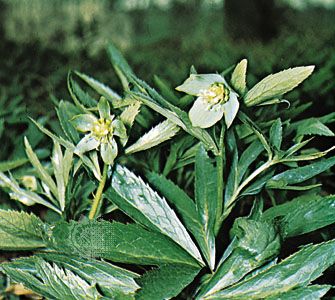
The term hellebore refers to poisonous herbaceous plants belonging to two distinct genera, Helleborus and Veratrum. It is important to distinguish these from helleborines, which are unrelated orchids in the family Orchidaceae.12
Helleborus
Part of the buttercup family (Ranunculaceae), this genus includes about 20 perennial species native to Eurasia. These plants are typically nearly stemless with thick roots and showy flowers featuring five petal-like sepals. Well-known species include:1
- Christmas rose (H. niger)
- Lenten rose (H. orientalis)
- Stinking hellebore (H. foetidus)
Veratrum
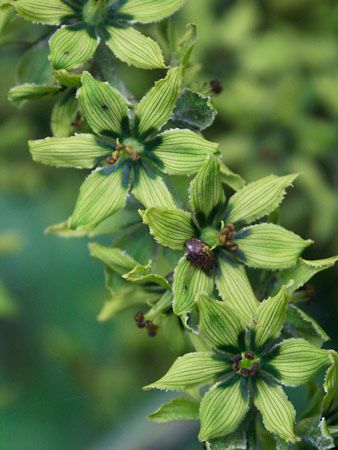
This genus, belonging to the family Melanthiaceae, consists of 25–30 species native to damp regions of the Northern Hemisphere. These plants possess simple, parallel-veined leaves and terminal clusters of small flowers. Notable examples include European white hellebore and American white hellebore.1
Why are hellebore plants considered poisonous?
Hellebore plants are considered poisonous primarily due to the presence of potent chemical compounds that act as toxins within the body.
The toxicity of these plants varies by genus:
- Genus Veratrum: These plants contain toxic alkaloids that function as cardiac and respiratory depressants. Because of these properties, extracts from certain species, such as V. album and V. viride, have historically been utilized as [insecticides].1
- Genus Helleborus: While these plants are widely recognized as poisonous, their toxicity is often associated with the presence of compounds that can disrupt normal physiological functions.31
It is important to note that while some plant-derived compounds—such as cardiac glycosides found in other species like foxglove—can be used medicinally to influence heart contraction, they possess a very narrow margin of safety between therapeutic and toxic doses. Due to the risk of severe side effects, including heart block and fatal ventricular fibrillation, these substances must be handled and administered with extreme caution.4
What is the difference between a hellebore and a helleborine?
While the names are similar, hellebores and helleborines are entirely different types of plants belonging to distinct families.
Hellebore
The term hellebore refers to poisonous herbaceous plants from two specific genera:
- Helleborus: Members of the buttercup family (Ranunculaceae), these are typically stemless perennials with thick roots and showy flowers featuring five petal-like sepals.1
- Veratrum: Members of the family Melanthiaceae, these plants have simple, parallel-veined leaves and terminal clusters of small flowers.1
Helleborine
In contrast, helleborine refers to orchids in the family Orchidaceae, specifically those within the genera Cephalanthera and Epipactis. Unlike hellebores, these plants generally feature tall, thin stems and crinkled leaves. While some helleborines, such as the broad-leaved helleborine, have unique chemical properties—including nectar containing trace amounts of oxycodone—they are taxonomically unrelated to the poisonous hellebore genera.2
How do orchids like the helleborine survive without photosynthesis?
Orchids like the helleborine survive without photosynthesis through a process called mycoheterotrophy. In this relationship, the plant relies on fungal networks to provide the nutrition it cannot produce itself.8
While many orchids are only partially mycoheterotrophic—meaning they use fungi for nutrients during early development or when sunlight is scarce—some species, such as the phantom orchid (Cephalanthera austiniae), are obligate mycoheterotrophs. These plants have lost the ability to photosynthesize entirely and depend exclusively on their fungal partners for carbon-based nutrients.89
The mechanics of this survival involve the plant forming root attachments to mycorrhizal fungi. The plant leaches carbohydrates from these fungi, which the fungi have often obtained from other, photosynthetic plants in the surrounding environment. Because the mycoheterotroph provides no reciprocal benefit to the fungus, this interaction is sometimes described as “epiparasitism”. Some orchids may also derive nutrition directly from saprotrophic fungi, which break down decaying organic matter in the soil.8
Sources
- hellebore — Encyclopædia Britannica
- helleborine — Encyclopædia Britannica
- Veratrum — Encyclopædia Britannica
- hellebore — Merriam-Webster
- Steroid - Cardiac glycosides and aglycones — Encyclopædia Britannica
- cardiovascular drug - Contractions — Encyclopædia Britannica
- helleborine — Merriam-Webster
- mycoheterotroph — Encyclopædia Britannica
- mycorrhiza — Encyclopædia Britannica
- fungus - Mycorrhiza — Encyclopædia Britannica
Published on · 3 min read