Herbivore
A herbivore is an animal that has evolved to subsist solely on plant tissues. This diverse group ranges from small insects, such as aphids, to large mammals…
What is herbivore?
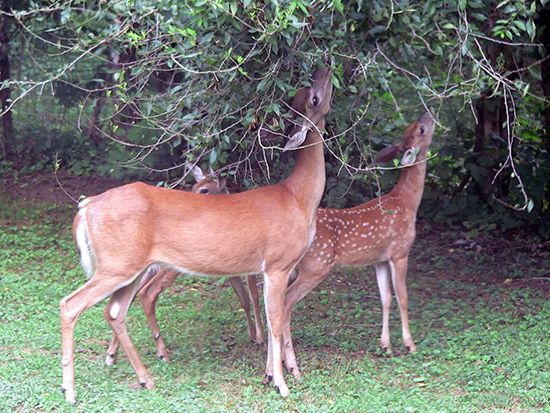
A herbivore is an animal that has evolved to subsist solely on plant tissues1. This diverse group ranges from small insects, such as aphids, to large mammals like elephants.12
Because plant cell walls are primarily composed of [cellulose] (https://www.britannica.com/science/cellulose)—a%E2%80%94a) material that most animal digestive enzymes cannot break down—herbivores have developed specialized evolutionary strategies to extract nutrients.3
- Ruminants: Species such as cattle and sheep possess a rumen, a stomach chamber where bacteria ferment plant material. This process allows the animal to absorb energy from short-chain fatty acids produced by the microorganisms.3
- Hindgut fermenters: Animals like horses, rabbits, and rhinoceroses utilize a cecum at the end of the small intestine to ferment undigested residues.3
Herbivory is a fundamental ecological process, often countered by plants through various defenses, including chemical toxins, thorns, or toughened leaves.4
What is the difference between ruminants and hindgut fermenters?
Ruminants and hindgut fermenters have evolved distinct digestive strategies to break down cellulose, a primary component of plant cell walls that most animals cannot digest on their own.35
Ruminants
Ruminants, such as cattle and sheep, utilize a multichambered stomach. Ingested plant material is stored in the rumen, where it is softened and fermented by microorganisms. A key feature of this process is the regurgitation of cud, which the animal re-chews to further break down plant fibers before the material passes into the remaining stomach chambers for final digestion.35
Hindgut Fermenters
Hindgut fermenters, including horses, elephants, and rabbits, perform bacterial fermentation in the cecum, a side pocket located at the end of the small intestine. Unlike ruminants, they do not regurgitate food. While they are generally less efficient at digesting high-fiber foods, they avoid the energy loss associated with ruminal fermentation and often possess greater physical agility due to the smaller bulk of their digestive organs.3
How do carnivores and omnivores differ from herbivores?
The primary differences between herbivores, carnivores, and omnivores lie in their dietary sources, specialized anatomical structures, and digestive strategies.
Dietary Focus
- Herbivores subsist solely on plant tissues. Because plant cells are encased in cellulose—a material most animals cannot digest—herbivores require specialized adaptations to access nutrients.36
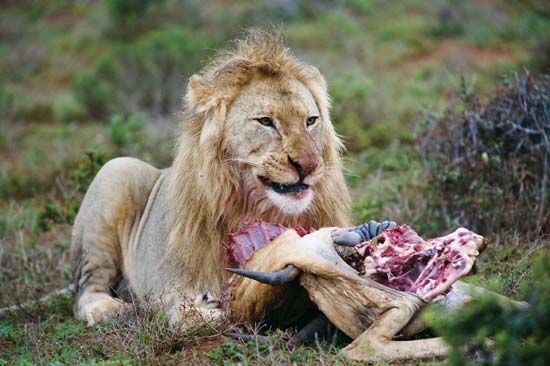
- Carnivores are animals that consume other animals. Unlike plant matter, animal tissues are not encased in indigestible cell walls, allowing them to be acted upon directly by digestive enzymes.76
- Omnivores consume both plant and animal tissues. Their digestive systems are designed for a relatively concentrated diet and lack the large, specialized fermentation chambers found in many herbivores.89
Anatomical and Digestive Adaptations
- Teeth: Herbivores possess large, flat premolars and molars with complex ridges for grinding tough plant fibers, often lacking canines. Carnivores have pointed teeth, including long canines, adapted for cutting and shearing meat. Omnivores have teeth that are structurally and functionally intermediate between these two extremes.6
- Digestion: Herbivores often utilize bacterial fermentation in a rumen or cecum to break down cellulose. Carnivores do not require such extensive fermentation for their diet. Omnivores possess a small cecum and large intestine where some fermentation occurs, though they are less reliant on it for energy than herbivores.369
What role do herbivores play in a food chain?
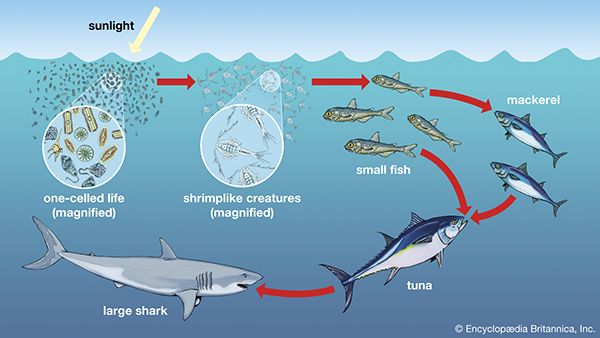
In an ecosystem, herbivores serve as the essential second trophic level in a food chain, acting as the primary link between producers—such as green plants—and higher-level consumers.118
Their primary role involves the transfer of energy and matter from plants to the rest of the food web. By consuming plant tissues, herbivores convert the chemical energy stored in vegetation into their own biomass, which then becomes available to carnivores and omnivores at higher trophic levels.1184
However, this energy transfer is relatively inefficient; on average, only about 10 percent of the energy from one trophic level is successfully converted into the biomass of the next. Furthermore, herbivores play a significant role in shaping plant communities. Through their feeding behaviors, they influence tree demographics, plant distribution, and the seasonal succession of vegetation. Much of the plant material not consumed by herbivores enters the detritus food chain, where it is eventually broken down by decomposers and recycled back into the ecosystem.412138
Sources
- herbivore — Encyclopædia Britannica
- herbivore — Merriam-Webster
- nutrition - Herbivores — Encyclopædia Britannica
- Eating the rainforest — Encyclopædia Britannica
- ruminant — Encyclopædia Britannica
- human digestive system - The teeth — Encyclopædia Britannica
- carnivore — Encyclopædia Britannica
- food web — Encyclopædia Britannica
- Feeding behaviour - Types of food procurement — Encyclopædia Britannica
- nutrition - Omnivores — Encyclopædia Britannica
- trophic level — Encyclopædia Britannica
- Biosphere - Energy transfers and pyramids — Encyclopædia Britannica
- artiodactyl - Food habits — Encyclopædia Britannica
Published on · 3 min read