Holocene Epoch
The end of the last ice age, which culminated in the transition to the Holocene Epoch approximately 11,700 years ago, fundamentally reshaped the Earth's…
What role did the end of the last Ice Age play in shaping the early Holocene?
The end of the last ice age, which culminated in the transition to the Holocene Epoch approximately 11,700 years ago, fundamentally reshaped the Earth’s environment and provided the conditions necessary for the development of human civilization.12
Environmental Transformations
The abrupt termination of the glacial period triggered significant shifts in global geography and climate:
- Sea-Level Rise: As massive ice sheets melted, sea levels rose significantly, flooding continental shelves and creating modern coastlines, estuaries, and land bridges that influenced migration patterns.3
- Biotic Shifts: The warming trend led to the retreat of cold-tolerant vegetation and the migration of species toward higher latitudes and elevations. This period also saw the extinction of many large Pleistocene animals, a process potentially driven by a combination of climatic stress and human activity.45
- Atmospheric and Oceanic Changes: The shift from glacial to interglacial conditions altered atmospheric circulation and precipitation patterns, leading to different moisture regimes across the globe.1
Impact on Human History
The Holocene is uniquely defined by its coincidence with human history. The climatic transition following the ice age imposed stresses on hunter-gatherer societies but also created new opportunities, facilitating the emergence of agriculture. By 11,000 to 9,000 years ago, humans began domesticating animals and cultivating crops, marking a pivotal shift in human development.26
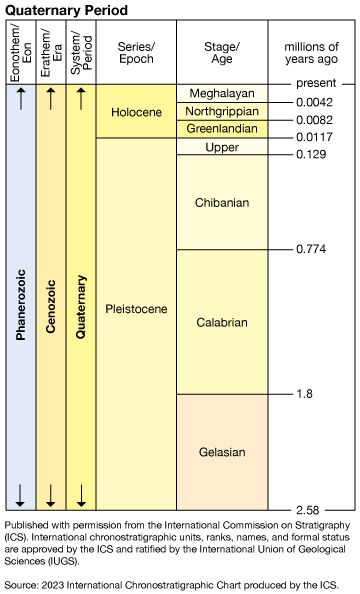
What is the Holocene Epoch and when did it begin?
The Holocene Epoch is the most recent interval of geologic time, representing the current interglacial period of the Quaternary Period. It is uniquely significant as the chronological framework for human history, coinciding with the development of early civilizations and the rise of human influence on the planet’s ecological systems.2
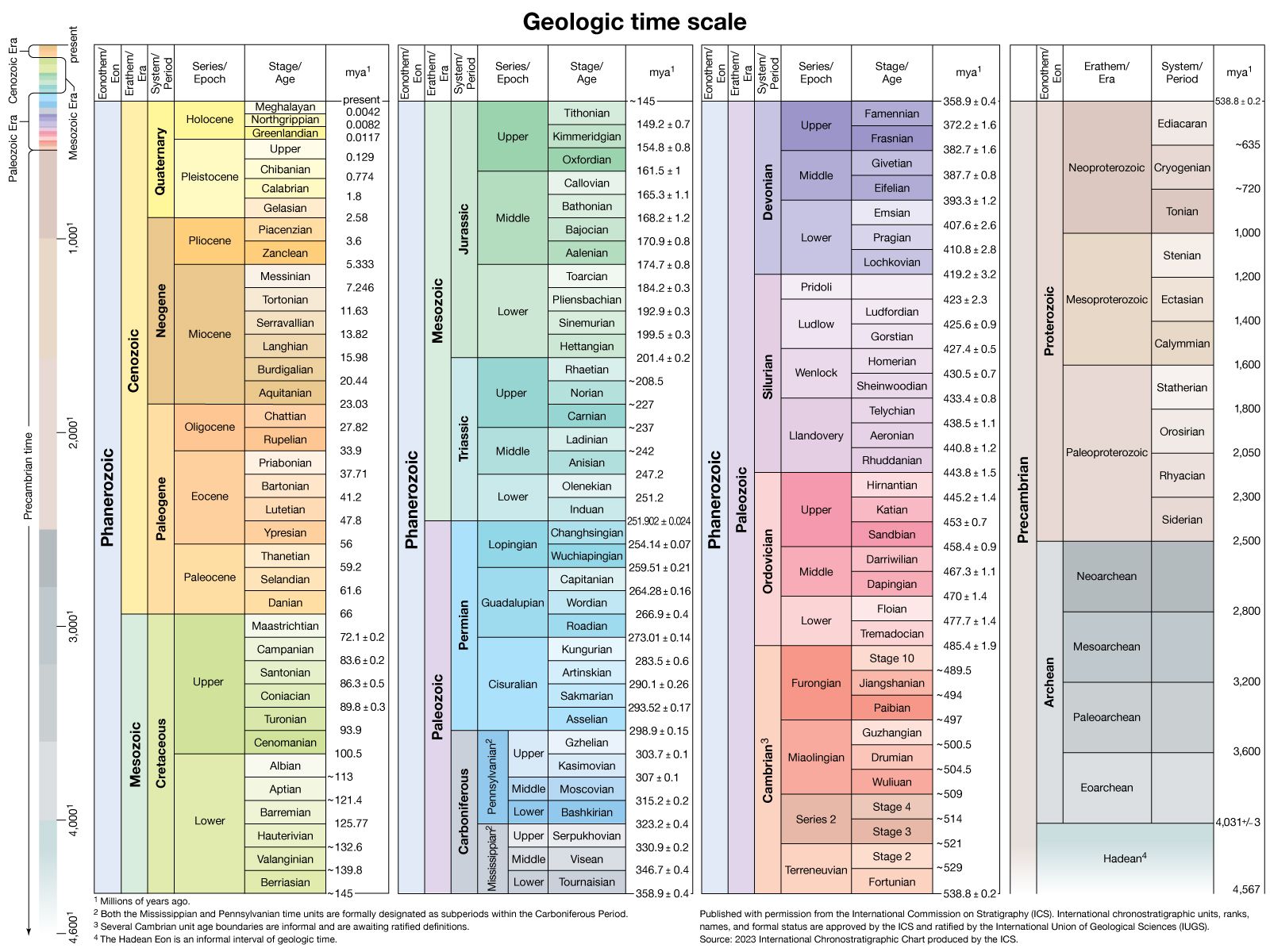
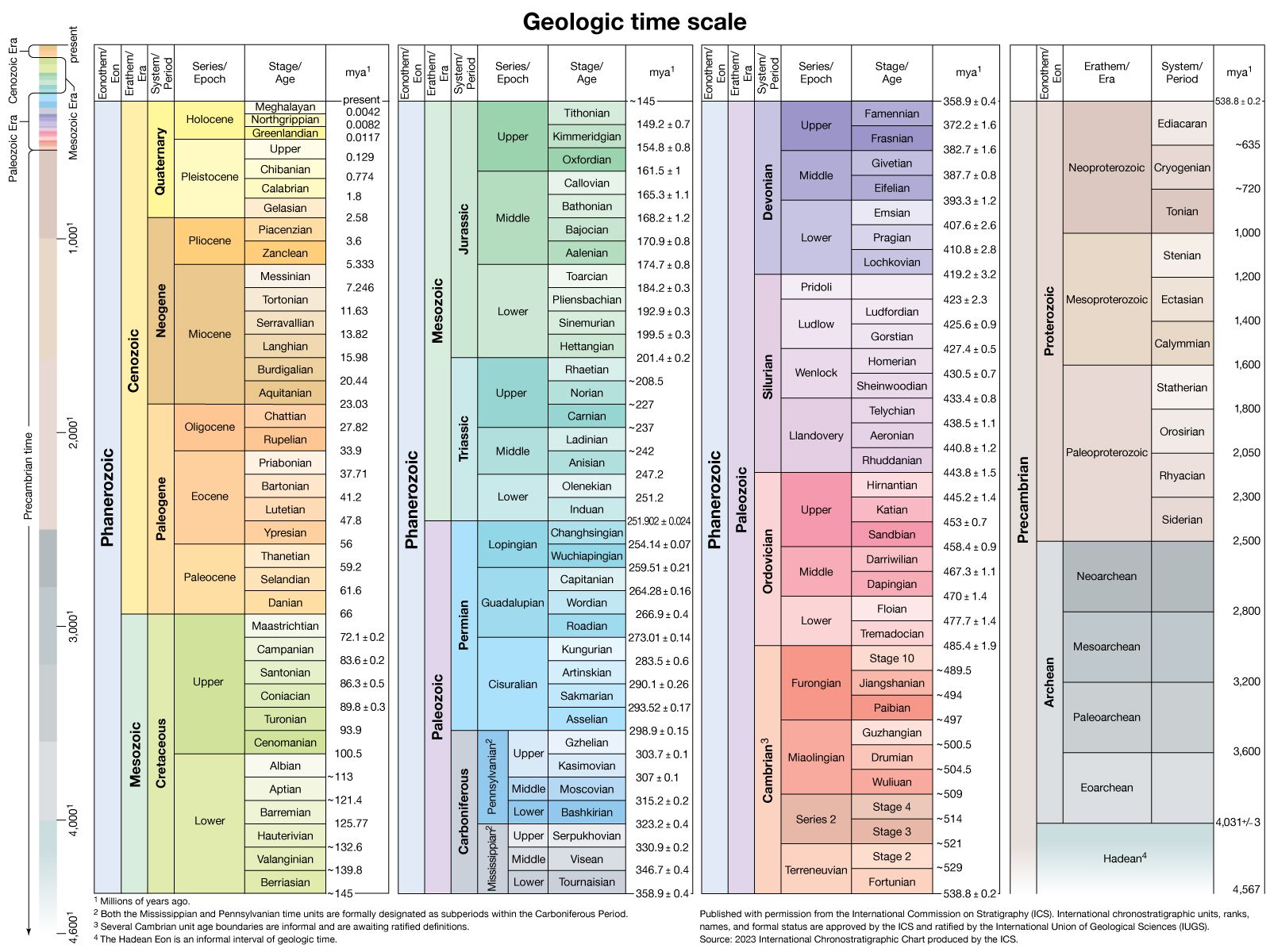
The epoch officially began approximately 11,700 years ago. This lower boundary is defined by data from Greenland ice cores, which mark the transition into the Greenlandian stage. While some older sources or general references may cite a start date of roughly 10,000 years ago, the 11,700-year figure is the formally recognized standard established by the International Union of Geological Sciences.2910
The Holocene is currently divided into three stages: the Greenlandian (11,700 to 8,300 years ago), the Northgrippian (8,300 to 4,200 years ago), and the Meghalayan (4,200 years ago to the present).9
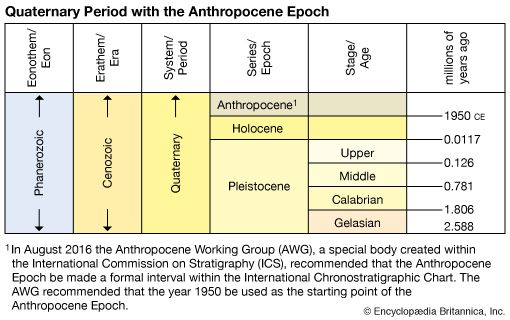
How does the concept of the Anthropocene relate to the Holocene Epoch?
The Anthropocene Epoch is a proposed, currently unofficial interval of geologic time that would follow the Holocene Epoch. While the Holocene has served as the chronological framework for human history for the past 11,700 years, the Anthropocene is defined by the argument that human activity has become a geological force capable of fundamentally altering Earth’s surface, atmosphere, oceans, and biogeochemical cycles.11212
Key Distinctions
- Status: The Holocene is a formally recognized epoch, whereas the Anthropocene remains an informal span of time awaiting official adoption by the International Union of Geological Sciences (IUGS).1112
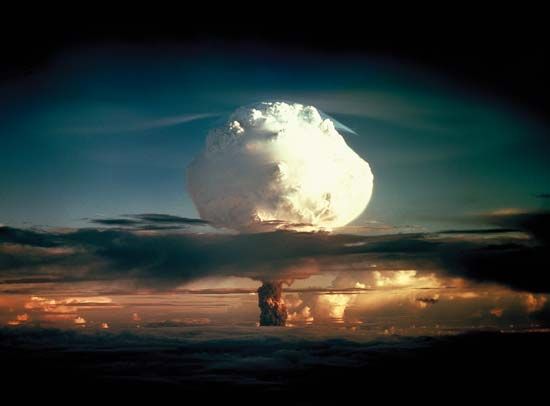
- Defining Characteristics: The Holocene is marked by the post-glacial period and the rise of human civilization. In contrast, the Anthropocene focuses on the period of human domination over natural systems, with proponents often citing the mid-20th century—specifically 1950—as a potential start date due to the presence of radioactive isotopes from nuclear testing in the geologic record.111312
- Scientific Debate: Some geologists argue that the Holocene already accounts for human emergence, and creating the Anthropocene could complicate geological research. Others contend that the profound, systematic changes caused by industrialization and the Great Acceleration warrant a new, distinct epoch.21214
What significant geological events have occurred during the Holocene Epoch?
The Holocene Epoch, which began approximately 11,700 years ago following the end of the last glacial period, has been characterized by significant environmental and geological shifts. Key events include:
- The Flandrian Transgression: As global ice sheets melted, sea levels rose significantly, flooding continental shelves and establishing modern coastlines. This process involved complex interactions between rising water levels and the Earth’s crust, which responded buoyantly to the removal of massive ice loads—a phenomenon known as postglacial uplift.1
- Climatic Fluctuations: While the Holocene is generally considered a stable interglacial period, it has experienced notable climate variations. During the early Holocene (roughly 9,000 years ago), atmospheric circulation and precipitation patterns differed from today, leading to wetter conditions in the Sahara Desert. Later, the Mid-Holocene Climatic Optimum (5,000–7,000 years ago) brought relatively warm conditions, followed by a cooling trend known as the “Neoglacial,” which saw the intermittent advance and retreat of mountain glaciers.15
- Human Development: The Holocene provided the environmental stability necessary for the rise of human civilization. This era saw the transition from Paleolithic food-gathering to the development of agriculture and animal domestication in various parts of the world.16
Sources
- Global warming - Climatic variation since the last glaciation — Encyclopædia Britannica
- Holocene Epoch — Encyclopædia Britannica
- Holocene Epoch - Faunal change — Encyclopædia Britannica
- Quaternary - Sea-level changes — Encyclopædia Britannica
- Holocene Epoch - Deep oceanic deposits — Encyclopædia Britannica
- Holocene Epoch - Little Ice Age — Encyclopædia Britannica
- Holocene Epoch - Floral change — Encyclopædia Britannica
- Climate change - Climate change and the emergence of agriculture — Encyclopædia Britannica
- Holocene Epoch - The Pleistocene–Holocene boundary — Encyclopædia Britannica
- Did you know? — Merriam-Webster
- Anthropocene Epoch — Encyclopædia Britannica
- Anthropocene Epoch - When did the Anthropocene begin? — Encyclopædia Britannica
- The Anthropocene Epoch: Adding Humans to the Chart of Geologic Time — Encyclopædia Britannica
- Anthropocene Epoch - The scale of human activity — Encyclopædia Britannica
- Stone Age — Encyclopædia Britannica
- Holocene Epoch - Continental shelf and coastal regions — Encyclopædia Britannica
- Cryogenian Period: Top Questions — Encyclopædia Britannica
- volcano - Long-term environmental effects — Encyclopædia Britannica
Published on · 4 min read