Hot Spring
Hot springs, geysers, and fumaroles are all manifestations of volcanic activity caused by groundwater interacting with magma or hot igneous rocks. While…
How do hot springs differ from geysers and fumaroles?
Hot springs, geysers, and fumaroles are all manifestations of volcanic activity caused by groundwater interacting with magma or hot igneous rocks. While related, they differ primarily in their physical behavior and the materials they discharge:12
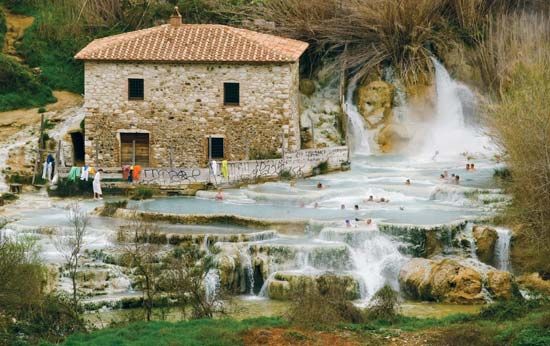
- Hot Springs: These occur when heated groundwater rises to the surface. They are essentially pools of water that have been warmed by subsurface heat sources.12
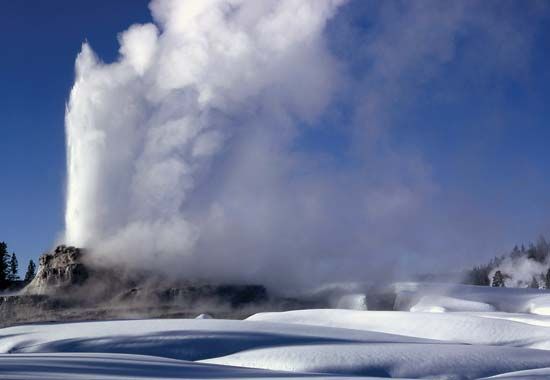
- Geysers: A geyser is a specific type of hot spring that intermittently discharges a column of hot water and steam. This occurs when water in deep conduits reaches its boiling point; as steam bubbles form and expand, the pressure forces the water out in a violent, periodic eruption.23
- Fumaroles: Unlike hot springs and geysers, which primarily discharge water, a fumarole is a vent that emits steam and volcanic gases, such as carbon dioxide, sulfur dioxide, and hydrogen sulfide. While they are closely related to the other two, fumaroles are characterized by their gaseous output rather than liquid water flow.1
What are some famous hot springs around the world and their unique features?
Famous hot springs and geothermal areas around the world are often defined by their unique geological activity, mineral composition, and the presence of thermophilic microorganisms.
Notable Geothermal Destinations
- Yellowstone National Park (United States): Home to roughly half of the world’s hydrothermal features, this region contains over 10,000 sites, including hot springs, geysers, and fumaroles.2
- Old Faithful: Perhaps the world’s most famous geyser, it is renowned for its predictable eruptions, which occur roughly every 90 minutes.67
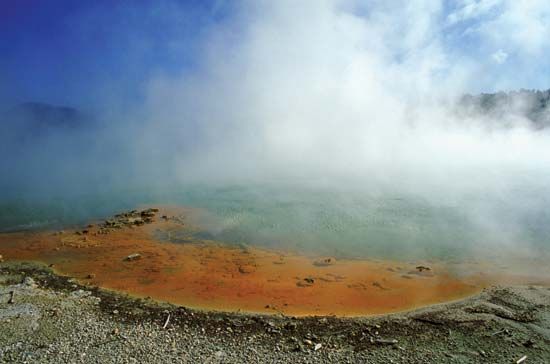
- Grand Prismatic Spring: Located in the Midway Geyser Basin, this feature is famous for its vibrant colors, which are produced by thermophilic microorganisms thriving in the mineral-rich, heated water.8
- Mammoth Hot Springs: This area features a broad hillside of travertine terraces created by calcium carbonate deposits.2
- Steamboat Geyser: Located in the Norris Geyser Basin, it holds the title of the world’s highest-erupting geyser, capable of throwing water up to 300 feet (90 meters) into the air.2
- Bath (England): Historically significant for its Roman-developed spa, Bath features thermal springs that yield over 500,000 gallons of water daily at approximately 120°F (49°C).9
- Japan: The country is home to several thousand hot springs, many of which have been converted into public baths or spas. These sites are deeply integrated into Japanese culture, often valued for their mineral content and therapeutic environment.9
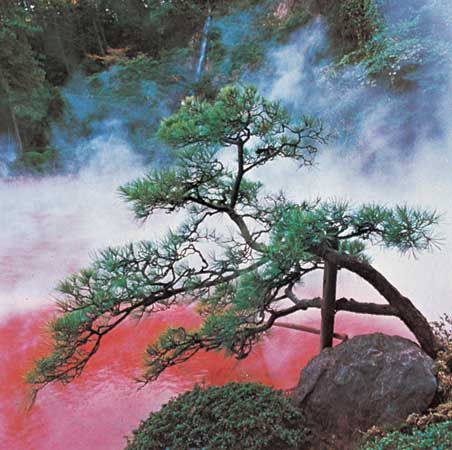
How have humans utilized hot springs throughout history, both for practical and therapeutic purposes?
Throughout history, humans have utilized hot springs for both practical and therapeutic purposes, leveraging the Earth’s natural heat for survival, industry, and social well-being.1013
Therapeutic and Social Uses
The practice of “taking the waters” has been a global tradition for millennia. Ancient civilizations, including the Greeks and Romans, recognized the healing potential of thermal springs, often constructing elaborate thermae (public baths) around them. The Roman Baths in Bath, England, serve as a prime example, where visitors progressed through rooms of varying temperatures to bathe and socialize. Beyond physical health, these sites often functioned as vital community hubs for relaxation, exercise, and even political or social networking. In many cultures, the environmental change and social atmosphere of a spa were considered as important to healing as the mineral-rich water itself.10141516
Practical Applications
Humans have long harnessed geothermal energy for daily necessities:
- Cooking and Heating: Evidence suggests Native Americans used geothermal energy for cooking as early as 10,000 years ago. Today, hot springs and geothermal wells provide heat for residential buildings, greenhouses, and district heating systems in places like Reykjavík, Iceland.1013
- Industry and Agriculture: Geothermal fluids are used for aquaculture, milk pasteurization, drying timber and produce, and large-scale snow melting. Historically, early industrial applications included the extraction of borate compounds in Italy.1013
- Energy Generation: The most significant modern application is the generation of geothermal power, which uses steam from underground reservoirs to drive turbines for electricity.13
What types of minerals are commonly found in hot springs and how do they affect the water’s properties?
Hot springs are characterized by their high mineral content, which is acquired as groundwater circulates through deep rock strata and interacts with geothermal heat. The specific chemical composition of these waters depends on the surrounding geology and the temperature of the circulating fluid.717
Common Minerals and Gases
Mineral springs often contain significant concentrations of dissolved salts and gases, including:
- Salts: Common constituents include calcium carbonate, magnesium sulfate, potassium, and sodium sulfate.1819
- Trace Minerals: Elements such as lithium are frequently found in medicinal waters.18
- Gases: Many springs are impregnated with carbon dioxide, which can create noticeable effervescence, or hydrogen sulfide, which is often associated with sulfurous waters.1819
Impact on Water Properties
The presence of these substances significantly alters the water’s characteristics and utility:
- Therapeutic Use: Historically, the mineral content has been linked to the perceived curative properties of mineral springs. For example, sulfurated waters are traditionally used for skin conditions, while alkaline waters may act as digestive aids.1819
- Geological Formation: As hot, mineral-laden water (hydrothermal solution) reaches the surface, it can precipitate solids, forming hydrothermal mineral deposits or creating features like travertine terraces.710
- Biological Activity: The chemical and metal content, including arsenic, iron, and ammonia, serves as an energy source for thermophilic microorganisms, which form the colorful mats often seen in hot spring basins.7
Sources
- fumarole — Encyclopædia Britannica
- volcano - Hot springs and geysers — Encyclopædia Britannica
- Did you know? — Merriam-Webster
- volcano - Volcanoes and geothermal energy — Encyclopædia Britannica
- geothermal power - Extraction and exhaustion — Encyclopædia Britannica
- Yellowstone National Park - Physical features — Encyclopædia Britannica
- hot spring — Encyclopædia Britannica
- Yellowstone National Park - Plant and animal life — Encyclopædia Britannica
- geyser — Encyclopædia Britannica
- spa — Encyclopædia Britannica
- Japan - Cultural institutions — Encyclopædia Britannica
- list of World Heritage sites - Japan — Encyclopædia Britannica
- Roman Baths — Encyclopædia Britannica
- geothermal energy - Direct uses — Encyclopædia Britannica
- geology - Geothermal energy — Encyclopædia Britannica
- thermae — Encyclopædia Britannica
- spring — Encyclopædia Britannica
- hydrothermal mineral deposit — Encyclopædia Britannica
- mineral deposit - Veins — Encyclopædia Britannica
- clay mineral - Hydrothermal deposits — Encyclopædia Britannica
- mineral water — Encyclopædia Britannica
Published on · 4 min read