Denisovan
The Denisovan is a member of an archaic group of humans that emerged approximately 370,000 years ago during the Pleistocene Epoch. They inhabited Eurasia…
What is Denisovan?
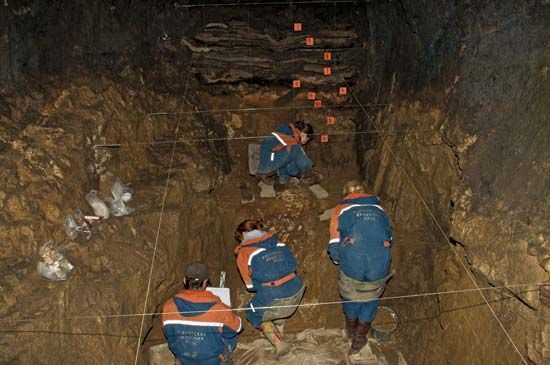
The Denisovan is a member of an archaic group of humans that emerged approximately 370,000 years ago during the Pleistocene Epoch. They inhabited Eurasia, spreading across eastern and southern Asia and into Melanesia before disappearing after about 30,000 years ago.12
Named after Denisova Cave in the Altai Mountains, where their first fossils were identified, their exact classification within the genus Homo remains a subject of scientific debate. Genetic evidence suggests they shared a common ancestor with Neanderthals and interbred with both Neanderthals and early modern humans (H. sapiens). Today, Denisovan genetic legacy persists in modern populations, particularly in Oceania, indicating they were a widespread and potentially seafaring group.12
How did Denisovans interbreed with early modern humans?
Genetic evidence indicates that Denisovans interbred with early modern humans (H. sapiens) as these modern populations migrated out of Africa between 120,000 and 80,000 years ago.1
While the exact mechanisms of these encounters remain a subject of study, the presence of Denisovan genomic material in contemporary populations provides clear evidence of this interbreeding. Research shows that:
- Geographic Distribution: Denisovans inhabited large parts of Eurasia, moving eastward into East Asia and Southeast Asia. This wide range allowed for contact with migrating H. sapiens groups.1
- Genetic Legacy: Modern human populations in Oceania, such as those in Papua New Guinea and Australia, carry significant amounts of Denisovan DNA. Studies suggest that 4 to 6 percent of the material in the genomes of modern Melanesians may be derived from Denisovans.1
- Island Populations: The presence of this DNA in remote island populations suggests that Denisovans were capable of seafaring and interbred with H. sapiens as they arrived in these regions.1
What evidence suggests Denisovans were capable of seafaring?
The hypothesis that Denisovans were capable of seafaring is primarily derived from genetic evidence rather than direct archaeological remains of watercraft. Researchers have identified significant amounts of Denisovan DNA in the genomes of modern human populations residing in Melanesia, including Papua New Guinea and Australia.1
The reasoning behind this conclusion is based on the following points:
- Geographic Barriers: To reach these remote islands during the Pleistocene Epoch, Denisovans would have needed to cross significant bodies of water, including areas beyond the Wallace Line, which serves as a major faunal boundary between Asia and Australia.1
- Genetic Legacy: The presence of Denisovan genetic material in modern populations on these islands implies that Denisovan groups were present in these regions before or during the arrival of early modern humans (H. sapiens), with whom they subsequently interbred.1
- Population Distribution: As H. sapiens expanded into the region, many researchers believe Denisovan populations were pushed from the Asian mainland, leaving behind only small, isolated groups on these remote islands.1
How do Denisovans differ from Neanderthals?
Denisovans and Neanderthals are distinct groups of archaic humans that share a common ancestor but diverged genetically and geographically approximately 370,000 years ago. While both are more closely related to each other than either is to modern humans (H. sapiens), they exhibit several key differences:1
Geographic Range
- Neanderthals: Primarily inhabited Europe and western Asia, ranging from Atlantic regions eastward to the Altai Mountains in Siberia.1
- Denisovans: Moved eastward, spreading throughout East Asia, Southeast Asia, and parts of Melanesia, potentially reaching as far as the Philippines and New Guinea.1
Genetic Legacy
- Modern Human DNA: Neanderthal DNA is found at higher frequencies in Eurasian populations, contributing 1–4 percent of their gene pool. In contrast, Denisovan DNA is most prominent in populations from Oceania, such as Papua New Guinea and Australia, where it accounts for approximately 5 percent of their genetic material.41
- Divergence: Mitochondrial DNA analysis indicates that the Denisovan lineage branched off from a common ancestor well before the lineage that eventually produced both Neanderthals and modern humans.3
Physical and Archaeological Evidence
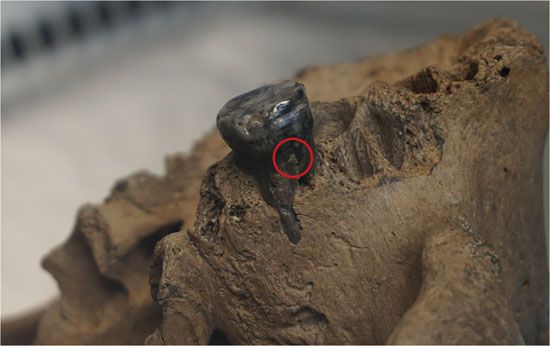
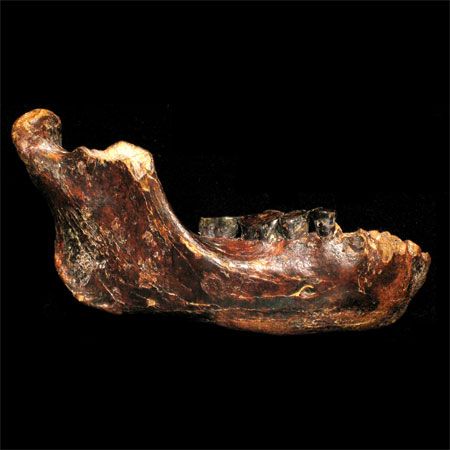
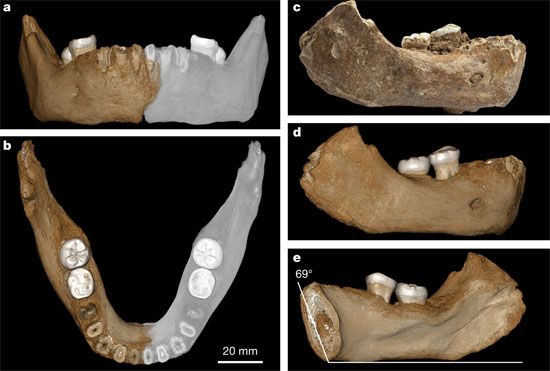
- Fossil Remains: Neanderthals are known from a more extensive fossil record, whereas Denisovans have been identified primarily through a limited number of finger bones, molars, and partial mandibles.1
- Distinctive Features: Genetic and structural analysis of Denisovan remains, such as teeth found in Denisova Cave, revealed unique features not present in Neanderthals or modern humans.3
Sources
- Denisovan — Encyclopædia Britannica
- Denisovan: Top Questions — Encyclopædia Britannica
- Denisova Cave — Encyclopædia Britannica
- Neanderthal - Genetics — Encyclopædia Britannica
Published on · 4 min read