How Do Oysters Make Pearls?
Pearls are formed when a foreign particle, such as a grain of sand or a tiny parasite, enters an oyster and becomes lodged within its shell. This irritant…
How do oysters make pearls?
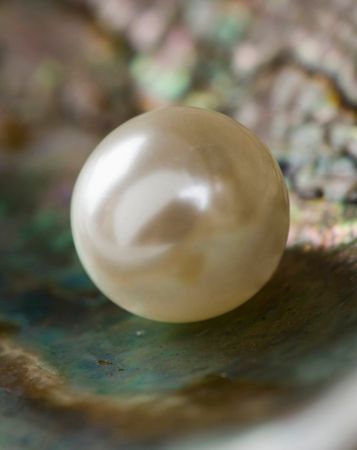
Pearls are formed when a foreign particle, such as a grain of sand or a tiny parasite, enters an oyster and becomes lodged within its shell. This irritant triggers a protective response from the oyster’s mantle tissue.12
To isolate the intruder, the mantle secretes layers of nacre, also known as mother-of-pearl. This substance is composed primarily of aragonite and conchiolin. Over several years, the oyster continues to deposit these layers around the particle, similar to wrapping a gift. As the layers accumulate, they create a smooth, lustrous pearl. The final size, shape, and color of the pearl are influenced by the specific species of oyster and its environment. While natural pearls occur spontaneously, cultured pearls are produced by manually inserting a piece of mother-of-pearl into the oyster to initiate this natural coating process.12
What is the difference between natural and cultured pearls?
The primary difference between natural and cultured pearls lies in how the pearl-forming process is initiated. Both types are composed of nacre—the same lustrous material that lines a mollusk’s shell—but their origins differ significantly.42
Natural Pearls
Natural pearls form spontaneously in the wild when a foreign irritant, such as a parasite or grain of sand, accidentally enters a mollusk’s shell and becomes lodged in the mantle tissue. The mollusk protects itself by coating the intruder in concentric layers of nacre over several years. Because these occur without human intervention, they are rare and often irregular in shape.52
Cultured Pearls
Cultured pearls are produced under controlled conditions through human intervention. In this process, a technician manually implants a small, polished bead of mother-of-pearl into the tissue of a mature mollusk. The mollusk then treats this bead as an irritant and deposits layers of nacre around it, just as it would with a natural intruder.3462
While cultured pearls closely approximate the quality of natural ones, their value can depend on the thickness of the nacre coating; if the layer is too thin, the pearl may deteriorate over time.4
What are baroque pearls and why do they have irregular shapes?
A baroque pearl is a pearl characterized by an irregular or non-spherical shape. While pearls typically form in soft-tissue areas where the pearl sac can expand uniformly, baroque pearls often develop when the pearl cyst becomes lodged in muscular tissue. In these instances, the pearl is unable to overcome the resistance of tough muscle fibers, forcing it to assume unusual or asymmetrical forms as it grows.76
Historically, these unique shapes were highly prized by Renaissance jewelers, who utilized their distinct silhouettes to create imaginative jewelry designs, such as the torso of a sea figure in the famous Canning Jewel. While perfectly spherical or droplike pearls are often considered more valuable in the gem trade, baroque pearls remain notable for their size; in fact, some of the largest naturally occurring pearls ever recorded have been baroque in shape.76
Do other mollusks besides oysters produce pearls?
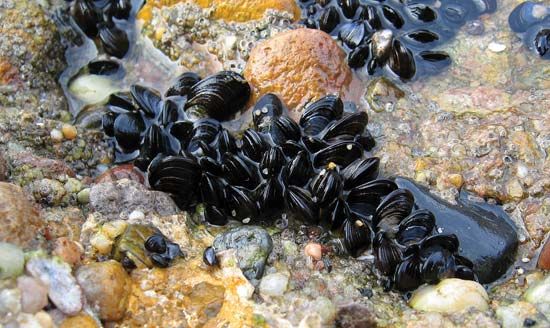
Yes, other mollusks besides oysters produce pearls. While saltwater oysters are well-known for producing fine-quality pearls, freshwater clams and mussels are also significant sources of pearls.6
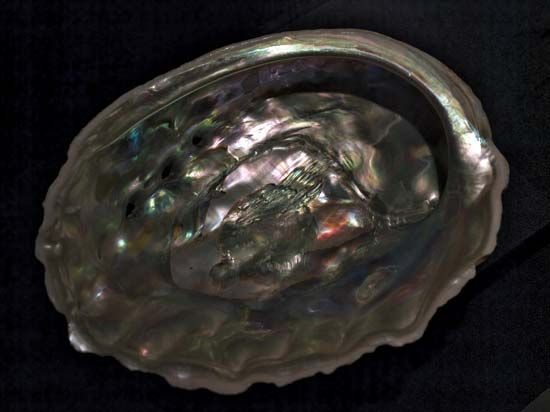
The ability to produce a pearl depends on whether the mollusk’s shell is lined with nacre—also known as mother-of-pearl. Mollusks such as oysters, mussels, and abalones possess specialized cells in their mantle that secrete the minerals and proteins necessary to form this iridescent, nacreous material.64
While many mollusks can create concretions, those that lack a nacreous lining produce pearls that are often reddish, whitish, or porcelain-like in appearance, lacking the characteristic luster and value of fine pearls. Historically, freshwater mussels have been a major source of pearls in regions like China, central Europe, and the United States, particularly within the Mississippi River basin.68
Sources
- mother-of-pearl: Top Questions — Encyclopædia Britannica
- How do oysters make pearls? — Encyclopædia Britannica
- oyster — Encyclopædia Britannica
- cultured pearl — Encyclopædia Britannica
- cultured pearl — Merriam-Webster
- pearl — Encyclopædia Britannica
- baroque pearl — Encyclopædia Britannica
- mother-of-pearl - Composition and formation process — Encyclopædia Britannica
Published on · 3 min read