How Old Is Earth?
It is widely accepted by geologists and astronomers that Earth is approximately 4.6 billion years old. This age is determined by analyzing the isotopic…
How Old Is Earth?
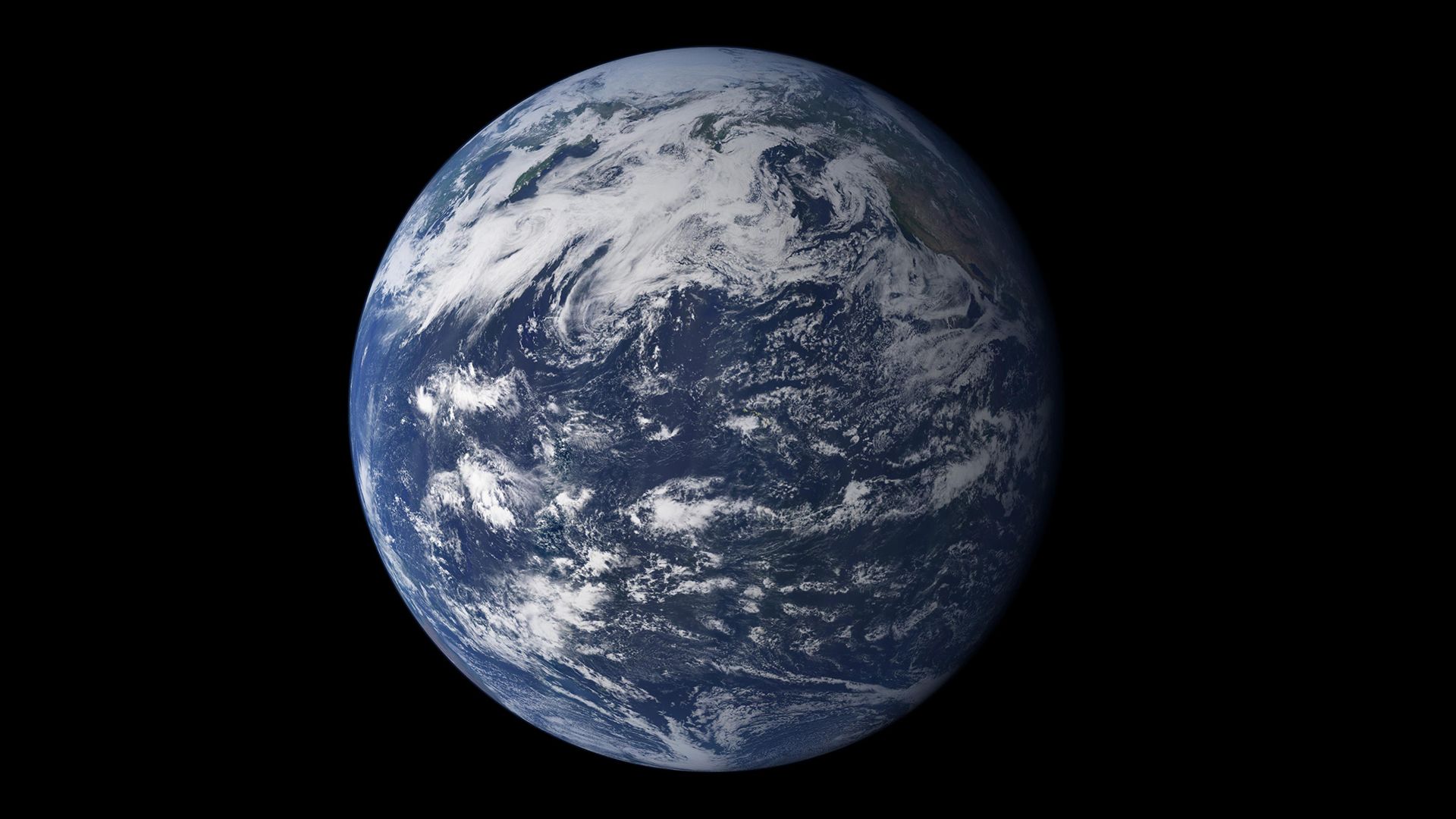
It is widely accepted by geologists and astronomers that Earth is approximately 4.6 billion years old. This age is determined by analyzing the isotopic composition of meteorites and samples from the Moon, which formed around the same time as Earth from the solar nebula.12
While the planet itself is about 4.6 billion years old, the oldest known intact rocks on Earth—the faux amphibolite deposits of the Nuvvuagittuq greenstone belt in Quebec, Canada—are approximately 4.28 billion years old. Additionally, individual zircon crystals found in western Australia have been dated to more than 4.4 billion years, representing the oldest known terrestrial materials. The gap between the age of the planet and the oldest rock record is attributed to early planetary processes, including intense meteorite bombardment and the differentiation of Earth’s crust and core.312
How do scientists use meteorites to determine the age of the solar system?
Scientists determine the age of the solar system by analyzing meteorites, which serve as preserved remnants of the early solar nebula. Because these small bodies formed during the initial stages of solar system development, they contain a record of the timing of early events.567
The Isochron Method
The primary technique used is the isochron method, which relies on the predictable decay of radioactive isotopes. Scientists measure the ratio of a radioactive parent isotope (such as rubidium-87) to a stable daughter isotope (such as strontium-87) within different minerals of a meteorite. When these ratios are plotted on a graph, the data points form a straight line called an isochron; the slope of this line is proportional to the time elapsed since the minerals formed or were last thermally reset.5
Long-Lived vs. Short-Lived Radionuclides
- Long-lived radionuclides: Isotopes with half-lives similar to or longer than the age of the solar system are used to establish absolute ages. For example, uranium-thorium-lead dating helps confirm the age of the solar system at approximately 4.6 billion years.58
- Short-lived radionuclides: While these have decayed away, their original abundances can be inferred from the presence of their daughter products in refractory inclusions. By comparing these abundances, scientists can determine the relative ages of different meteoritic components, which can then be converted into absolute ages when calibrated against long-lived systems.57
What are zircon crystals and why are they so important for dating Earth’s history?
Zircon is a silicate mineral (zirconium silicate, ZrSiO4\text{ZrSiO}_4) that serves as one of the most vital tools in geochronology, particularly for uranium-lead dating. Its importance in dating Earth’s history stems from several unique chemical and physical properties:
- Crystal Structure: During formation, zircon’s crystal lattice readily accepts uranium atoms but effectively excludes lead. This means that any lead found within a pristine zircon crystal is almost entirely the result of the radioactive decay of uranium over time, providing a “clean” starting point for dating.10
- Durability: Zircon is exceptionally resistant to chemical and physical weathering. It possesses a very high blocking temperature, meaning it remains stable and retains its isotopic signature even when subjected to extreme heat or geological disturbances that might reset other minerals.10
- Longevity: Because it is chemically inert, zircon can survive for billions of years, even as the host rocks that originally contained it are eroded or destroyed. This has allowed scientists to identify individual grains in sedimentary rocks that are over 4.4 billion years old—the oldest known terrestrial materials—providing a window into the planet’s earliest history.102
By analyzing these grains, geologists can determine the timing of primary rock-forming events and even identify secondary reheating events, helping to reconstruct the complex history of Earth’s crust.10
What happened during the 300-million-year gap before the oldest known rocks formed?
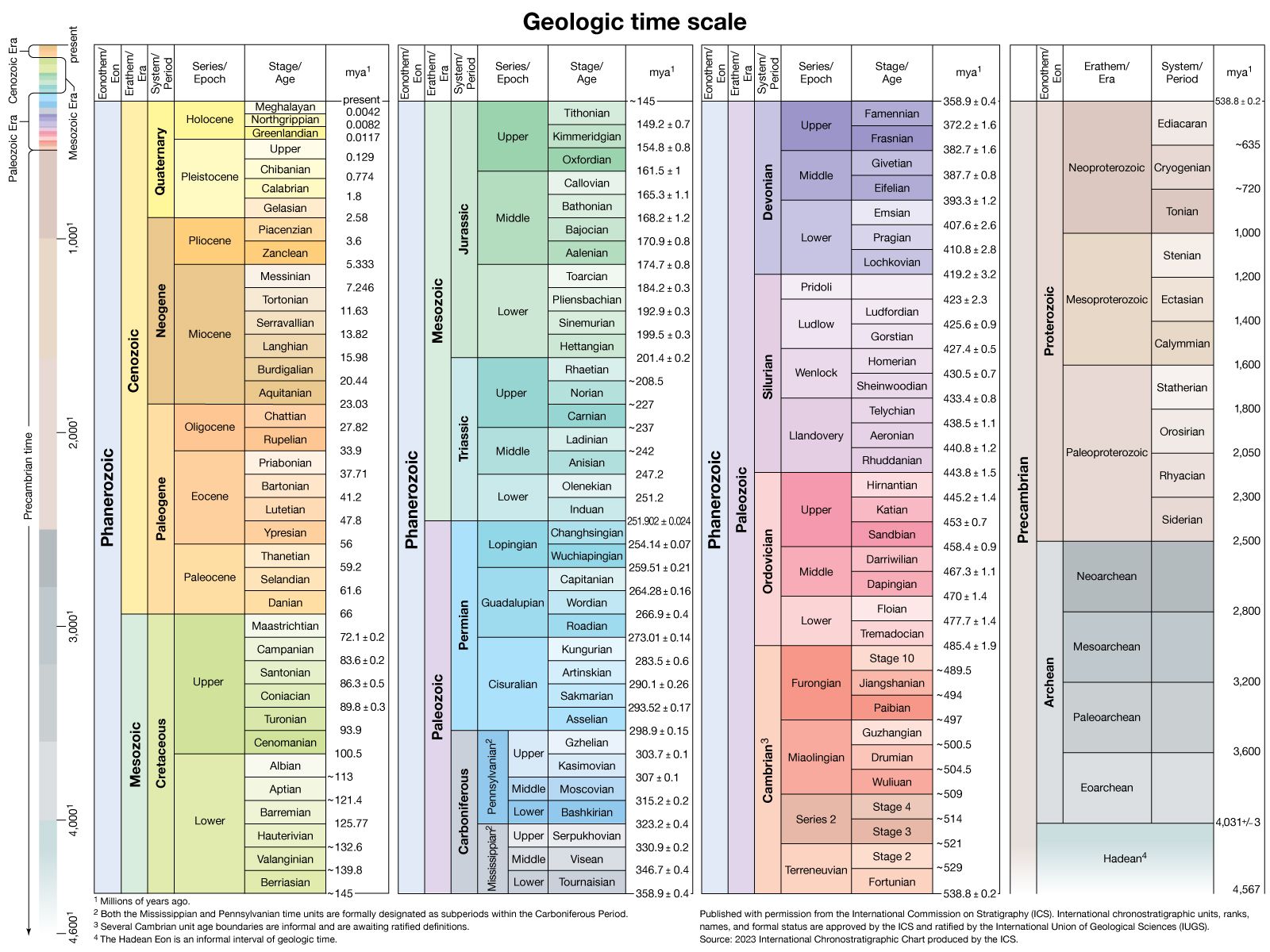
The 300-million-year gap between Earth’s formation (approximately 4.6 billion years ago) and the oldest known rock record (about 4.28 billion years ago) is a period of intense geological activity and transformation known as the Hadean Eon. During this time, the planet underwent several critical processes:
- Accretion and Differentiation: Earth formed through the collision of planetesimals. This process generated immense heat, causing the planet to melt and differentiate: heavy elements like iron sank to form the core, while lighter elements rose to form the crust.141
- Crustal Instability: The early crust was likely unstable, frequently foundering and collapsing into the mantle. This rapid recycling of material, driven by convection, likely destroyed most original rocks, leaving behind only isolated zircon crystals as evidence of this era.141
- Meteorite Bombardment: Earth was subjected to a period of heavy meteorite bombardment. Scientists estimate that hundreds or even thousands of impact basins were created, causing widespread destruction of the terrestrial surface.21
- Atmospheric and Oceanic Development: Through volcanic outgassing, the planet developed a secondary atmosphere and, eventually, oceans as water vapor condensed. Evidence from ancient zircon grains suggests that stable continents and liquid water may have existed as early as 4.4 billion years ago.1415
Sources
- Precambrian - Oldest minerals and rocks — Encyclopædia Britannica
- geologic history of Earth - The pregeologic period — Encyclopædia Britannica
- Earth sciences - Radiometric dating — Encyclopædia Britannica
- geochronology — Encyclopædia Britannica
- Meteorite - The ages of meteorites and their components — Encyclopædia Britannica
- uranium-thorium-lead dating — Encyclopædia Britannica
- Meteorite — Encyclopædia Britannica
- dating - Origin of radioactive elements used — Encyclopædia Britannica
- Meteorite - Meteorites and the formation of the early solar system — Encyclopædia Britannica
- dating - Importance of zircon in uranium-lead dating — Encyclopædia Britannica
- zirconium — Encyclopædia Britannica
- zircon — Encyclopædia Britannica
- refractory - Zircon — Encyclopædia Britannica
- Hadean Eon — Encyclopædia Britannica
- hydrosphere - The early hydrosphere — Encyclopædia Britannica
Published on · 4 min read