How One Shrimp Used Its Survival Skills to Become Both Best-Selling Pet and Astronaut
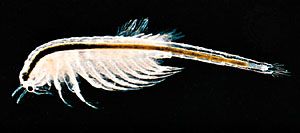
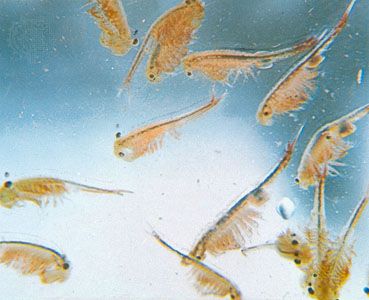
"Sea-Monkeys" are not aquatic primates, but rather brine shrimp—small crustaceans of the order Anostraca. They became best-selling pets because they can be…
What is How One Shrimp Used Its Survival Skills to Become Both Best-Selling Pet and Astronaut?
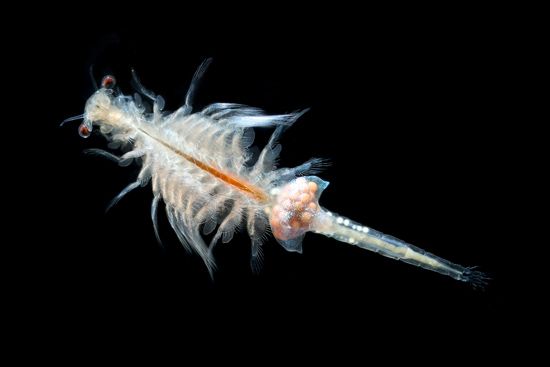
“Sea-Monkeys” are not aquatic primates, but rather brine shrimp—small crustaceans of the order Anostraca. They became best-selling pets because they can be sold as dried “cysts” that hatch when added to water, a process made possible by their unique ability to enter a state of anhydrobiosis, allowing them to survive extreme drying.1
Their survival skills also made them ideal subjects for NASA research:
- Apollo 16 (1972): Brine shrimp eggs were taken to the Moon as part of the Biostack experiments to test the effects of cosmic rays on living organisms. Many eggs survived the radiation and hatched upon returning to Earth.1
- Space Shuttle Atlantis (1991): Brine shrimp eggs were hatched in space, making them some of the first animals born in orbit.1
These experiments provided valuable data on how radiation affects biological life, aiding in the understanding of space travel’s impact on humans.1
What is anhydrobiosis and how does it help animals survive?
Anhydrobiosis is a biological state characterized by “life away from water,” where an organism survives extreme desiccation by entering a state of suspended animation. This process allows typically aquatic organisms to endure environments where water is temporarily unavailable, effectively pausing their metabolic processes until conditions improve.3
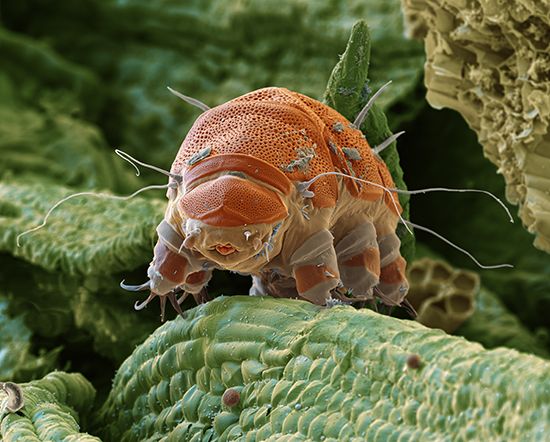
While the term specifically refers to life without water, it is closely related to other forms of cryptobiosis—a broader category of dormant states used by various species to survive harsh conditions. For instance, tardigrades utilize cryptobiosis to survive for decades in a desiccated, deathlike state, returning to active life once rehydrated.4
Other animals employ different survival strategies to manage environmental stress, such as producing cryoprotectants to prevent freezing or utilizing heat-shock proteins to stabilize their cellular structure against extreme temperatures. These adaptations demonstrate the remarkable resilience of life in the face of environmental extremes.45
What are tardigrades and why are they considered nearly indestructible?
Tardigrades, often called water bears, are tiny invertebrates typically measuring 1 mm or less in length. Despite their small size, they are renowned for their ability to survive in virtually any environment on Earth, from deep-sea hydrothermal vents to the peaks of the highest mountains.64
Their reputation for being nearly indestructible stems from their remarkable ability to enter a state of suspended animation known as the “tun” state, or cryptobiosis. When faced with unfavorable conditions, such as extreme desiccation, the tardigrade’s body dries out into a lifeless ball, and its metabolism drops to as little as 0.01 percent of its normal rate.67
In this state, they can endure extreme stresses that would kill most other organisms, including:
- Extreme Temperatures: They have survived exposure to temperatures as low as −272 °C (−458 °F) and prolonged periods in liquid air at −190 °C (−310 °F).6
- Vacuum and Radiation: Tardigrades have survived being kept in a vacuum and exposure to harsh space-like conditions.64
They can remain in this dormant state for years or even decades, reviving quickly once they are exposed to water again.64
How do scientists study the effects of cosmic radiation on living organisms?
Scientists study the effects of cosmic radiation on living organisms by observing biological responses to ionizing radiation, which is known to be mutagenic, carcinogenic, and lethal due to its ability to damage DNA, proteins, and other cellular macromolecules.89
Research methods include:
- Space-Based Experiments: Scientists utilize the International Space Station and robotic satellites to expose various organisms—ranging from bacteria and plants to invertebrates and mammals—to the space environment. These studies help researchers understand how radiation and microgravity affect reproductive cycles, development, and physiological processes like aging.1011
- Observational Studies: During space missions, astronauts have reported observing light flashes and streaks, which are attributed to heavy cosmic-ray particles striking the retina.12
- Laboratory Models: Researchers use animal models, such as rats and mice, to test behavioral and physiological reactions to radiation fields. These tests measure responses like sensory avoidance, neurological arousal, and seizure susceptibility, providing data on how radiation impacts the nervous system.12
- Cellular Analysis: By exposing cells to different types of radiation, scientists study how DNA repair mechanisms function and why certain cells are more radiosensitive than others.89
Sources
- How One Shrimp Used Its Survival Skills to Become Both Best-Selling Pet and Astronaut — Encyclopædia Britannica
- brine shrimp — Encyclopædia Britannica
- anhydrobiosis — Merriam-Webster
- 8 Animals That Live in Extreme Environments — Encyclopædia Britannica
- Ectotherm — Encyclopædia Britannica
- tardigrade — Encyclopædia Britannica
- tardigrade: Top Questions — Encyclopædia Britannica
- space exploration - Microgravity research — Encyclopædia Britannica
- radiation - Brain and sensory organs — Encyclopædia Britannica
- radiation - Natural sources — Encyclopædia Britannica
- human genetic disease - Ionizing radiation — Encyclopædia Britannica
- International Space Station: Top Questions — Encyclopædia Britannica
- radiation - Effects on the cell — Encyclopædia Britannica
Published on · 3 min read