8 Animals That Live in Extreme Environments
Earth is home to a variety of extremophiles—organisms that have evolved to thrive in conditions that would be lethal to most other life forms. Here are eight…
What are 8 Animals That Live in Extreme Environments?
Earth is home to a variety of extremophiles—organisms that have evolved to thrive in conditions that would be lethal to most other life forms. Here are eight animals that survive in extreme environments:
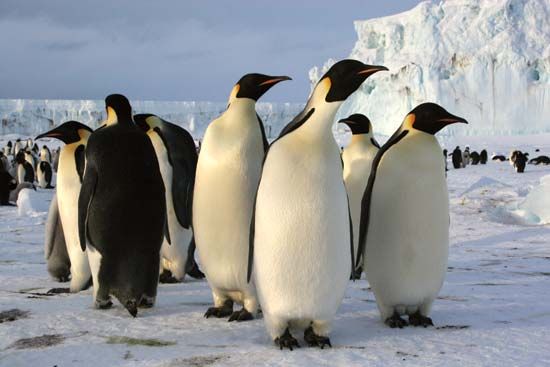
- Emperor penguin: These birds endure the brutal Antarctic winter, where temperatures can drop to −40 °F (−40 °C), by huddling together to share body heat.1
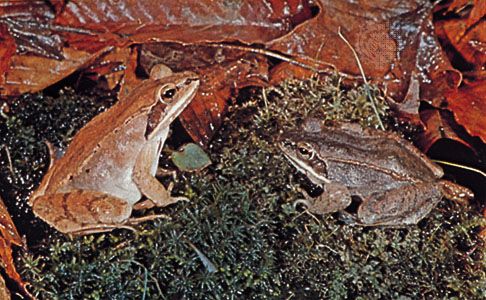
- Wood frog: This animal survives freezing temperatures by accumulating glucose in its tissues, which acts as a cryoprotectant during a state of suspended animation.12
- Flat bark beetle: To survive extreme cold, this beetle reduces its body water content and produces special proteins that protect its tissues from freezing.1
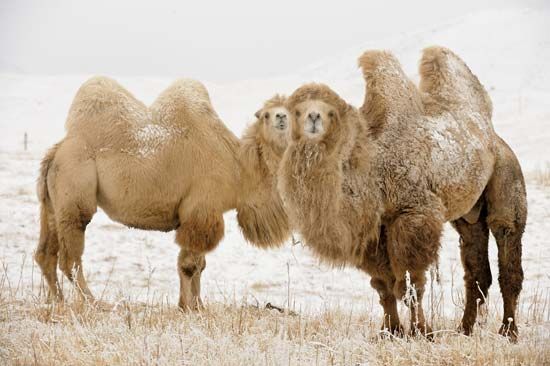
- Camel: Known for desert survival, camels can withstand temperatures up to 120 °F (49 °C) and go over a week without water.1
- Sahara desert ant: This insect uses its long legs to stay elevated above sand that can reach temperatures exceeding 140 °F (60 °C).1
- Jerboa: This rodent avoids the intense heat of the day by remaining in cool, underground burrows, emerging only at night to forage.1
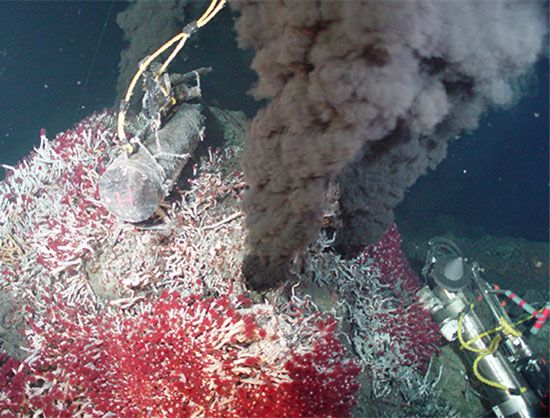
- Pompeii worm: Found near deep-sea hydrothermal vents, this worm can survive temperatures as high as 175 °F (79 °C).1
- Tardigrade: Also called water bears, these microscopic animals can survive nearly any environment—from glaciers to space—by entering a dormant, desiccated state known as cryptobiosis.13
How do extremophiles help scientists search for life on other planets?
Extremophiles are organisms that thrive in environmental conditions—such as extreme heat, cold, pressure, or acidity—that would be lethal to most other life forms. Their study is fundamental to astrobiology, the field dedicated to searching for life beyond Earth, in several key ways:2
- Defining the Limits of Life: By understanding the physicochemical parameters that allow life to exist on Earth, scientists can better define the range of conditions under which life might arise elsewhere in the universe.27
- Broadening Search Criteria: The discovery that life can flourish in extreme environments has expanded the search for extraterrestrial life far beyond the traditional habitable zone. For example, life might exist in subsurface oceans on moons like Europa or Enceladus, sustained by internal energy rather than sunlight.87
- Modeling Ancient Life: Because extreme conditions were likely prevalent on primitive Earth, extremophiles serve as models for ancient life, offering clues about how life might originate on other solar bodies.2
- Identifying Potential Biosignatures: Research into extremophiles with unique biochemical properties—such as those utilizing arsenic instead of phosphorus—helps scientists identify non-traditional chemical markers that could indicate the presence of biota on other planets.2
What is the difference between an ectotherm and an endotherm?
The primary difference between an ectotherm and an endotherm lies in how they regulate their body temperature and generate heat.
- Endotherms (Warm-blooded): These animals, primarily birds and mammals, generate heat internally through their metabolism. They maintain a relatively constant body temperature independent of their surroundings. While this allows them to remain active in cold environments, it is metabolically expensive and requires a high, continuous intake of food to fuel heat production.1112
- Ectotherms (Cold-blooded): These animals, including reptiles, amphibians, fishes, and invertebrates, rely on external sources—such as sunlight or warm surfaces—to regulate their body temperature. Because they do not generate their own heat, they have lower metabolic rates and require significantly less food than endotherms of similar size. However, they are more susceptible to fluctuations in environmental temperatures and often employ behavioral strategies, like basking or seeking shade, to manage their internal heat.31213
What are some examples of microorganisms that are considered extremophiles?
Extremophiles are organisms that have evolved to thrive in environmental conditions that would be lethal to most other life forms. Most are prokaryotic organisms, primarily belonging to the domain Archaea or Bacteria.2
Examples of these microorganisms include:
- Pyrolobus fumarii: An archaeon found in hydrothermal vents that holds the upper temperature limit for life at 113 °C (235 °F).15
- Thermoplasma: A genus of archaea that thrives in hot, acidic environments, such as volcanic steam vents and coal refuse sites, typically requiring a pH of 0.8 to 4.0.16
- Picrophilus: Isolated from acidic soils, these are the most acid-tolerant organisms known, capable of growing at a pH of around 0.15
- Halobacterium: An extreme halophile that requires high salt concentrations (20 to 30 percent) to survive and is found in environments like the Dead Sea.17
- Haloarcula marismortui: A halophilic archaeon often used as a model organism in scientific research.15
Sources
- 8 Animals That Live in Extreme Environments — Encyclopædia Britannica
- Extremophile — Encyclopædia Britannica
- Ectotherm — Encyclopædia Britannica
- Andes Mountains - Plant and animal life — Encyclopædia Britannica
- Biosphere - Hydrostatic pressure — Encyclopædia Britannica
- life - Temperature and desiccation — Encyclopædia Britannica
- Habitable zone — Encyclopædia Britannica
- extraterrestrial life - Europa , other Jovian moons, comets, and asteroids — Encyclopædia Britannica
- astrobiology — Encyclopædia Britannica
- geology - Astrogeology — Encyclopædia Britannica
- Endotherm — Encyclopædia Britannica
- Why are reptiles cold-blooded? — Encyclopædia Britannica
- Did you know? — Merriam-Webster
- dinosaur - Ectothermy and endothermy — Encyclopædia Britannica
- Thermoplasma — Encyclopædia Britannica
- Archaea — Encyclopædia Britannica
- halophile — Merriam-Webster
- Bacteria - Salt and water — Encyclopædia Britannica
Published on · 4 min read