Kazan River
The Kazan River is a major waterway located in Nunavut, Canada. It serves as a significant tributary of the Thelon River and drains a portion of the…
What is Kazan River?
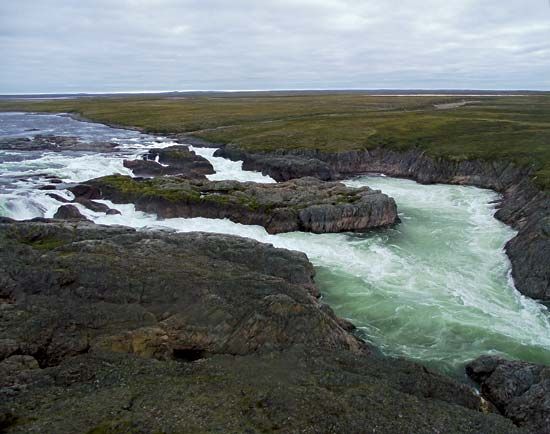
The Kazan River is a major waterway located in Nunavut, Canada. It serves as a significant tributary of the Thelon River and drains a portion of the subarctic prairie region known as the Barren Grounds.1
Originating from Snowbird and Kasba lakes, north of the Manitoba-Saskatchewan provincial boundary, the river flows northeast for 455 miles (730 km). Its course is characterized by numerous lakes—including Ennadai, Angikuni, and Yathkyed—and frequent rapids before it eventually joins the Thelon River at the south shore of Baker Lake. The name “Kazan” is derived from an Indigenous word meaning “white partridge,” and the river was historically explored by James and Joseph Tyrrell in 1893–94.1
Please note that the Kazan River in Canada is distinct from the Kazanka River, which flows through the city of Kazan in Russia and joins the Volga River.2
What are the Barren Grounds of Canada?
The Barren Grounds are a vast, treeless subarctic tundra region in northern mainland Canada. Located primarily in Nunavut and extending into the eastern Northwest Territories, this region stretches from Hudson Bay westward to Great Slave and Great Bear lakes, and northward to the Arctic Ocean.5
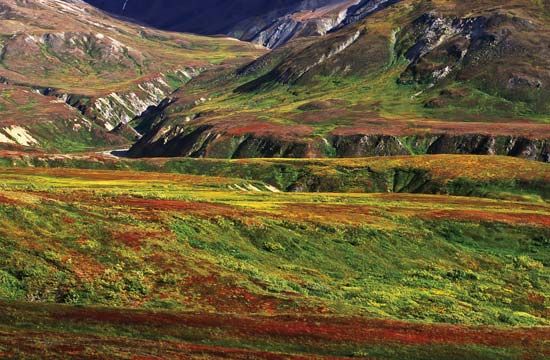
The landscape consists of a low, glaciated, and rocky plain under 1,000 feet (300 meters) in elevation. Its surface is covered with grasses, mosses, and lichens, and it is dotted with numerous lakes and rivers, such as the Coppermine, Back, Kazan, and Thelon. The ground is characterized by permafrost, which remains frozen to within a few inches of the surface, often creating swampy conditions during the summer thaw.5
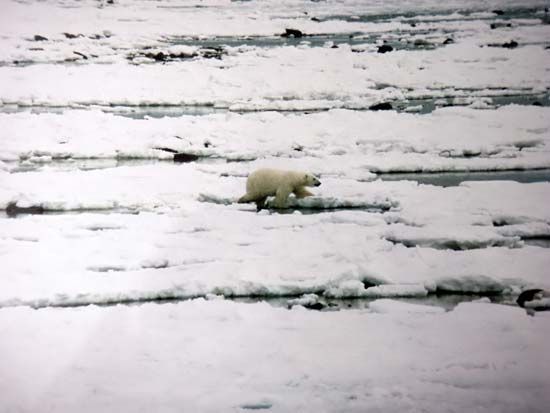
Wildlife in the area includes caribou, musk oxen, foxes, and bears. Large portions of the region are protected by sanctuaries, such as the Thelon Wildlife Sanctuary.5
How do rivers like the Kazan support Arctic wildlife?
Rivers like the Kazan River play a vital role in supporting Arctic wildlife by acting as essential corridors within the Barren Grounds ecosystem. These waterways facilitate the survival of diverse species in several key ways:
- Gallery Forests: In the subarctic forest-tundra, rivers allow woodlands to penetrate deep into the otherwise treeless tundra. These “gallery forests” provide sheltered habitats and resources that are not available on the open, windswept plains.1
- Habitat Diversity: The river systems, which include numerous lakes and rapids, create varied environments that support a range of wildlife, including caribou, musk oxen, foxes, and bears.59
- Ecological Connectivity: Because the Arctic food chain is fragile, these river systems help maintain the integrity of the habitat. They serve as focal points for the region’s ecology, which is protected in areas like the Thelon Wildlife Sanctuary.97
By providing moisture and sheltered terrain, these rivers help sustain the vegetation and animal populations that define the unique Arctic landscape.17
What is the significance of the Thelon River system?
The Thelon River is a significant waterway in northern Canada that serves as a primary drainage system for the Barren Grounds. Its importance is defined by several key factors:
- Ecological Preservation: The river flows through the Thelon Wildlife Sanctuary, a critical protected area that provides a vital habitat for musk oxen and other subarctic wildlife.11
- Geographic Reach: Stretching 562 miles (904 km), the river connects several major lakes—including Beverly, Aberdeen, Schultz, and Baker—before emptying into Hudson Bay via the Chesterfield Inlet.11
- Historical and Cultural Context: The river system was extensively mapped by explorers Joseph B. and James Tyrrell in the late 19th century. Today, the region remains home to a dispersed Inuit population, with communities like Baker Lake and Chesterfield Inlet serving as important cultural and trading hubs, the former being particularly renowned for its traditional tapestry.11
Sources
- Kazan River — Encyclopædia Britannica
- Kazan — Encyclopædia Britannica
- Volga River - Physical features — Encyclopædia Britannica
- Volga River - Physiography — Encyclopædia Britannica
- Barren Grounds — Encyclopædia Britannica
- Barren Grounds — Merriam-Webster
- Canada - Tundra — Encyclopædia Britannica
- Northwest Territories - Land — Encyclopædia Britannica
- Arctic - Vegetation — Encyclopædia Britannica
- Kazakhstan - Drainage — Encyclopædia Britannica
- Thelon River — Encyclopædia Britannica
Published on · 3 min read