Hyrax
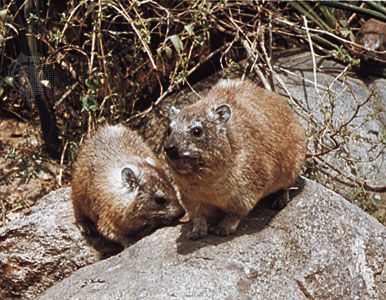
Hyraxes are small, hoofed ungulates that possess a rodent-like appearance, characterized by squat bodies, plump heads, and short necks, ears, and tails. They…
What are the physical characteristics of hyraxes?
Hyraxes are small, hoofed ungulates that possess a rodent-like appearance, characterized by squat bodies, plump heads, and short necks, ears, and tails. They typically measure 30 to 50 cm (12 to 20 inches) in length and weigh between 4 and 5 kg (9 to 11 pounds).1
Key physical features include:
- Limbs and Feet: They have slender legs and are highly agile, utilizing special pads on their feet to climb effectively. Anatomically, they feature small hooves on the first and third digits of their hind feet, while the middle digit bears a claw.1
- Dentition: Their teeth include a pair of curved, continuously growing upper incisors, four chisel-like lower incisors, and molars that resemble those of a rhinoceros.1
- Other Traits: They have a scent gland located on their back.1
While sometimes called “rock rabbits,” they are not lagomorphs; interestingly, their closest living relatives are elephants and manatees.1
Where are hyraxes found in the wild, and what habitats do they prefer?
Hyraxes are native to Africa and extreme southwestern Asia. While they are sometimes mistakenly called “rock rabbits,” they are not exclusively rock dwellers, as their habitat preferences vary by species.4
The specific habitats of hyraxes include:
- Terrestrial species: The rock hyrax (Procavia capensis) and bush hyraxes (Heterohyrax) are terrestrial animals that live in social groups among rocky, scrub-covered areas, such as kopjes.14
- Arboreal species: Tree hyraxes (Dendrohyrax) are solitary, nocturnal animals that inhabit trees.4
Regardless of their specific environment, all hyraxes are primarily vegetarian.4
How are hyraxes related to other mammals, particularly elephants?
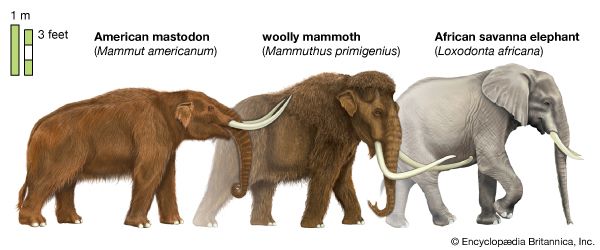
Despite their rodent-like appearance, hyraxes are not closely related to rodents or rabbits. Instead, they are classified within the group Uranotheria, which links them to two other distinct orders of mammals: Proboscidea (elephants) and Sirenia (manatees and dugongs).15
The relationship between these groups is supported by scientific classification, which places hyraxes as the closest living terrestrial relatives to elephants. While elephants and sirenians are more closely linked to each other within a subgroup called Tethytheria—reflecting their hypothesized origin in the ancient Tethys Sea—hyraxes are grouped with them under the broader umbrella of Uranotheria.5
Although their evolutionary history remains somewhat unclear, fossils indicate that hyraxes have been a distinct group for at least 30 million years, dating back to the Oligocene Epoch. While they share a common ancestry with elephants, they have evolved into a unique, small-bodied form that occupies a very different ecological niche.15
Why are elephants considered the closest relatives of hyraxes?
Elephants and hyraxes are considered close relatives because they are both members of the superorder Uranotheria. This taxonomic grouping also includes the order Sirenia, which consists of manatees and dugongs.517
While elephants and sirenians share a more specific evolutionary history as tethytherians—hypothesized to have originated in the ancient Tethys Sea—hyraxes are recognized as the closest living terrestrial relative to the proboscideans (elephants). Although hyraxes appear rodent-like, they are actually classified as ungulates, or hoofed mammals, and share a deep evolutionary lineage with elephants that dates back at least 30 million years to the Oligocene Epoch.517
Sources
- hyrax — Encyclopædia Britannica
- procaviid — Merriam-Webster
- Procaviidae — Merriam-Webster
- rock hyrax — Merriam-Webster
- proboscidean — Encyclopædia Britannica
- elephant shrew — Encyclopædia Britannica
- ungulate — Encyclopædia Britannica
Published on · 2 min read