Proboscidean
The trunk, or proboscis, is a unique anatomical feature of the order Proboscidea, which includes elephants, mastodons, and mammoths. Anatomically, it is a…
How do proboscideans use their trunks, and what makes this appendage unique?
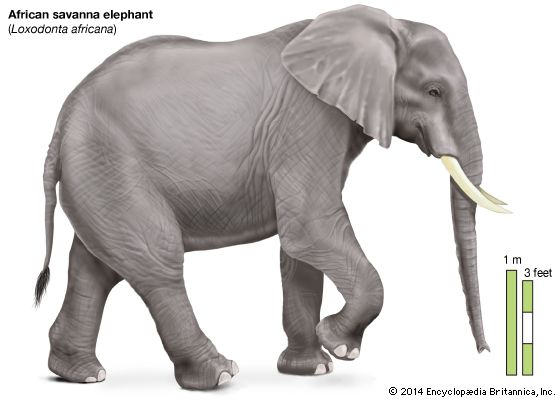
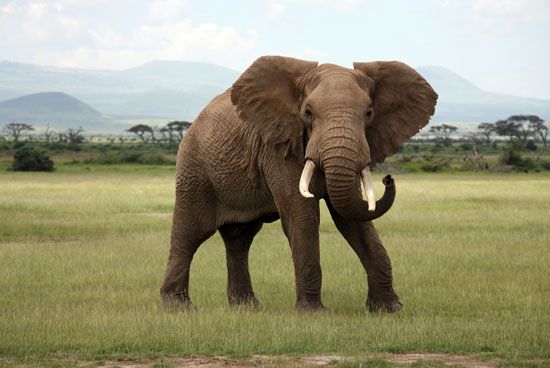
The trunk, or proboscis, is a unique anatomical feature of the order Proboscidea, which includes elephants, mastodons, and mammoths. Anatomically, it is a fusion of the nose and upper lip, containing nearly 150,000 muscle fascicles that provide immense strength and fine motor control.1
The trunk serves as a multifunctional tool for:
- Manipulation: Elephants use it like a hand to grasp, lift, and manipulate objects, from delicate tasks like picking up coins to wielding large branches.12
- Hydration and Nutrition: It is used to suck up water—holding up to 10 liters—to squirt into the mouth, and to gather vegetation.12
- Sensing and Communication: Acting as an “olfactory periscope,” it helps detect danger and locate resources. Specialized whiskers on the trunk provide tactile feedback, allowing the elephant to gauge pressure and object position.12
- Self-Care: Elephants spray water, mud, or dust onto themselves for protection against the sun and insects.12
How do proboscideans differ from other large land mammals like rhinoceroses or hippopotamuses?
Proboscideans, which include elephants, are distinct from large land mammals like rhinoceroses in several key evolutionary and anatomical ways.
Anatomical and Evolutionary Differences
- The Trunk: The most defining feature of proboscideans is the trunk, a fusion of the nose and upper lip. While rhinoceroses lack this appendage, they possess horns composed of keratin on their snouts.
- Tusks: Proboscideans possess upper incisors that emerge as tusks. In contrast, while some Asian rhinoceros species have tusk-like lower incisors used for fighting, African rhinoceroses lack these and rely on their horns for defense.
- Taxonomy and Lineage: Proboscideans are classified within the group Uranotheria and are most closely related to manatees and dugongs. Rhinoceroses are perissodactyls, a group of hoofed mammals that includes horses and zebras.
Social and Behavioral Distinctions
- Social Structure: Elephants live in complex, female-led matriarchies. Most rhinoceros species are solitary, with the exception of the white rhinoceros, which may live in small groups.
- Communication: Both groups utilize infrasonic frequencies to communicate, but their territorial marking differs; rhinoceroses rely heavily on scent-marking through urine and dung heaps to establish home ranges.
How have proboscideans evolved over time, and what extinct species are known?
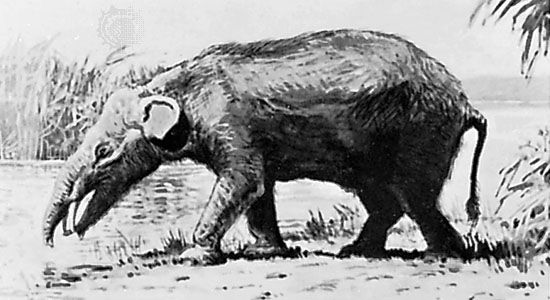
The evolutionary history of proboscideans spans over 60 million years, originating in northeastern Africa during the late Paleocene Epoch. Over 160 extinct species have been identified, showcasing a remarkable transition from small, semi-aquatic ancestors to the massive land mammals known today.5
Early Evolution
The earliest known proboscideans were less than a meter tall and lacked a trunk. The genus Moeritherium, which lived during the Eocene and early Oligocene, represents an early stage of this evolution. Roughly the size of a tapir, it was semi-aquatic and possessed short, strong legs and early developments of the incisors that would eventually become tusks.513
Notable Extinct Groups
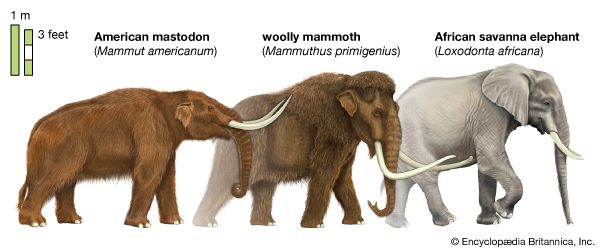
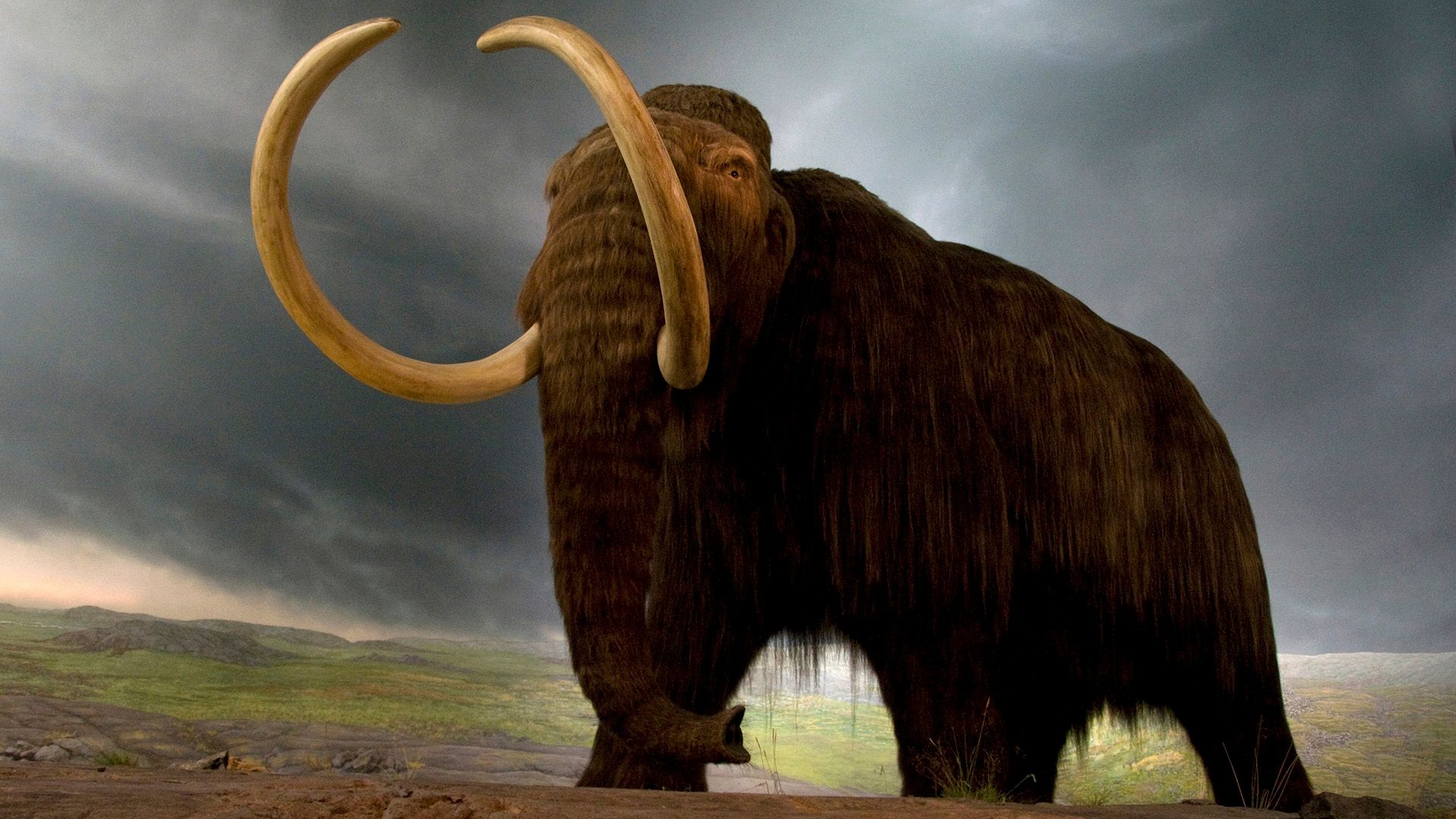
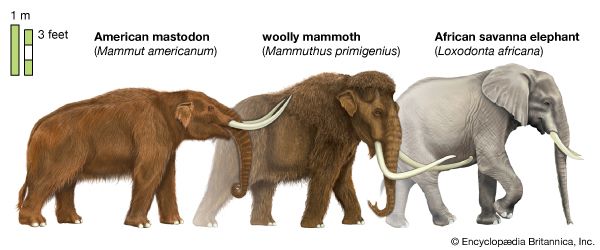
- Mammoths: Belonging to the family Elephantidae, mammoths were widespread during the Pleistocene Epoch during the Pleistocene Epoch. The woolly mammoth (Mammuthus primigenius) is the most famous, adapted to cold climates with thick hair and insulating fat.514
- Mastodons: Members of the family Mammutidae, these animals were more distantly related to modern elephants. They were heavily built with shorter legs and distinct, low-crowned grinding teeth suited for eating leaves.515
- Gomphotheres: A diverse group of extinct proboscideans that often featured varied tusk arrangements, including “shovel-tuskers” with broad lower incisors for digging.5
What is the origin of the name ‘proboscidean’ and what does it mean?
The term “proboscidean” refers to any member of the order Proboscidea, a group of large mammals that includes modern elephants and their extinct relatives, such as mammoths and mastodons.317
The name is derived from the Latin proboscid- or proboscis, which ultimately comes from the Greek proboskis—a combination of pro- (meaning “forward”) and boskein (meaning “to feed”). This etymology highlights the defining anatomical feature of these animals: the trunk, which is a long, flexible, and extensible snout used for feeding and interaction with the environment. While the term was first used in its current biological context around 1835, the word “proboscis” has been used to describe an elephant’s trunk since at least 1601.3517
Sources
- elephant - The trunk (proboscis) — Encyclopædia Britannica
- What are elephant trunks used for? — Encyclopædia Britannica
- proboscidean — Merriam-Webster
- human muscle system - Changes in the muscles of the trunk — Encyclopædia Britannica
- proboscidean — Encyclopædia Britannica
- Asian elephant: Top Questions — Encyclopædia Britannica
- elephant: Top Questions — Encyclopædia Britannica
- rhinoceros — Encyclopædia Britannica
- artiodactyl - Evolution and paleontology — Encyclopædia Britannica
- What’s the Difference Between Asian and African Elephants? — Encyclopædia Britannica
- perissodactyl - Integument — Encyclopædia Britannica
- perissodactyl - Social organization and territory — Encyclopædia Britannica
- Moeritherium — Encyclopædia Britannica
- mammoth — Encyclopædia Britannica
- mastodon — Encyclopædia Britannica
- elephant - Tusks and teeth — Encyclopædia Britannica
- Proboscidea — Merriam-Webster
- proboscis — Merriam-Webster
Published on · 3 min read