Iguanodon
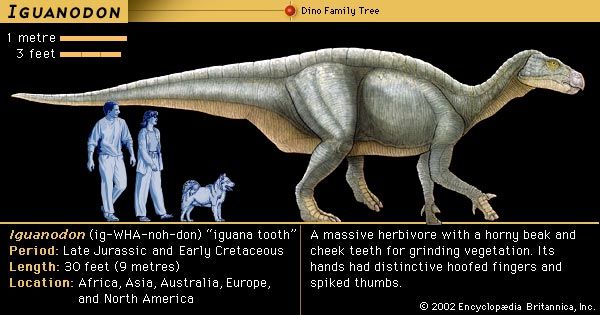
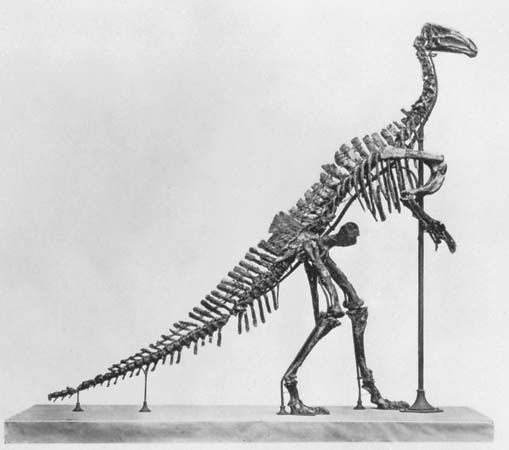
Iguanodon was a large herbivorous dinosaur that fed on low-growing ferns and horsetails found near streams and rivers. Its teeth were ridged and formed…
What did Iguanodon eat, and how did its unusual thumb spike contribute to its lifestyle?
Iguanodon was a large herbivorous dinosaur that fed on low-growing ferns and horsetails found near streams and rivers. Its teeth were ridged and formed sloping surfaces, allowing the animal to pulverize tough plant material, aided by a skull structure with movable joints that provided flexibility while chewing.1
Regarding its anatomy, the Iguanodon possessed an unusual five-fingered hand featuring a thumb with joints fused into a conelike spike. While early, incorrect reconstructions—such as those by Gideon Mantell—mistakenly placed this spike on the animal’s nose, it was actually a feature of the hand. Although the specific functional role of this spike in the dinosaur’s daily lifestyle is not explicitly detailed in the provided records, it remains one of the most distinct characteristics of the iguanodontid forelimb.1
When and where did Iguanodon live, and what was its habitat like?
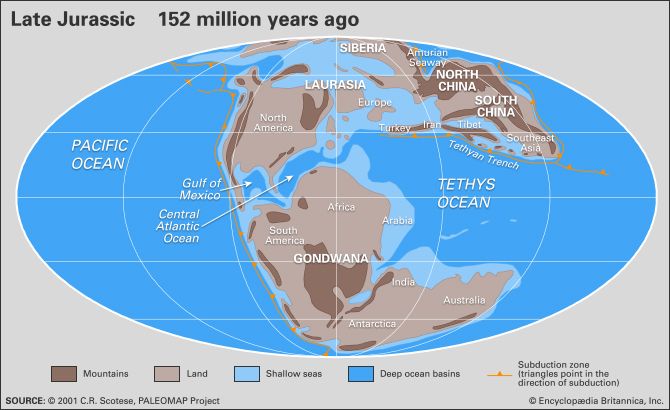
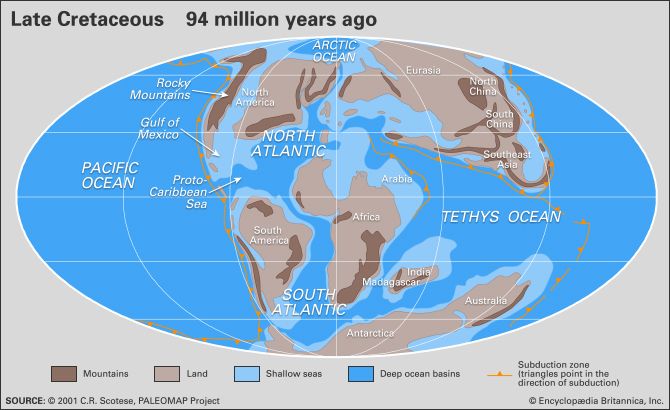
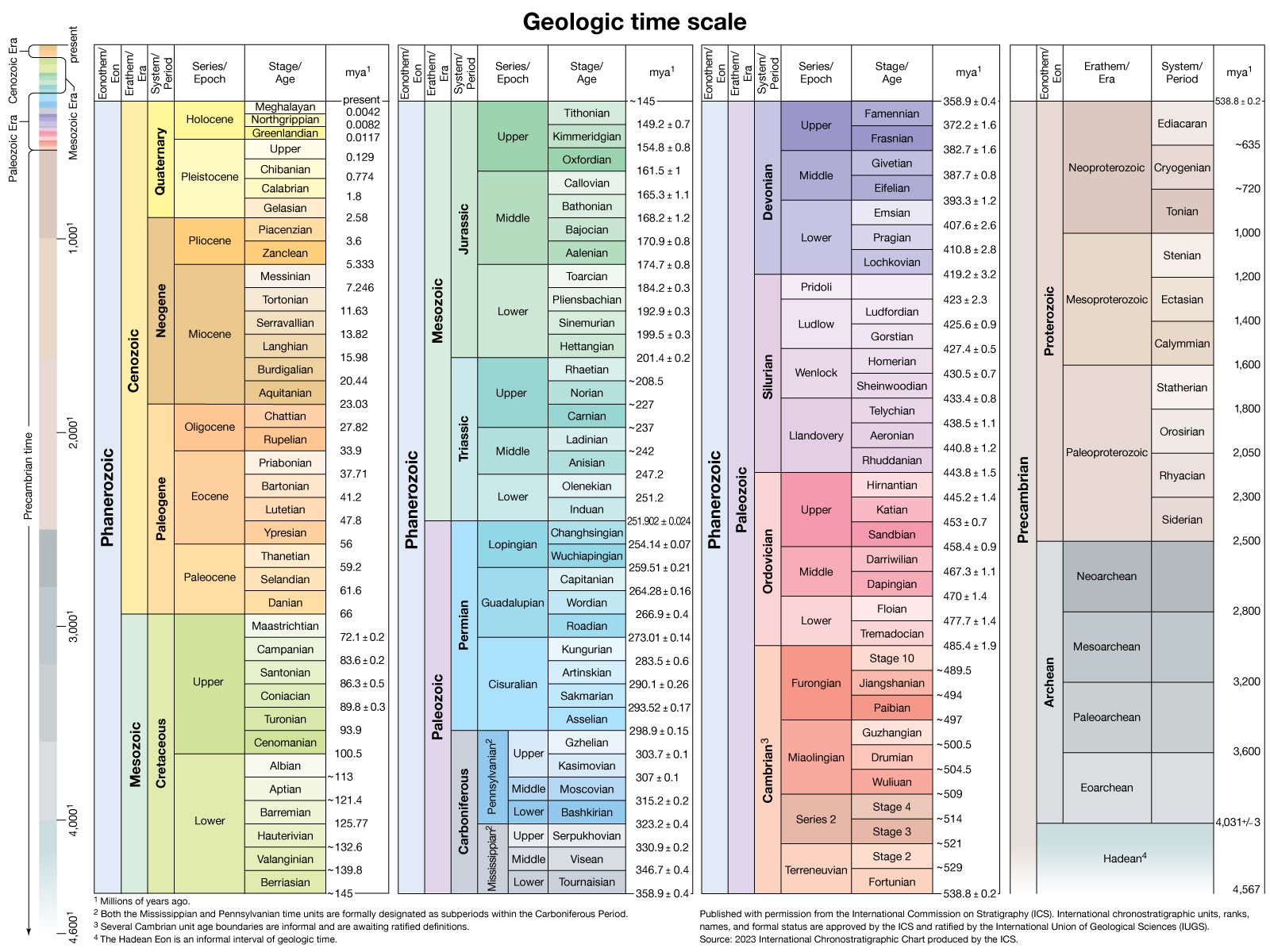
Iguanodon lived during the Late Jurassic and Early Cretaceous periods, spanning approximately 161.2 million to 99.6 million years ago. Its fossil remains have been discovered across a wide geographic range, including Europe, North Africa, North America, Australia, and Asia, with some specimens also identified in Late Cretaceous deposits of Europe and southern Africa.1
Regarding its habitat, the environment of Iguanodon was characterized by areas near streams and rivers where it grazed on low-growing vegetation, specifically ferns and horsetails. The presence of fossilized remains found in groups and widespread fossilized tracks suggests that these dinosaurs were social animals that likely traveled in herds.1
What evidence do we have about Iguanodon’s social behavior?
Evidence for the social behavior of Iguanodon is primarily derived from the discovery of multiple skeletal remains and fossilized trackways.
- Mass Assemblages: A pivotal discovery occurred in the 1870s in Bernissart, Belgium, where dozens of complete, articulated Iguanodon skeletons were unearthed in a coal mine. This mass assemblage, which contained at least three distinct groups of the dinosaur, provided the first significant hint that these animals may have traveled in groups.15
- Fossilized Trackways: The hypothesis of herding behavior is further supported by the widespread presence of fossilized iguanodontid tracks. Similar to evidence found for other dinosaurs, these trackways often show numerous footprints moving in parallel directions, suggesting that the animals were traveling together toward a common objective.65
These findings have led paleontologists to conclude that Iguanodon was likely a gregarious animal that moved in herds, a behavior documented across various dinosaur types throughout the Mesozoic Era.51
How did Iguanodon’s teeth and jaw structure adapt to its herbivorous diet?
Iguanodon possessed specialized dental and cranial adaptations that allowed it to effectively process a diet of tough, low-growing vegetation such as ferns and horsetails.1
Dental and Jaw Adaptations
- Ridged Teeth: The teeth of Iguanodon were ridged and formed sloping surfaces. These surfaces functioned as grinding tools, enabling the dinosaur to pulverize fibrous plant material.1
- Skull Flexibility: Unlike many other animals, most of the bones in the skull and jaws of Iguanodon were not tightly fused. Instead, they featured movable joints that provided the flexibility necessary to withstand the stresses of chewing tough vegetation.17
- Horny Beaks: Both the premaxillaries (upper jaw) and the predentary (lower jaw) were toothless and were likely sheathed in horny beaks. These beaks were well-suited for cropping and stripping leaves or needles from branches and shrubs.17
- Jaw Mechanics: The jaw joint was positioned lower than the occlusal plane (where the teeth meet), a characteristic feature of ornithopods that facilitated efficient food processing.7
These adaptations allowed Iguanodon to function as a highly successful herbivore, serving as a dinosaurian equivalent to modern ruminants.8
Sources
- Iguanodon — Encyclopædia Britannica
- iguanodon — Merriam-Webster
- reptile - Feeding habits — Encyclopædia Britannica
- Are iguanodons and iguanas related? — Encyclopædia Britannica
- dinosaur - Herding behaviour — Encyclopædia Britannica
- dinosaur - Reconstruction and classification — Encyclopædia Britannica
- dinosaur - Ornithopoda — Encyclopædia Britannica
- mammal - Teeth — Encyclopædia Britannica
- ornithopod — Encyclopædia Britannica
Published on · 3 min read