Scaphites
Scaphites is an extinct genus of cephalopods that lived during the Cretaceous Period, approximately 144 to 66.4 million years ago. These marine animals are…
What is Scaphites?
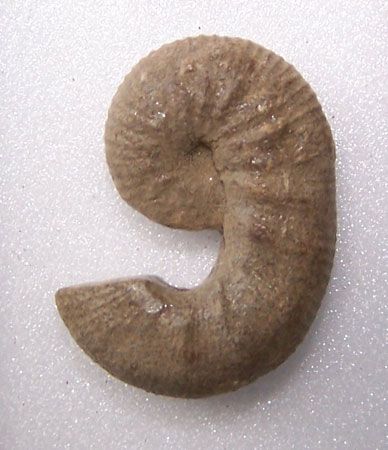
Scaphites is an extinct genus of cephalopods that lived during the Cretaceous Period, approximately 144 to 66.4 million years ago. These marine animals are related to modern octopuses, squids, and the nautilus.1
Because they were restricted to specific time intervals, Scaphites serves as a valuable index fossil for geologists and paleontologists. Their shells are notable for a distinct growth pattern: they begin as a tightly coiled spiral, extend into a straight segment, and then coil again at the terminus, resulting in a unique double-loop shape.12
What are index fossils and why are they important?
An index fossil is any plant or animal preserved in the Earth’s rock record that serves as a marker for a specific span of geologic time or a particular environment.4
To be considered a useful index fossil, a specimen should ideally possess the following characteristics:
- Distinctive appearance: It must be easily recognizable to avoid misidentification.45
- Abundance: The fossilized population should be common enough to be discovered with high probability.45
- Wide distribution: It should be cosmopolitan, appearing across large geographic areas and various rock types.45
- Short temporal range: The species must have existed for a relatively brief period, ensuring that its presence in two separated rock layers indicates they were formed at the same time (synchroneity).45
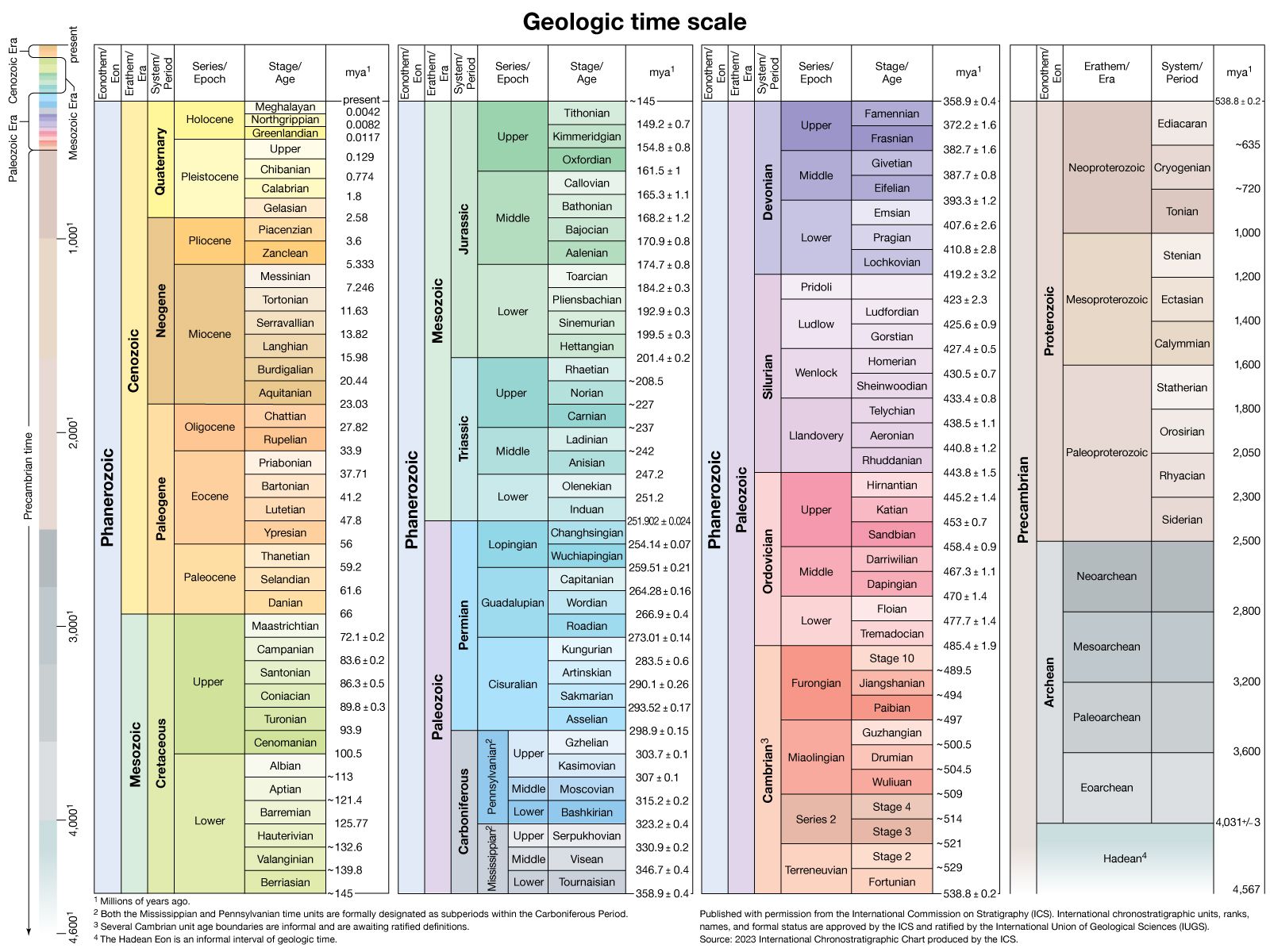
Index fossils are essential because they provide the basis for defining boundaries in the geologic time scale and for the stratigraphic correlation of rock layers across different locations. By applying the principle of faunal succession, geologists can use these fossils to determine the relative age of sedimentary rocks.45
How do ammonites differ from modern cephalopods?
Ammonites and modern cephalopods differ significantly in their physical structure, lifestyle, and evolutionary adaptations.
Shell Structure
The most prominent difference is the shell. Ammonites were characterized by a protective, external calcareous shell that served as both a supportive structure and a hydrostatic device to manage buoyancy. In contrast, most modern cephalopods—such as squids, cuttlefishes, and octopuses—have evolved to possess an internal, often degenerate shell, or have lost it entirely. This transition reflects a shift toward a more active, swimming lifestyle, where the mantle has overgrown the shell.678
Lifestyle and Anatomy
- Activity Levels: Ammonites were generally sluggish, shallow-water bottom dwellers that relied on their external shells for protection. Modern coleoids (squids, octopuses, and cuttlefishes) have developed highly active, aggressive lifestyles, leading to significant structural advancements.7
- Nervous System: Modern cephalopods possess a highly developed central nervous system and complex eyes with lenses, which are far more efficient than the simple, lensless pit eyes found in the Nautilus (the only living relative of the ammonites).7
- Defense Mechanisms: Unlike ammonites, most modern cephalopods utilize an ink sac to eject dark fluid as a defensive measure.7
Suture Patterns
Ammonites are specifically distinguished from other shelled cephalopods, such as nautiloids, by their complex, highly folded, and interwoven suture patterns—the lines where internal partitioning walls meet the outer shell.6
What other creatures lived during the Cretaceous Period?
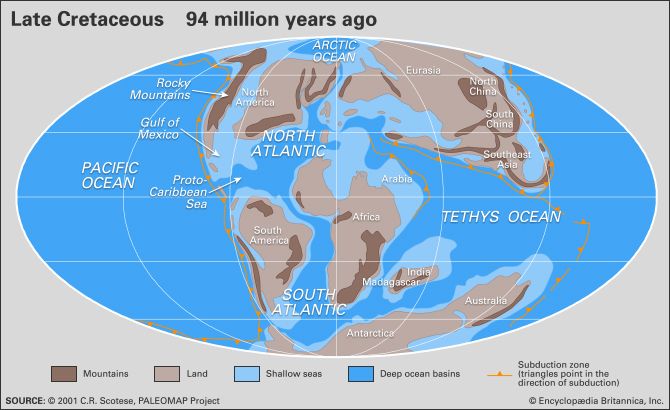
The Cretaceous Period (145 million to 66 million years ago) was a time of immense biological diversity, characterized by the dominance of dinosaurs on land and a thriving array of marine and aerial life.910
Terrestrial Life
While dinosaurs like the carnivorous Tyrannosaurus, the herbivorous Iguanodon, and the three-horned Triceratops were prominent, the period also saw the rise of titanosaurs, the largest land animals to ever exist. Mammals also began to diversify, with the emergence of placental mammals and marsupials. In the skies, pterosaurs dominated, including the massive Quetzalcoatlus, alongside early birds such as the flightless, fish-eating Hesperornis.10
Marine Life
The oceans were inhabited by giant marine reptiles, including ichthyosaurs, plesiosaurs, and mosasaurs./plesiosaur), and mosasaurs. The seas also teemed with teleost fishes, sharks, and a variety of invertebrates, such as ammonites, belemnites, and rudist bivalves.911
Flora
The landscape underwent a major transformation with the appearance and rapid diversification of angiosperms (flowering plants), which eventually became the dominant land flora, alongside conifers, cycads, and ferns.91012
Sources
- Scaphites — Encyclopædia Britannica
- scaphite — Merriam-Webster
- Scaphites — Merriam-Webster
- index fossil — Encyclopædia Britannica
- dating - Principles and techniques — Encyclopædia Britannica
- ammonoid — Encyclopædia Britannica
- cephalopod - Evolution and paleontology — Encyclopædia Britannica
- cephalopod - Form and function — Encyclopædia Britannica
- A Journey Through Time Since the Precambrian - Cretaceous Period: 145 million to 66 million years ago — Encyclopædia Britannica
- Cretaceous Period - Marine life — Encyclopædia Britannica
- Cretaceous Period - Mass extinction — Encyclopædia Britannica
- Cretaceous Period - Terrestrial life — Encyclopædia Britannica
- plant - Evolution of seed plants and plant communities — Encyclopædia Britannica
Published on · 3 min read