Illinois River
The Illinois River has served as a vital artery for transportation and commerce in the United States by bridging the gap between the Great Lakes and the…
How has the Illinois River been important for transportation and commerce throughout history?
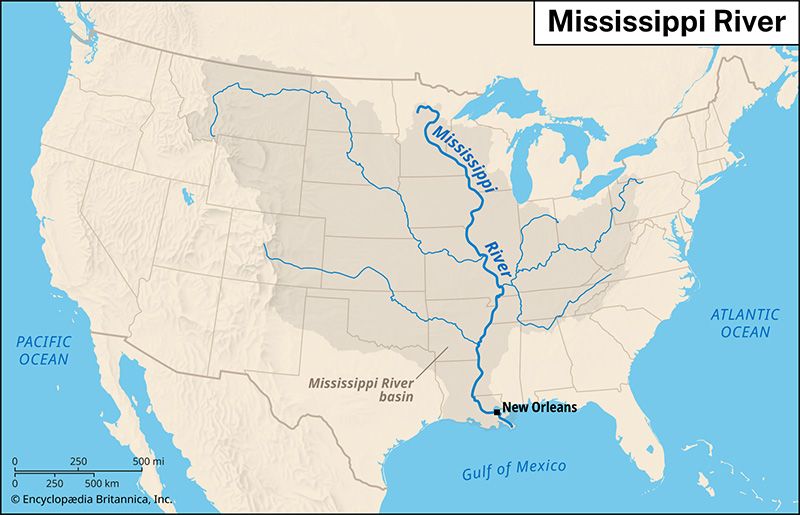
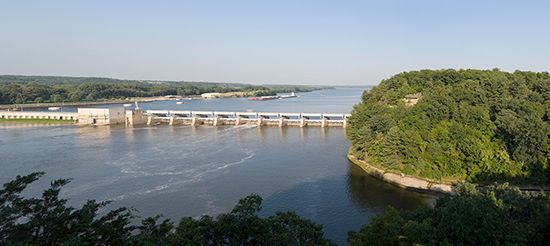
The Illinois River has served as a vital artery for transportation and commerce in the United States by bridging the gap between the Great Lakes and the Mississippi River system.12
Historically, this connection was facilitated by the Illinois and Michigan Canal, completed in 1848. By linking the Chicago River to the Illinois River, the canal enabled shipping between the Great Lakes and the Gulf of Mexico, which was instrumental in the rapid growth of Chicago. In 1933, this infrastructure was modernized with the opening of the Illinois Waterway, which incorporated the Chicago Sanitary and Ship Canal to support contemporary barge traffic.132
Today, the river remains a significant commercial corridor, primarily utilized for the transport of bulk commodities such as grain, coal, and petroleum. While the river has faced environmental challenges, including pollution and the introduction of invasive species like the Asian carp, it continues to be a critical component of the nation’s inland waterway network.14
What role did the Illinois River play in the early exploration and settlement of the region?
The Illinois River was central to the early exploration and settlement of the region, serving as a primary corridor for European expansion into the American interior.
Exploration and Strategic Importance
In 1673, French explorers Louis Jolliet and Jacques Marquette became the first Europeans to explore the Illinois River, recognizing its potential as a strategic link between the Great Lakes and the Mississippi River system. By 1679, René-Robert Cavelier, sieur de La Salle, had navigated the Kankakee River to enter the Illinois River valley, grasping the immense strategic value of this drainage system for French territorial claims.167
Early Settlement
The river valley became the site of the first French footholds in the region, including Fort Crèvecœur near present-day Peoria and Fort Saint Louis near Ottawa. These outposts facilitated trade and missionary work, such as Marquette’s efforts to establish a mission among the Illinois people. Later, the river continued to influence settlement patterns as American pioneers moved into the territory, utilizing the waterway for transport and establishing communities along its banks, including areas near the Sangamon River where figures like Abraham Lincoln would eventually reside.189
What is the Illinois River and where is it located?
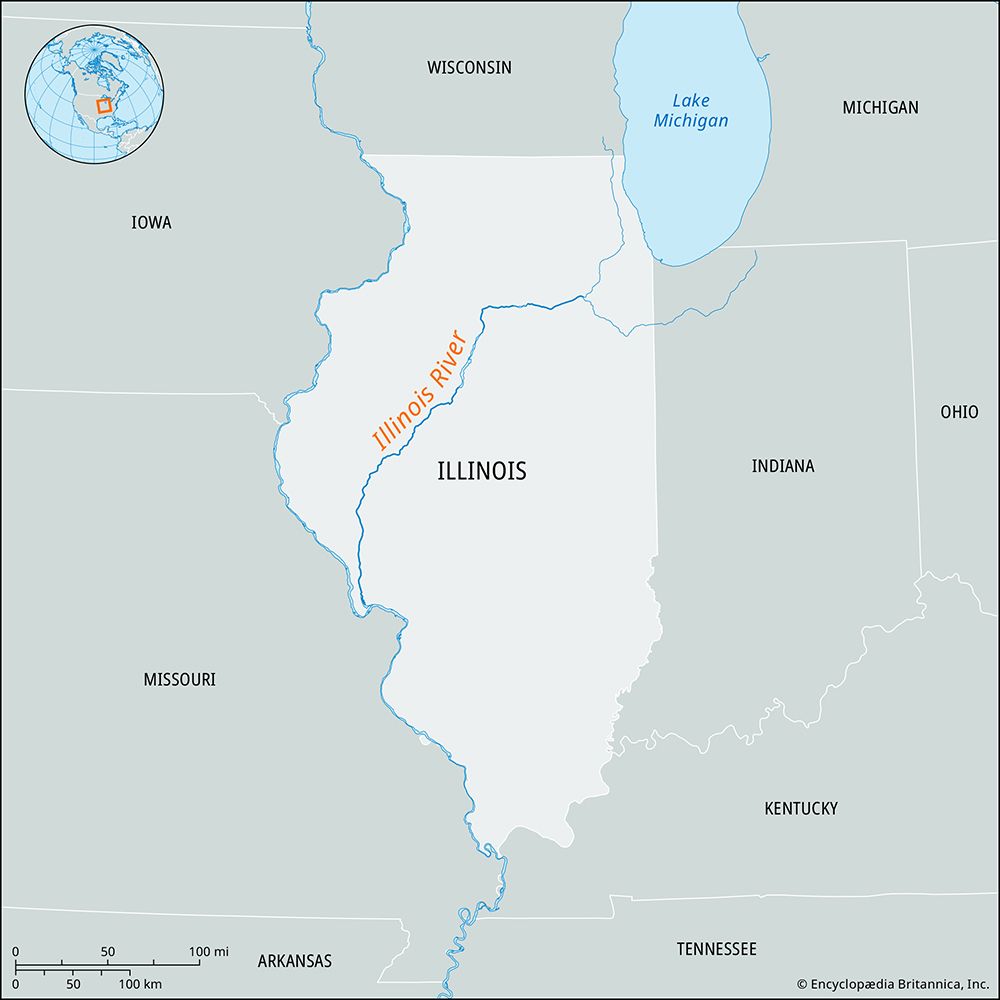
The Illinois River is a navigable waterway located in northern and central Illinois, United States. It is formed by the junction of the Des Plaines and Kankakee rivers in Grundy County, southwest of Joliet. The river flows west before turning south, traveling a total of 273 miles (440 km) to join the Mississippi River at Grafton.1
The river drains approximately 29,000 square miles (75,000 square km) and passes through several cities, including Ottawa, Peoria, and Pekin. Historically, it became a vital commercial link between the Great Lakes and the Gulf of Mexico through the Illinois and Michigan Canal, which was later superseded by the Illinois Waterway in 1933.1
What types of fish and wildlife can be found in and around the Illinois River?
The Illinois River ecosystem has faced significant environmental challenges, but ongoing restoration efforts are working to support its native biodiversity.
Wildlife and Invasive Species
Historically, the river supported a vast array of wildlife, particularly within its extensive floodplain. While human development and pollution have altered these habitats, restoration projects have successfully encouraged the return of native plants and increased populations of waterfowl.1
However, the river’s aquatic life faces ongoing pressure from invasive species:
- Zebra mussels: These organisms have established themselves in the river, impacting the local ecosystem.1
- Asian carp: Migrating from the Mississippi River, these fish pose a significant threat to the river’s native marine life.1
Because the Illinois River is recognized as one of the few large river ecosystems in the United States with high potential for successful rehabilitation, conservationists continue to focus on managing these threats to protect the river’s biological health.1
Sources
- Illinois River — Encyclopædia Britannica
- Des Plaines River — Encyclopædia Britannica
- Illinois - Relief and drainage — Encyclopædia Britannica
- Chicago Sanitary and Ship Canal — Encyclopædia Britannica
- canals and inland waterways - United States — Encyclopædia Britannica
- Jacques Marquette — Encyclopædia Britannica
- Illinois - Settlement — Encyclopædia Britannica
- Kankakee River — Encyclopædia Britannica
- Mississippi River - Early settlement and exploration — Encyclopædia Britannica
- Sangamon River — Encyclopædia Britannica
- Black Hawk War - Background: the Treaty of 1804 and white settlement of the Northwest Territory — Encyclopædia Britannica
Published on · 3 min read