Islay
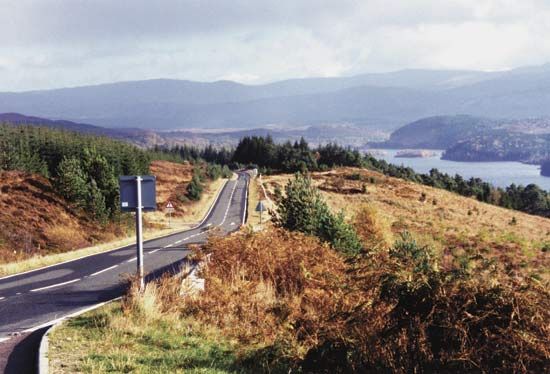
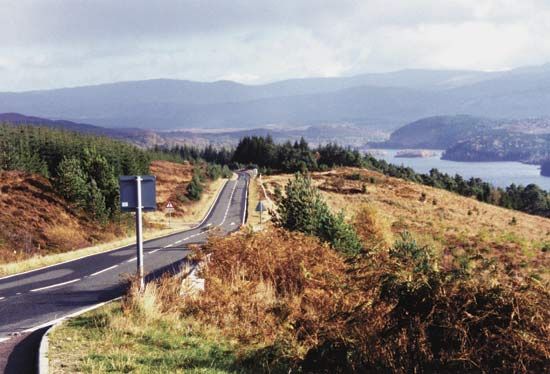
Islay is the southernmost island of the Inner Hebrides, an island group located off the western coast of Scotland. Situated in the Argyll and Bute council…
What is Islay?
Islay is the southernmost island of the Inner Hebrides, an island group located off the western coast of Scotland. Situated in the Argyll and Bute council area, it is often referred to as the “Queen of the Hebrides.”12
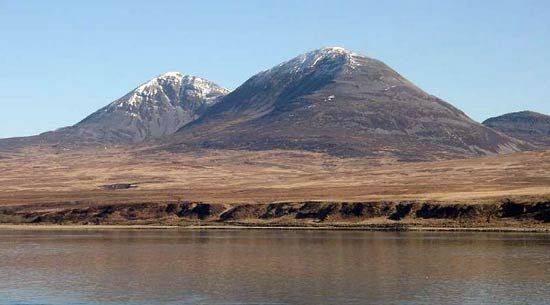
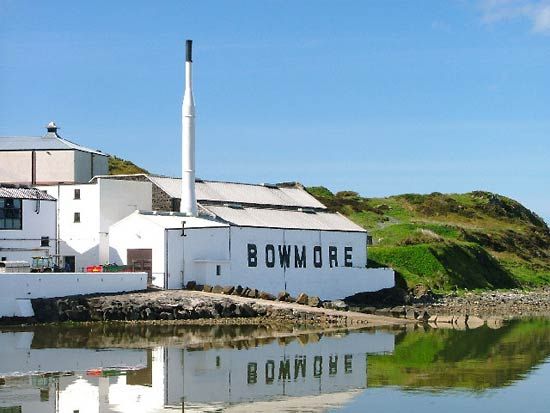
Measuring approximately 25 miles long and 20 miles wide, the island is known for its productive landscape, which supports agriculture, stock raising, and cheese making. It is also globally recognized for its whisky distilleries and tourism. Historically, Islay served as the seat of the Macdonalds, the Lords of the Isles, until they were displaced by the Campbells in 1616. The island’s geography is notable for the Rhinns of Islay, a western peninsula defined by deep sea lochs, and its proximity to the island of Jura, from which it is separated by the Sound of Islay.12
Who were the Lords of the Isles?
The Lords of the Isles were powerful semi-independent rulers of mixed Celtic and Norse ancestry who held sway over the Western Isles and parts of the western Highlands of Scotland during the Middle Ages2.2
The lordship was founded in the 12th century by Somerled, who rebelled against Norwegian dominance. His descendants, the Macdonalds, maintained effective rule over the islands for centuries, often exerting influence that rivaled or outstripped that of the Scottish kings. The island of Islay served as their ancient seat.324
The power of the Lords of the Isles posed a significant threat to the territorial integrity of the Scottish kingdom, particularly when they sought alliances with England to carve out vassal states. Their dominance eventually ended in 1493, when King James IV forfeited the estates of John, the last Macdonald Lord of the Isles. Following their removal, the Campbells of Lochawe supplanted the Macdonalds in the region.423
What makes the Inner Hebrides unique?
The Inner Hebrides are a group of islands situated off the western coast of Scotland, distinguished by their proximity to the mainland compared to the Outer Hebrides. Stretching 150 miles from Skye in the north to Islay in the south, they are known for their diverse natural and cultural features.26
Key characteristics include:
- Geographic Diversity: The islands feature spectacular landscapes, such as the Cuillin Hills on Skye and Fingal’s Cave on the island of Staffa.26
- Scientific Significance: Rhum serves as a Nature Conservancy Research Centre, focusing on botanical, geological, and wildlife studies, including red deer and wild goats.26
- Historical Legacy: The islands were Christianized following the arrival of St. Columba on Iona in 563 CE. They were later central to the lordship of the Isles, a powerful political entity established by Somerled that resisted Scottish royal control until 1493.27
- Economic Activities: The economy relies on crofting, whisky distilling, cheese making, and tourism.26
How is Scotch whisky made on Islay?
The production of whisky on the island of Islay relies on traditional methods, most notably the use of the pot still.
Unlike continuous distillation, which maintains a constant temperature to produce a uniform spirit, the pot still process involves heating a fermentation mixture in large vessels. As the mixture boils, the temperature rises, causing the alcohol content of the vapor to drop over time as more water is vaporized alongside the alcohol. This method typically employs a series of two or three stills; if the vapor falls below a specific alcohol content, it is moved to the next still for further refinement.
The resulting spirit is a blend of the vapors collected throughout the entire run. Because the composition of the condensate changes as the temperature increases, the final product possesses a complex flavor profile that is distinct from spirits produced via continuous distillation.1
Sources
- Islay — Encyclopædia Britannica
- Inner Hebrides — Encyclopædia Britannica
- Scotland - The early Stewart kings — Encyclopædia Britannica
- Argyllshire — Encyclopædia Britannica
- Massacre of Glencoe — Encyclopædia Britannica
- Outer Hebrides — Encyclopædia Britannica
- Hebrides — Encyclopædia Britannica
- distilled spirit - The pot still — Encyclopædia Britannica
Published on · 3 min read