What Is the Difference Between Primary and Secondary Ecological Succession?
Ecological succession is the process by which the structure of a biological community evolves over time. The primary difference between the two types of…
What Is the Difference Between Primary and Secondary Ecological Succession?
Ecological succession is the process by which the structure of a biological community evolves over time. The primary difference between the two types of succession lies in the initial state of the environment following a disturbance.12
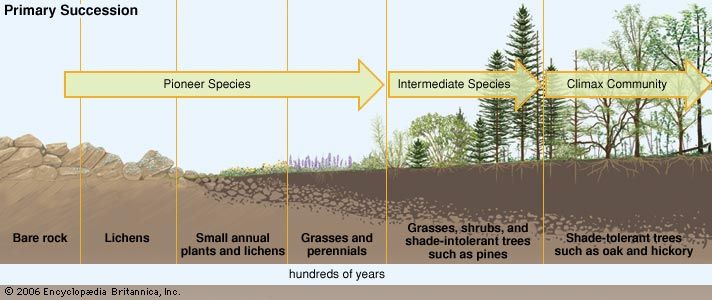
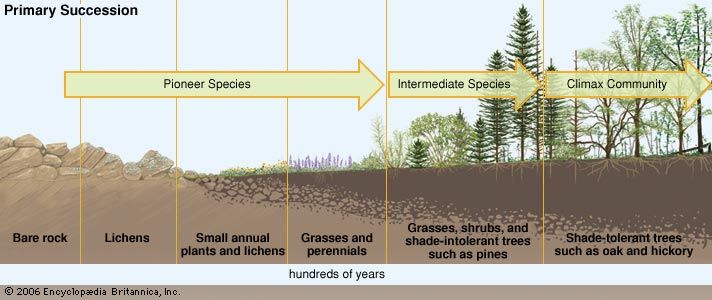
Primary Succession
Primary succession occurs in essentially lifeless areas where the soil is incapable of sustaining life. This typically happens in regions where a disturbance has removed all biological activity and soil, such as on newly formed sand dunes, lava flows, or areas left behind by retreating glaciers1. Because no soil exists, the process begins with the slow formation of soil through the decomposition of pioneer species.132
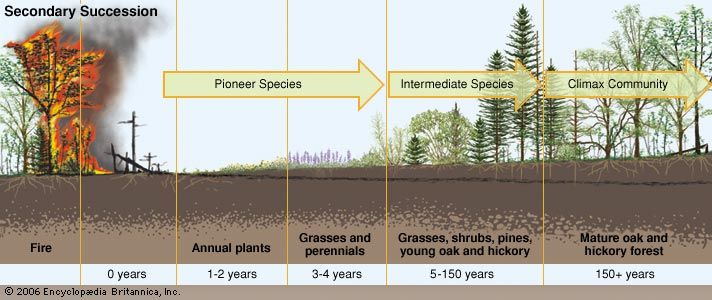
Secondary Succession
Secondary succession occurs in areas where a previously existing community has been disturbed but not rendered completely lifeless. Because the soil remains intact and often contains a bank of seeds and nutrients, the environment can recover more rapidly than in primary succession. Common causes include wildfires, floods, or human activities like farming.132
What are pioneer species and why are they important?
Pioneer species are the first organisms to colonize barren or recently disturbed environments, initiating the process of ecological succession. Common examples include lichens, mosses, fungi, and various bacteria.4
These species are vital because they transform harsh, sterile landscapes into habitats capable of supporting more complex life. Their importance includes:
- Soil Formation: Pioneer species like lichens and mosses release acids that break down rock. As they die, their decomposing organic matter mixes with rock fragments to create the first layers of soil.4
- Nutrient Enrichment: They improve soil fertility by fixing nitrogen and adding carbon to the environment.4
- Facilitating Biodiversity: By establishing a simple biological community, they create conditions—such as moisture retention and nutrient availability—that allow grasses, ferns, and eventually invertebrates to colonize the area.4
While they are eventually outcompeted by larger plants that cast shade, pioneer species are the essential foundation for ecosystem development.4
What is a climax community in an ecosystem?
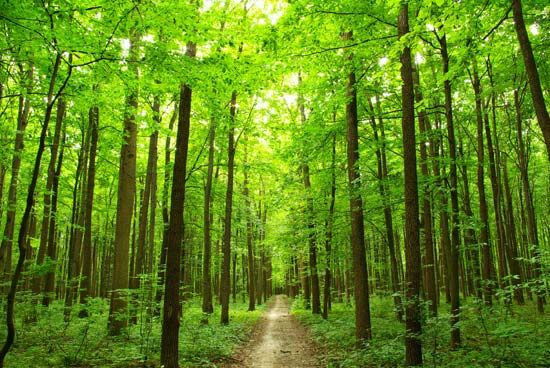
A climax community is the final, relatively stable stage of ecological succession in a given environment. It occurs when a biological community reaches a state of equilibrium where its species composition remains consistent over time because the resident species successfully reproduce and prevent invading species from gaining a foothold.563
This stability is thought to arise when the web of interactions between community members becomes so intricate that the ecosystem effectively maximizes the use of available resources, such as moisture and nutrients. For example, a forest may progress through various stages of colonization until it is dominated by long-lived, hardy tree species that define the climax stage.5376
However, it is important to note that the climax stage is not permanent. Because evolutionary processes, climate shifts, and other long-term ecological changes occur, the environment itself is always evolving. Furthermore, not all ecosystems reach this state, as frequent small-scale disturbances can maintain a more dynamic, nonequilibrial state in some environments.567
How do human activities influence ecological succession?
Human activities significantly influence ecological succession by acting as major disturbances that alter landscapes and disrupt natural community development. These anthropogenic impacts can be categorized in several ways:
- Direct Disturbance: Activities such as farming, road construction, and building development function as major disturbances that clear land, triggering secondary succession. While ecosystems often recover from these events if left undisturbed, some actions—such as deforestation—can be so severe that they cause permanent soil erosion or habitat loss, preventing the return of the original biological community.382
- Introduction of Invasive Species: Through global commerce and trade, humans frequently transport nonnative organisms to new environments. These invasive species often possess competitive advantages that allow them to displace native populations, disrupt established ecological structures, and reduce overall biodiversity.9
- Urbanization and Fragmentation: The conversion of natural biomes into residential or industrial areas fragments ecosystems. This creates “edge habitats” that inhibit the survival of specialist species and alter the natural progression of plant and animal communities.10
- Climate Change: Anthropogenic climate change is occurring at an accelerated rate, forcing plant migrations and causing unpredictable shifts in ecosystem dynamics. This rapid change can overwhelm the natural adaptive capacities of many species, leading to declines in sensitive habitats like wetlands.11
In some cases, restoration ecologists attempt to reverse these impacts by applying principles of disturbance ecology to help damaged landscapes regain their stable, climax state.2
Sources
- ecological succession — Encyclopædia Britannica
- secondary succession — Encyclopædia Britannica
- What Is the Difference Between Primary and Secondary Ecological Succession? — Encyclopædia Britannica
- pioneer species — Encyclopædia Britannica
- ecological succession: Top Questions — Encyclopædia Britannica
- climax — Encyclopædia Britannica
- community ecology - Community equilibrium and species diversity — Encyclopædia Britannica
- invasive species — Encyclopædia Britannica
- ecological restoration - Concepts — Encyclopædia Britannica
- Urban ecosystem: Top Questions — Encyclopædia Britannica
- Plant - Succession and zonation — Encyclopædia Britannica
- Wetland - Effects of climate change — Encyclopædia Britannica
Published on · 3 min read