Primary Succession
Primary succession is a form of ecological succession in which plants and animals first colonize a barren, lifeless habitat where no life previously existed.…
What is primary succession?
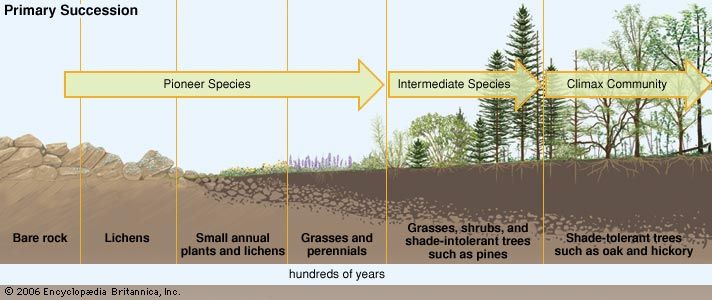
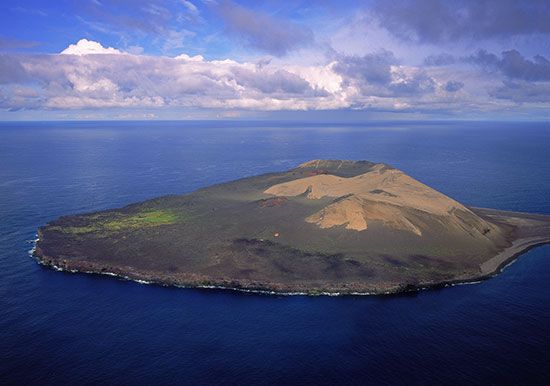
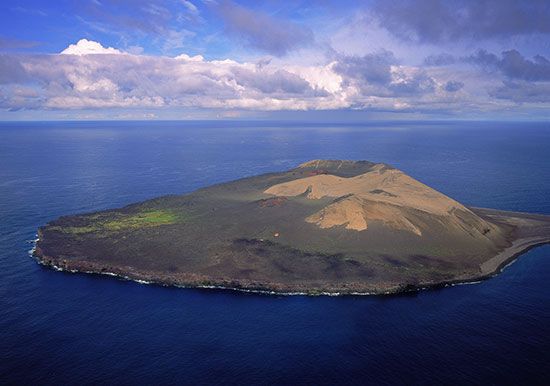
Primary succession is a form of ecological succession in which plants and animals first colonize a barren, lifeless habitat where no life previously existed. This process typically occurs in environments that lack soil or cannot sustain life, such as lava-sterilized landscapes, newly formed sand dunes, or areas scoured by retreating glaciers.123
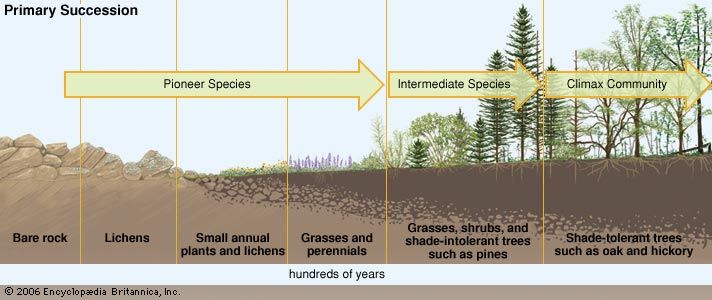
The process begins with the arrival of pioneer species—such as lichens, mosses, and bacteria—which are adapted to harsh, sterile conditions. These organisms break down rock and, upon death, decompose to form the initial pockets of soil. As soil quality improves, more complex vegetation and animal life arrive, gradually increasing the ecosystem’s stability. Over several decades, the community transitions through intermediate stages until it reaches a relatively stable climax community.413
Primary succession is distinct from secondary succession, which occurs in areas where a disturbance has altered the landscape but left the soil and existing seed banks intact.12
How do lichens help turn bare rock into soil?
Lichens play a critical role in the transformation of bare rock into soil through both chemical and biological processes. As pioneer species, they are among the first organisms to colonize sterile environments, where they initiate the formation of soil through the following actions:
- Chemical Weathering: As lichens grow, they release acids that chemically react with the rock surface. These acids help break down the rock’s mineral structure, effectively fragmenting the solid substrate into smaller particles.5
- Organic Matter Accumulation: Lichens are long-lived organisms. When they die, their remains decompose, adding organic matter to the environment. This organic material mixes with the mineral particles produced by the chemical weathering of the rock, creating the initial foundation of soil.52
- Nutrient Enrichment: Beyond physical and chemical breakdown, lichens improve the fertility of the developing soil by fixing nitrogen and contributing carbon to the substrate.5
Over time, this accumulation of organic matter and weathered rock creates a hospitable environment where seeds and spores from other plants can lodge, germinate, and eventually establish a more complex biological community.52
What is the main difference between primary and secondary succession?
The primary difference between primary succession and secondary succession lies in the initial state of the environment and the presence of soil.83
- Primary Succession: This process occurs in environments that are essentially lifeless and lack soil, such as areas recently covered by lava, newly formed sand dunes, or rock exposed by retreating glaciers. Because there is no existing soil or seed bank, the process must “start from scratch,” beginning with pioneer species like lichens that help create the first layers of soil through their growth and decomposition.841
- Secondary Succession: This occurs in areas where a biological community previously existed but was partially cleared by a disturbance, such as a wildfire, flood, or human activity. Unlike primary succession, the soil remains intact and often contains a bank of seeds and nutrients, allowing the ecosystem to recover more rapidly.831
Both processes involve a transition through intermediate stages toward a relatively stable climax community.314
What are some examples of pioneer species in an ecosystem?
Pioneer species are the first organisms to colonize barren or disturbed environments, initiating the development of a biological community. These species are typically characterized by their ability to grow and reproduce quickly, often producing large numbers of wind-dispersed spores or seeds.21
Common examples of pioneer species include:
- Microorganisms: Bacteria are often the very first to colonize sterile surfaces like bare rock or glacial ice.2
- Lichens: Formed from a symbiotic relationship between fungi and algae, these are essential for breaking down rock through the release of acids and for adding organic matter to the developing soil.21
- Mosses: Similar to lichens, mosses contribute to soil formation by breaking down rock surfaces with their own acidic secretions.2
- Fungi and Plants: Species such as certain grasses and ferns often arrive via wind or water, taking root in the initial soil created by earlier pioneers.21
- Invertebrates: Once a basic community is established, animals such as ants, worms, and snails arrive to help process organic material and aerate the soil.2
Sources
- primary succession — Encyclopædia Britannica
- pioneer species — Encyclopædia Britannica
- secondary succession — Encyclopædia Britannica
- What Is the Difference Between Primary and Secondary Ecological Succession? — Encyclopædia Britannica
- lichen — Encyclopædia Britannica
- weathering — Encyclopædia Britannica
- fungus - Form and function of lichens — Encyclopædia Britannica
- ecological succession: Top Questions — Encyclopædia Britannica
Published on · 4 min read