Volcanic Winter
A volcanic winter occurs when massive amounts of volcanic ash and sulfur aerosols are injected into the stratosphere following explosive eruptions. These…
How do volcanic winters affect ecosystems and agriculture?
A volcanic winter occurs when massive amounts of volcanic ash and sulfur aerosols are injected into the stratosphere following explosive eruptions. These particles reflect incoming solar radiation, leading to a decline in surface heating and a subsequent drop in global temperatures.12
Impact on Agriculture and Ecosystems
The resulting cooler temperatures and atypical weather patterns can have severe consequences:
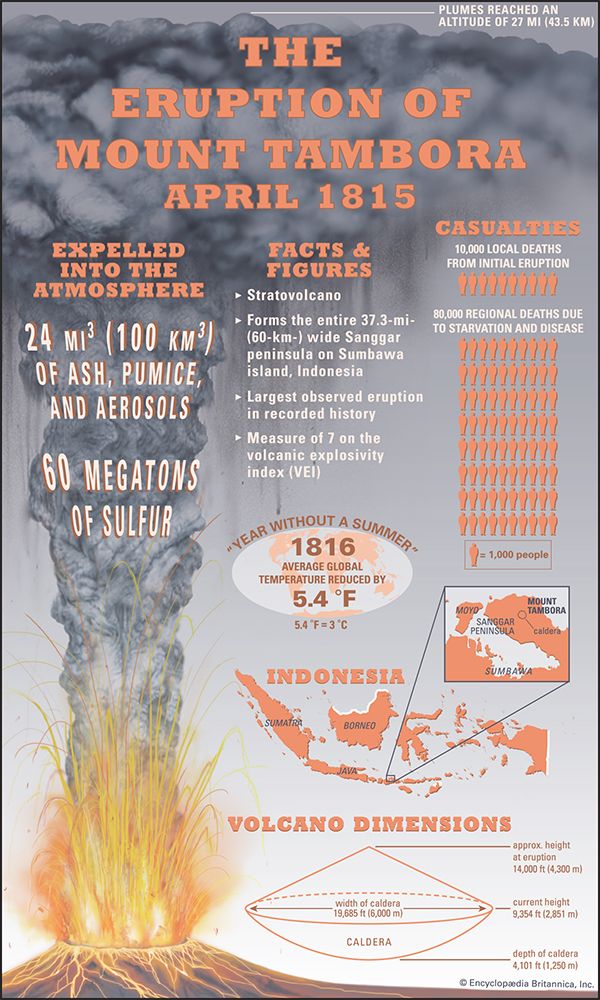
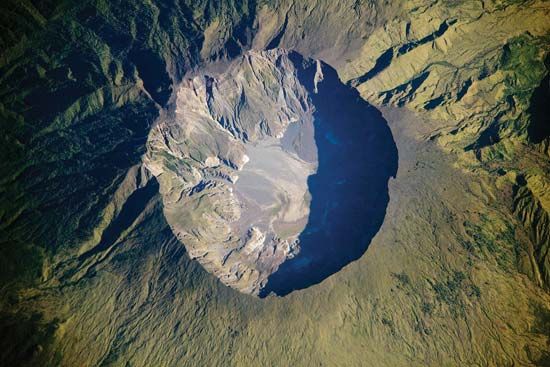
- Crop Failure: Significant cooling and ash accumulation often lead to widespread crop failure. For example, the 1815 eruption of Mount Tambora caused the “year without a summer” in 1816, devastating harvests in North America and Europe.132
- Famine and Disease: When ash accumulates over large areas, it can trigger secondary hazards such as roof collapses and food shortages, potentially leading to famine and disease, particularly in vulnerable regions.3
- Long-term Benefits: While the immediate effects are destructive, the long-term decomposition of nutrient-rich volcanic fallout eventually creates some of the world’s most fertile soils, which can support dense populations and robust agriculture over time.23
What role do sulfur dioxide emissions play in creating a volcanic winter?
Sulfur dioxide (SO2SO_2) emissions are a primary driver of volcanic winters because they facilitate the formation of reflective aerosols in the stratosphere.14
When explosive volcanic eruptions occur, they inject large quantities of SO2SO_2 and other gases into the stratosphere, which sits above the troposphere and its weather-producing clouds. Once in the stratosphere, SO2SO_2 reacts to form tiny droplets of sulfuric acid, creating a persistent aerosol haze a persistent aerosol haze.142
These aerosols play a critical role in cooling the planet through the following mechanisms:
- Solar Reflection: The sulfuric acid aerosols reflect a portion of incoming solar radiation back into space, preventing it from reaching Earth’s surface.15
- Increased Residence Time: Because the stratosphere lacks the atmospheric turbulence found in the lower atmosphere, these aerosols are not quickly washed away by rain. They can remain suspended for several years, causing a prolonged decline in surface temperatures.154
- Radiative Forcing: By absorbing longwave radiation emitted by the surface, these aerosols further alter the heat budget of the atmosphere, leading to a cooling of the troposphere below.15
How does a volcanic winter affect global weather patterns?
A volcanic winter significantly alters global weather patterns by injecting sulfate aerosols into the stratosphere, which disrupt the Earth’s energy balance. These aerosols reflect incoming solar radiation and absorb longwave radiation, leading to a cooling of the troposphere below4.41
Key Impacts on Weather
- Global Cooling: The primary effect is a widespread decline in surface temperatures. For instance, the 1815 eruption of Mount Tambora caused a global temperature drop of approximately 3 °C (5.4 °F), resulting in the infamous “year without a summer” in 1816.241
- Wind Pattern Shifts: The vertical temperature gradient created by stratospheric aerosol absorption influences wind behavior in the lower atmosphere. While the overall effect is cooling, these shifts can paradoxically lead to warmer winters in specific regions, such as parts of Europe.2
- Atmospheric Scattering: Aerosol layers can alter the appearance of the sky, causing the Sun to take on unusual hues due to the scattering of light.8
- Climate Phenomena: There is evidence that volcanic eruptions may influence other major climate phenomena, such as ENSO.2
How do volcanic eruptions contribute to global cooling?
Explosive volcanic eruptions contribute to global cooling primarily by injecting large quantities of sulfur dioxide into the stratosphere. Once in the stratosphere, these gases react to form sulfate aerosols.41
These aerosols drive cooling through two main processes:
- Solar Reflection: The aerosol layer reflects a portion of incoming solar radiation back into space, preventing it from reaching the Earth’s surface.19
- Radiative Forcing: While in the stratosphere, these aerosols absorb longwave radiation emitted by the Earth’s surface. This absorption in the stratosphere leads to a cooling of the troposphere below.41
Because the stratosphere lacks the atmospheric turbulence found in the lower atmosphere, these aerosols can remain suspended for several years, leading to a prolonged global cooling effect. The severity of this cooling depends on the scale of the eruption; for example, the 1815 eruption of Mount Tambora caused a significant drop in global temperatures, while the 1991 eruption of Mount Pinatubo cooled the climate by approximately 0.5 °C (0.9 °F).419
Sources
- volcanic winter — Encyclopædia Britannica
- volcano - Long-term environmental effects — Encyclopædia Britannica
- volcano - Ash falls — Encyclopædia Britannica
- Global warming - Volcanic aerosols — Encyclopædia Britannica
- Climate change - Volcanic activity — Encyclopædia Britannica
- oxide - Oxides of sulfur — Encyclopædia Britannica
- chemical industry - Chamber process — Encyclopædia Britannica
- Zavaritzki caldera: Top Questions — Encyclopædia Britannica
- Stratospheric sulfur injection — Encyclopædia Britannica
Published on · 3 min read