Jiu River
The Jiu River is a 205-mile (330 km) river located in southwestern Romania. It originates south of Petroșani through the confluence of two headstreams that…
What is Jiu River?
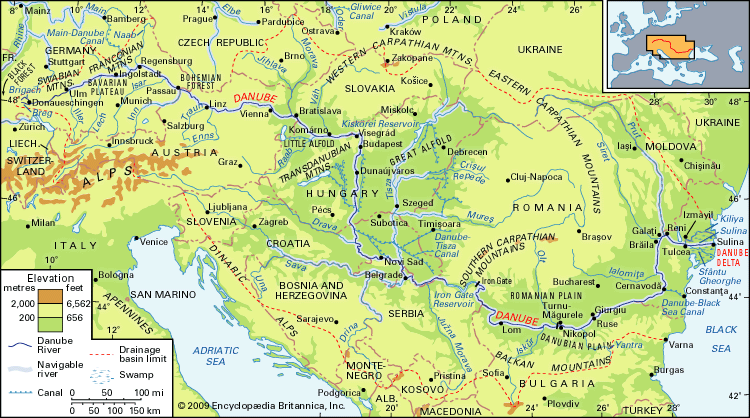
The Jiu River is a 205-mile (330 km) river located in southwestern Romania. It originates south of Petroșani through the confluence of two headstreams that rise in the Parâng and Vâlcan mountains.1
As it flows southward, the river carves through the Transylvanian Alps, creating a deep, rugged gorge known as the Surduc Pass. Upon exiting the mountains, the river continues across the Danube Plain before emptying into the Danube River before emptying into the Danube River. Additionally, the upper basin of the Jiu is notable for forming the Petroșani Depression, which serves as a significant coalfield.1
What are the Transylvanian Alps?
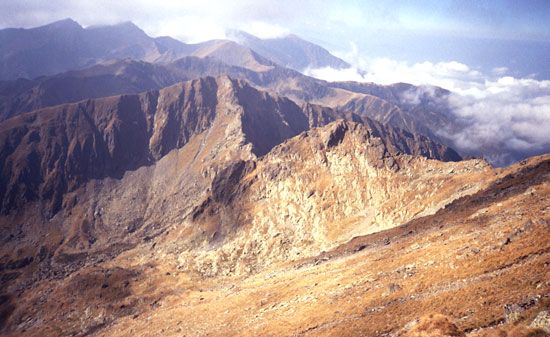
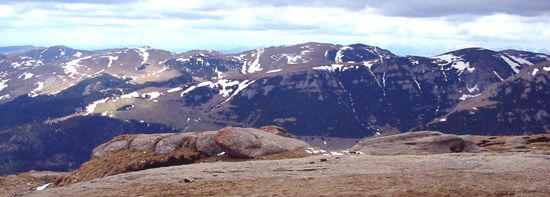
The Transylvanian Alps, also known as the Southern Carpathians, are a mountainous region in south-central Romania. Stretching approximately 155 miles (250 km), they extend from the Prahova River valley in the east to the gap containing the Timiș and Cerna rivers in the west.23
Key characteristics of the region include:
- Geology and Relief: Composed primarily of hard crystalline and volcanic rocks, this section is more massive, continuous, and impassable than other Carpathian segments. It features Alpine-type relief and ancient erosion platforms that have historically served as pastures.234
- Elevation: The region contains the highest peaks in Romania, including Mount Moldoveanu (8,346 feet/2,544 meters) and Mount Negoiu (8,317 feet/2,535 meters), both located in the Făgăraș Mountains.23
- Major Massifs: The region is divided into several major massifs, including the Făgăraș, Bucegi, Parâng, and Retezat-Godeanu ranges.3
- Human Geography: While the mountains are rugged, they are broken by four major passes and contain significant intermontane depressions, such as Petroșani, where industry and agriculture are concentrated](https://www.britannica.com/place/Petrosani), where industry and agriculture are concentrated.23
How does the Danube River impact Romania?
The Danube River is of profound economic and geographic importance to Romania, serving as a vital artery for transportation, energy, and agriculture.
Transportation and Commerce
The Danube acts as a major international transport route connecting the Black Sea to western Europe and the Middle East/Europe) and the Middle East. Its utility is significantly enhanced by the Danube–Black Sea Canal, which provides a direct, navigable link from Cernavodă to the Black Sea port of Constanța. Key Romanian river ports, including Galați, Brăila, Giurgiu, and Tulcea, facilitate both domestic and international trade and Tulcea, facilitate both domestic and international trade.653
Energy and Infrastructure
Romania has harnessed the river’s hydroelectric potential, most notably through the Iron Gate power station. This joint project with Serbia (formerly Yugoslavia) not only generates significant electricity but also transformed one of the river’s most difficult stretches into a navigable waterway.537
Agriculture and Ecology
The Danube floodplain and the Danube delta are essential to the Romanian economy. Former marshlands along the river have been diked and drained to expand agricultural production. The delta, a UNESCO World Heritage site, is a unique ecological region that contributes significantly to the country’s fishing industry and has become a major destination for ecological tourism.38
What is the importance of the Petroșani coalfield?
The Petroșani coalfield, located in the upper Jiu River basin, is a critical industrial hub for Romania. Its importance is defined by several key factors:
- Economic Significance: The Jiu Valley, which encompasses the Petroșani coalfield, produces half of Romania’s total bulk coal output. The region is the primary source of bituminous coal in the country, with annual production reaching several million tons.1112
- Industrial Foundation: Mining is the only significant industry in the Jiu Valley, making it the economic lifeblood of the area. The city of Petroșani serves as the headquarters for surrounding mining centers—including Lupeni, Petrila, and Vulcan—and hosts a state mining institute to support the sector.1112
- Social Impact: Because mining is the sole major industry, the region’s stability is deeply tied to the coalfield. The threat of layoffs in this sector has historically led to significant social unrest, including protests and strikes.11
Sources
- Jiu River — Encyclopædia Britannica
- Transylvanian Alps — Encyclopædia Britannica
- Romania - Relief — Encyclopædia Britannica
- Carpathian Mountains - Physiography of the Carpathian Mountains — Encyclopædia Britannica
- Danube River - The economy — Encyclopædia Britannica
- Romania - Transportation and telecommunications — Encyclopædia Britannica
- Romania - Drainage of Romania — Encyclopædia Britannica
- Romania - Land of Romania — Encyclopædia Britannica
- Romania - Services — Encyclopædia Britannica
- Danube River - Physiography — Encyclopædia Britannica
- Romania - Resources and power — Encyclopædia Britannica
- Petroșani — Encyclopædia Britannica
Published on · 3 min read