Jos Plateau
The Jos Plateau significantly shapes regional agricultural practices through its unique geography and climate. Its high elevation provides a cool, rainy…
How has the Jos Plateau influenced the agricultural practices in the region?
The Jos Plateau significantly shapes regional agricultural practices through its unique geography and climate. Its high elevation provides a cool, rainy environment that is notably free of the tsetse fly, a factor that has historically attracted many Fulani herdsmen to the area to raise cattle, goats, and sheep.1
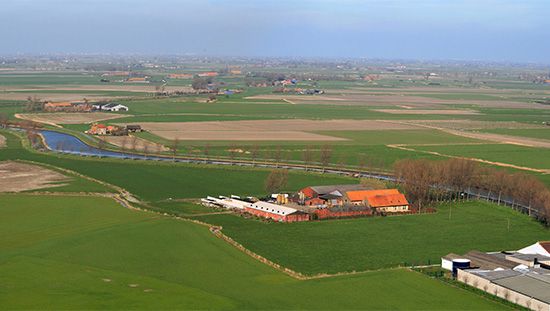
The plateau’s landscape, characterized by open savanna grassland resulting from the clearing of original forests for farming and mining, supports a variety of crops. Staple foods such as acha (hungry rice), sorghum, and millet are widely cultivated. Additionally, the region produces cash crops—including potatoes, yams, and green vegetables—to supply major urban markets like Jos, Bukuru, and Vom.1
While the area has faced challenges such as overcultivation and overgrazing, which historically pressured some farmers to relocate, the development of dam and reservoir projects has been implemented to support land reclamation and sustain agricultural productivity.1
What is the average elevation of the Jos Plateau, and how does it compare to other plateaus in Africa?
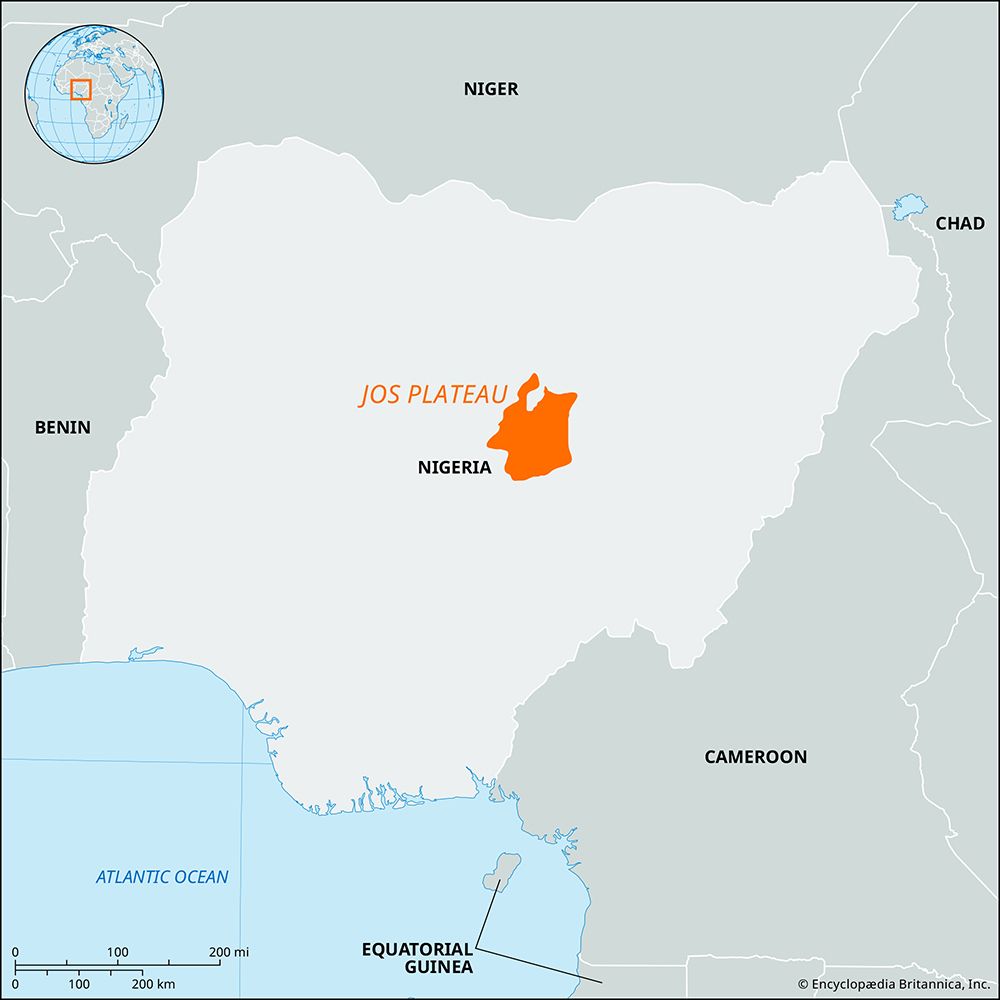
The Jos Plateau in central Nigeria has an average elevation of approximately 4,200 feet (1,280 meters), with some central areas rising to about 5,250 feet (1,600 meters) and peaks such as Mt. Shere reaching 5,843 feet (1,781 meters).23
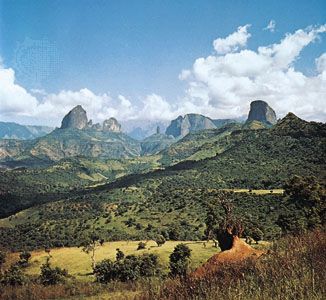
When compared to other African plateaus, the Jos Plateau is part of a broader continental pattern of elevated surfaces. While much of the African continent consists of ancient, rigid rock blocks, the higher elevations are typically concentrated in the south and east. For instance, the East African Plateau frequently reaches 8,000 feet or more, and parts of the Ethiopian Plateau exceed 15,000 feet. In contrast, the interior uplands of western Africa—including the Jos Plateau, the Adamawa Plateau, and the Fouta Djallon—are generally lower than these eastern massifs, though they remain significantly higher than the surrounding plains. Unlike the volcanic-heavy peaks of East Africa, the Jos Plateau is primarily composed of eroded gneiss and granite formations, though it is also dotted with extinct volcanic cones.413
What are some of the major cities or towns located on the Jos Plateau?
Several major towns and cities are located on the Jos Plateau, serving as important centers for mining, agriculture, and research. Key settlements include:
- Jos: The capital of Plateau state and the largest town on the plateau. It is a major hub for commerce, education, and the mining industry, housing a federal university and the Jos Museum.45
- Bukuru: A significant mining and industrial center located just south of Jos. It is home to the Plateau State Polytechnic and various strategic research institutes.46
- Vom: Situated southwest of Jos, this town is well-known for its agricultural and veterinary significance, hosting the National Veterinary Research Institute and a major dairy.41
- Pankshin: A sizable market and mining center that serves as a key location for the region’s agricultural trade.47
- Other Centers: Additional towns such as Wamba, Shendam, and Akwanga also function as important market and mining hubs within the broader plateau region.4
What are the major economic activities and resources found on the Jos Plateau?
The economy of the Jos Plateau is historically and currently defined by its significant mineral wealth and diverse agricultural output.
Mining and Mineral Resources
The plateau is Nigeria’s most important mining region. It has long been a major global supplier of tin, which was traditionally extracted by local populations before large-scale British operations began in the early 20th century. Additionally, the region holds the world’s largest known deposits of columbite, an ore of niobium. Other minerals exploited on the plateau include:14
- Tantalite, wolfram (tungsten), and kaolin14
- Zircon, thorium compounds, and uranium14
- Lead, zinc, and silver (found primarily in the eastern parts of the state)14
Agriculture and Livestock
Agriculture is the primary occupation for the majority of the population. The plateau’s cool, tsetse-free climate makes it ideal for both farming and animal husbandry.41
- Staple Crops: Sorghum, millet, and acha (hungry rice) are the most widely cultivated staples.15
- Cash Crops: Farmers produce yams, potatoes, corn (maize), cowpeas, rice, and various green vegetables for urban markets.145
- Livestock: The region is a significant center for cattle, goat, and sheep rearing. The dairy at Vom is a key facility for milk production, and hides and skins are major regional exports.145
Industrial and Urban Activity
Beyond mining and farming, the plateau supports various local enterprises, including food processing, beer brewing, and the manufacture of soap, cosmetics, and furniture. The construction industry is also a vital economic contributor, supported by the production of crushed stone.5
Sources
- Jos Plateau — Encyclopædia Britannica
- Nigeria - Relief — Encyclopædia Britannica
- Africa - Relief — Encyclopædia Britannica
- Plateau — Encyclopædia Britannica
- Jos — Encyclopædia Britannica
- Bukuru — Encyclopædia Britannica
- Vom — Encyclopædia Britannica
Published on · 3 min read