Jost Van Dyke Island
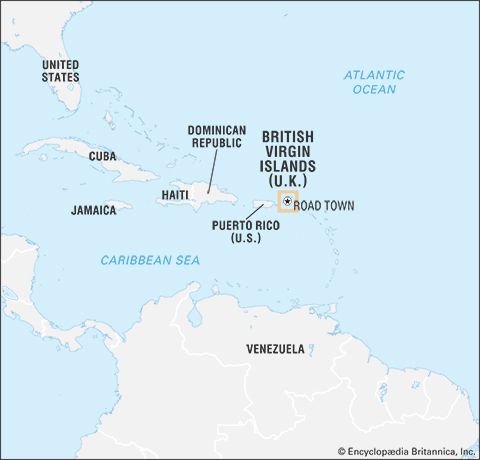
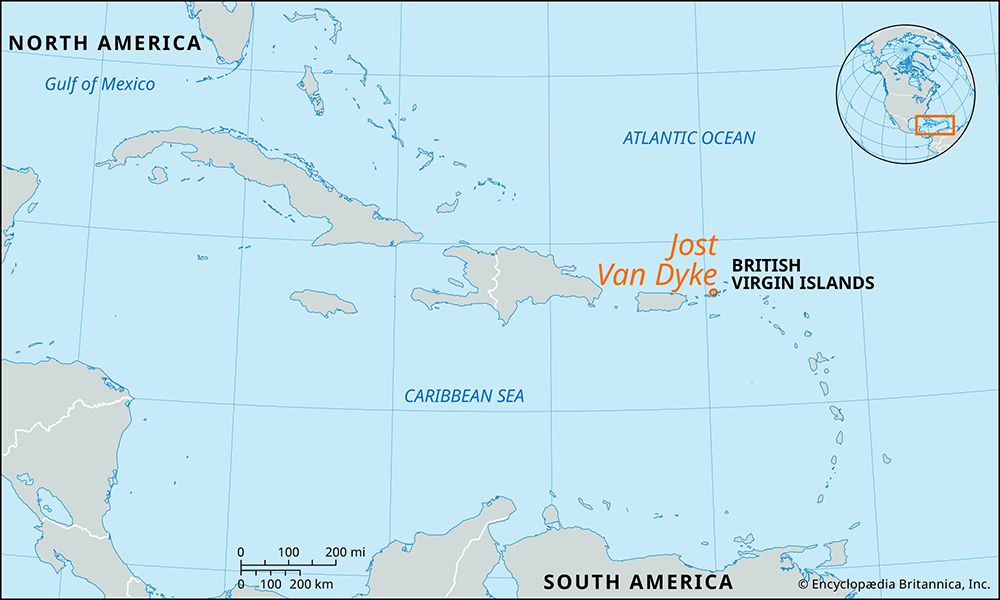
Jost Van Dyke Island is one of the British Virgin Islands located in the Lesser Antilles, situated between the Atlantic Ocean and the Caribbean Sea.…
What is Jost Van Dyke Island?
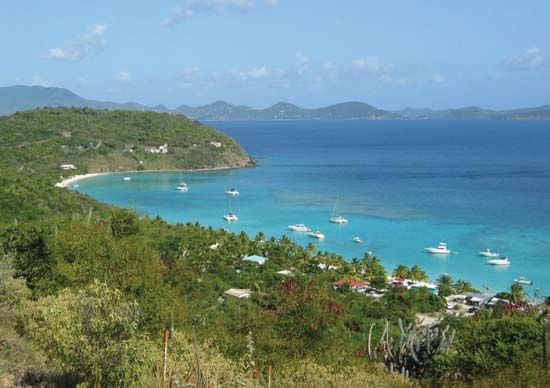
Jost Van Dyke Island is one of the British Virgin Islands located in the Lesser Antilles, situated between the Atlantic Ocean and the Caribbean Sea. Positioned approximately 4 miles west of Tortola, the island covers an area of about 3.5 square miles and is characterized by a rugged, hilly terrain that reaches an elevation of 1,054 feet.12
Tradition holds that the island was named after a Dutch pirate who resided there. While likely discovered and settled by the Dutch, the island has been under British control since 1672. Today, the island’s economy is supported by tourism, with its chief settlement, Great Harbour, located on the southern coast. The island is known for its hilly landscape and features two notable beaches on its southern side.12
What are the main differences between the British and U.S. Virgin Islands?
The British Virgin Islands and the United States Virgin Islands are two distinct administrative groups within the Virgin Islands archipelago. Their primary differences lie in their political status, geography, and historical development.4
Political and Administrative Status
- British Virgin Islands: This group is a British colony (overseas territory). It operates under a ministerial form of government with a constitution that allows for a degree of autonomy in internal affairs.43
- U.S. Virgin Islands: This group is an unincorporated territory of the United States, administered by the U.S. Department of the Interior. Residents are U.S. citizens, and the territory has its own executive, legislative, and judicial branches, with a popularly elected governor.45
Geography and Composition
Feature
British Virgin Islands
U.S. Virgin Islands
Major Islands
Tortola
,
Anegada
,
Virgin Gorda
,
Jost Van Dyke
St. Croix
,
St. John
,
St. Thomas
Total Area
59 square miles
134 square miles
Capital
Road Town
(on Tortola)
Charlotte Amalie
(on St. Thomas)
Historical Background
- British Virgin Islands: Settled by the Dutch in 1648 and annexed by the British in 1672, the islands have remained under British administration, declining to join the West Indies Federation in 1958 to maintain economic ties with the U.S. islands.3
- U.S. Virgin Islands: Originally colonized by Denmark in the late 17th century, these islands were purchased by the United States in 1917 for $25 million due to their strategic importance near the Panama Canal.5
How were the Virgin Islands formed geologically?
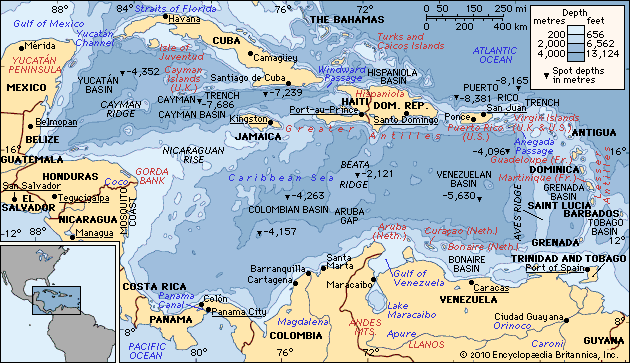
Geologically, the Virgin Islands are an extension of the central fault-block mountain ranges of Puerto Rico and are considered part of the Greater Antilles. They are composed primarily of metamorphosed igneous and sedimentary rocks, which are overlain in various locations by limestone and alluvium.89
The formation of the region is linked to the complex tectonic history of the Caribbean Sea. The islands rise from the continental shelf and are generally characterized by rugged, hilly terrain, with the notable exception of Anegada, which is a flat coral island surrounded by reefs. Most of the islands are fringed by coral reefs, and ancient elevated reefs are found ringing the main islands.89
While the broader Lesser Antilles arc is associated with volcanic arc processes—where the subduction of the Atlantic Ocean floor beneath the overriding plate leads to volcanic activity—the Virgin Islands specifically represent the northernmost extension of this geological structure.101112
What are some other famous pirates associated with the Caribbean?
Beyond the well-known figures like Blackbeard, the Caribbean was home to several other notorious pirates during the “golden age” of piracy:
- Bartholomew Roberts: Often considered one of the most successful pirates in terms of sheer numbers, Roberts captured more than 400 vessels. Operating from West Africa to the Caribbean and as far north as Newfoundland, he was known for his distinct personal flag and his rapid rise to captaincy after turning to piracy in his late 30s.
- Anne Bonny: One of the few women to defy the era’s proscription against female pirates, Bonny gained notoriety for her fierce disposition. She joined John (“Calico Jack”) Rackham in 1720, participating in armed conflict while raiding merchant vessels near Jamaica.
- Mary Read: A compatriot of Anne Bonny, Read had previously served as a mercenary while disguised as a man. She fought alongside Bonny when their crew was captured by privateer Capt. Jonathan Barnet.
- Black Caesar: A famous Black pirate who operated in the Florida Keys for nearly a decade. He eventually became a lieutenant under Blackbeard and was present for the pirate’s final battle in 1718.
- Sir Henry Morgan: A legendary Welsh buccaneer whose exploits in the Caribbean were so significant that they are often compared to the conquests of the most successful pirate captains.
- William Kidd: Known as “Captain Kidd,” he remains one of the most iconic figures from the era of piracy in the American colonies and the Caribbean.
Sources
- Jost Van Dyke Island — Encyclopædia Britannica
- British Virgin Islands — Encyclopædia Britannica
- Virgin Islands - Relief — Encyclopædia Britannica
- Virgin Islands — Encyclopædia Britannica
- Virgin Islands - Settlement and history of the British Virgin Islands — Encyclopædia Britannica
- Virgin Islands - Settlement and history of the U.S. Virgin Islands — Encyclopædia Britannica
- United States Virgin Islands - Economy — Encyclopædia Britannica
- United States Virgin Islands - Land — Encyclopædia Britannica
- North America - Mesozoic and Cenozoic orogenic belts — Encyclopædia Britannica
- Caribbean Sea - Geology — Encyclopædia Britannica
- Virgin Gorda Island — Encyclopædia Britannica
- British Virgin Islands - Relief — Encyclopædia Britannica
- island arc — Encyclopædia Britannica
- Lesser Antilles — Encyclopædia Britannica
- Bartholomew Roberts — Encyclopædia Britannica
- Anne Bonny — Encyclopædia Britannica
- Black Pirates and the Tale of Black Caesar — Encyclopædia Britannica
- Queen Anne’s Revenge — Encyclopædia Britannica
- piracy — Encyclopædia Britannica
Published on · 4 min read