Julian Alps
The Julian Alps are a mountain range belonging to the Eastern Alps. They are located in Europe and span two countries: northeastern Italy and Slovenia.
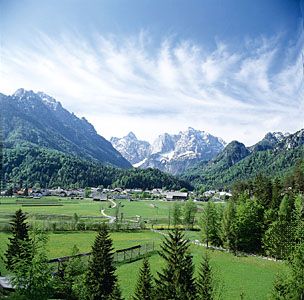
Where are the Julian Alps located, and which countries do they span?
The Julian Alps are a mountain range belonging to the Eastern Alps. They are located in Europe and span two countries: northeastern Italy and Slovenia.1
The range extends southeastward from the town of Tarvisio in Italy to the vicinity of Ljubljana, Slovenia’s capital. These limestone mountains reach their highest elevation at Triglav, which stands at 9,396 feet (2,864 meters) and serves as the highest point in Slovenia. The range is geographically significant as it forms part of the divide between the watersheds of the Adriatic and Black seas.1
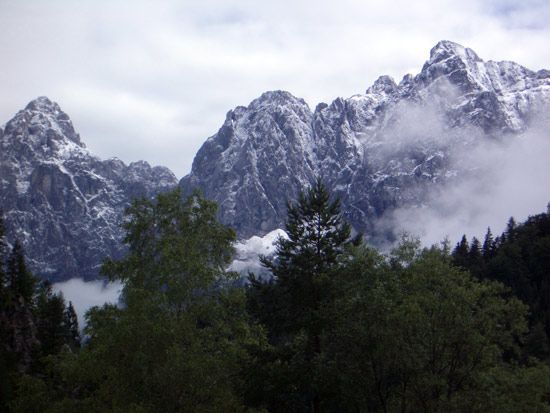
What are some of the highest peaks in the Julian Alps?
The most prominent peak in the Julian Alps is Triglav, which stands at 9,396 feet (2,864 meters). It is the highest mountain in both the range and the country of Slovenia.213
While the Julian Alps feature a variety of limestone formations and rugged terrain, the provided search results do not list other specific named peaks within this particular range. The range is characterized by its dramatic limestone faces, such as the massive north wall of Triglav, and is divided into two sections by the Predel Pass.21
How were the Julian Alps formed, and what is their geological composition?
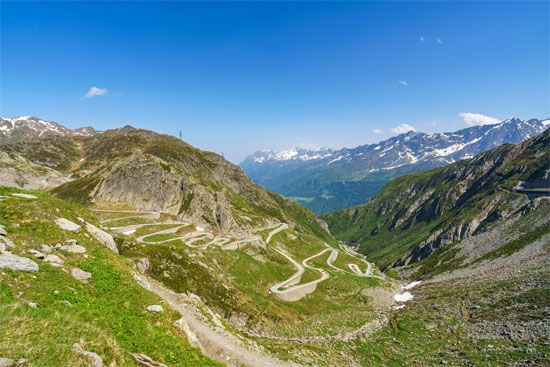
The Julian Alps are primarily composed of limestone, a sedimentary rock that defines their rugged, mountainous character.1
Geological Formation
The formation of the Julian Alps is part of the broader Alpine orogeny, a complex tectonic process that began approximately 65 million years ago. The geological history of this region involves several key stages:4
- Sedimentation: During the Mesozoic Era (about 250 to 65 million years ago), the area was covered by the Tethys Sea. Eroded materials from older landmasses settled at the bottom of this ocean, forming thick, horizontal layers of sedimentary rock, including limestone, shale, and sandstone.4
- Tectonic Collision: Beginning about 44 million years ago, powerful pressures caused by the convergence of the African and European plates forced these deep sedimentary layers to fold and thrust upward against the crystalline bedrock.54
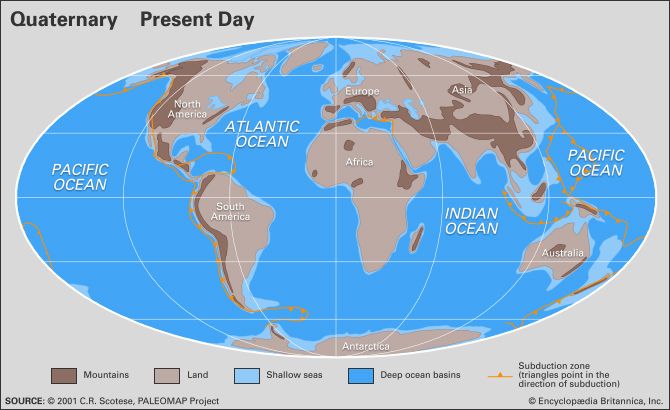
- Erosion and Glaciation: Throughout the Quaternary Period, the landscape was further sculpted by intense glaciation and river erosion, which carved out the deep valleys and sharp ridges characteristic of the range today.4
What are some popular outdoor activities and attractions in the Julian Alps?
The Julian Alps offer a variety of outdoor activities and attractions, largely centered around their rugged limestone terrain and scenic landscapes.
Popular Outdoor Activities
- Climbing and Mountaineering: The region is well-known for its challenging climbing opportunities. Triglav, the highest peak in the range, has been a destination for climbers since its first ascent in 1778. Its massive north wall, which spans nearly 2 miles in width, is a notable feature for experienced mountaineers.
- Winter Sports: The mountains are a popular destination for various winter activities, including skiing and ski mountaineering. The latter involves a mix of climbing and skiing techniques to navigate backcountry slopes.
- Sightseeing and Exploration: The range features numerous valleys and summer resorts that cater to visitors looking to explore the natural environment.
Attractions
- Triglav National Park: This protected area is a major attraction, encompassing a diverse landscape of glacial lakes and unique Alpine plant life.
- Scenic Vistas: The summits of the Julian Alps, particularly Triglav, provide expansive views that can extend as far north as Austria and south to the Adriatic Sea.
Sources
- Julian Alps — Encyclopædia Britannica
- Triglav — Encyclopædia Britannica
- Alps - Physiography — Encyclopædia Britannica
- mountain - The western segment of the system — Encyclopædia Britannica
- Alps - Geology — Encyclopædia Britannica
- ski mountaineering — Encyclopædia Britannica
Published on · 3 min read