Kitzbühel Alps
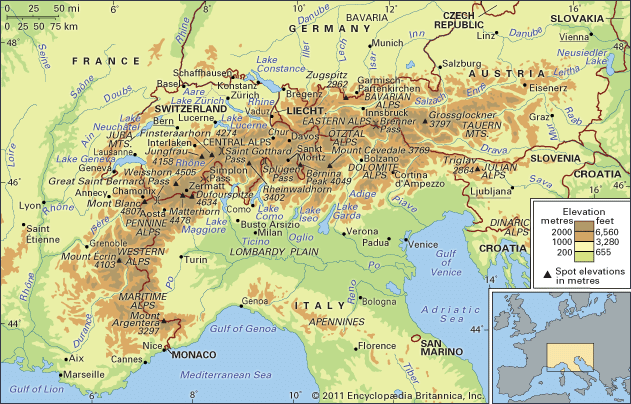
The Kitzbühel Alps are a mountain range within the Eastern Alps located in western Austria. Extending approximately 40 miles (65 km) between the Ziller and…
What is Kitzbühel Alps?
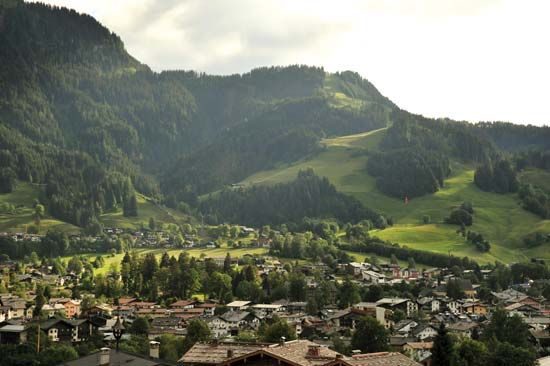
The Kitzbühel Alps are a mountain range within the Eastern Alps located in western Austria. Extending approximately 40 miles (65 km) between the Ziller and Saalach rivers, the range is divided into two sections by the Thurn Pass, which connects the towns of Kitzbühel and Mittersill.1
The highest elevations in the range include the Kreuzjoch at 8,392 feet (2,558 meters) in the west and the Gaisstein at 7,753 feet in the east. The region is well-known for its significant tourism industry, serving as a hub for numerous summer resorts and winter-sports centers. The town of Kitzbühel itself, situated at the foot of the Kitzbüheler Horn, is a world-famous destination for winter sports and a climatic health resort. This development of mass tourism has been a vital economic driver for the area, providing essential employment in the service sector.123
What are some famous winter sports events held in Kitzbühel?
While Kitzbühel is globally recognized as a premier winter-sports centre, the provided search results do not contain specific information regarding the names or details of the famous winter sports events held there.
How do mountain ranges like the Alps form?
Mountain ranges like the Alps are formed through a process known as orogeny, a mountain-building event typically occurring in linear belts. This process is driven by plate tectonics and involves intense deformation of the Earth’s crust, including folding and faulting of rock strata.4
The formation of the Alps specifically resulted from the Alpine orogeny, which began approximately 65 million years ago. This event was triggered by the convergence of the African and European continents. As the Tethys Sea contracted, sedimentary layers deposited on the ocean floor were compressed, folded into massive nappes, and thrust upward against the crystalline bedrock.56
Mountain building can occur through several mechanisms:
- Subduction: One tectonic plate slides beneath another, often leading to magmatism and crustal uplift, as seen in the Andes Mountains.78
- Terrane Accretion: Small crustal fragments or island chains collide with and attach to larger landmasses.48
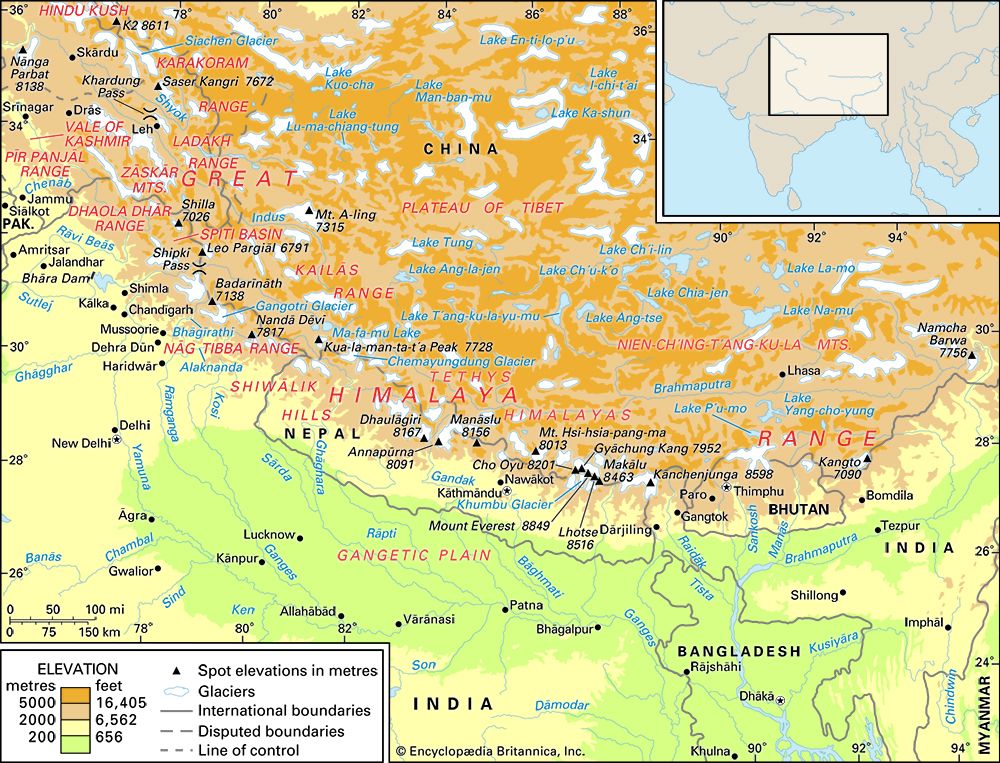
- Continental Collision: Two large continents converge, terminating subduction and forcing the crust to thicken and rise, which was the primary driver for the Alps and the Himalayas.86
What is the difference between the Eastern and Western Alps?
The Alps are divided into Western, Central, and Eastern segments, each characterized by distinct geographical and physical features.10
Western Alps
The Western Alps extend from the Mediterranean coast through southeastern France and northwestern Italy to the Rhône valley in Switzerland. This region is defined by:10
- Elevation: It contains the highest peaks in the entire range, including the glacier-covered Mont Blanc (15,771 feet).10
- Composition: The area features massive crystalline peaks, such as the Mercantour Massif, alongside low-lying arid limestones like the Maritime Alps.10
- Drainage: Rivers in this segment flow west into the Rhône or east into the Po.10
Eastern Alps
The Eastern Alps span a broader area, including parts of Switzerland, Italy, Germany, Austria, Slovenia, and the Balkan Peninsula. Key differences include:10
- Elevation: The mountains are generally lower than those in the west. For example, the Grossglockner in Austria reaches 12,460 feet, and the Zugspitze in Germany is 9,718 feet.10
- Composition: This segment includes diverse ranges such as the Dolomite Alps and the Julian Alps.10
- Drainage: These ranges exhibit a northerly and southeasterly drainage pattern, with many rivers flowing into the Danube or the Gulf of Venice.10
Sources
- Kitzbühel Alps — Encyclopædia Britannica
- Kitzbühel — Encyclopædia Britannica
- Alps - Tourism — Encyclopædia Britannica
- orogeny — Encyclopædia Britannica
- Alpine orogeny — Encyclopædia Britannica
- plate tectonics - Mountains by subduction — Encyclopædia Britannica
- Alps - Geology — Encyclopædia Britannica
- plate tectonics - Mountain building — Encyclopædia Britannica
- mountain - The western segment of the system — Encyclopædia Britannica
- Alps - Physiography — Encyclopædia Britannica
- Rhine River - Physiography — Encyclopædia Britannica
- Alps - Climate of the Alps — Encyclopædia Britannica
- Carpathian Mountains — Encyclopædia Britannica
Published on · 3 min read