Lepontine Alps
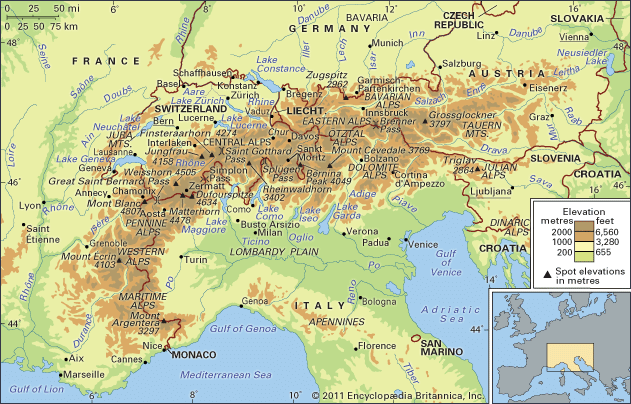
The Lepontine Alps are a segment of the central Alps situated along the border between Switzerland and Italy. The range is bounded by the Simplon Pass and…
What is Lepontine Alps?
The Lepontine Alps are a segment of the central Alps situated along the border between Switzerland and Italy. The range is bounded by the Simplon Pass and the Pennine Alps to the west-southwest, the Rhaetian Alps to the east-northeast, and the Italian lake district to the south.12
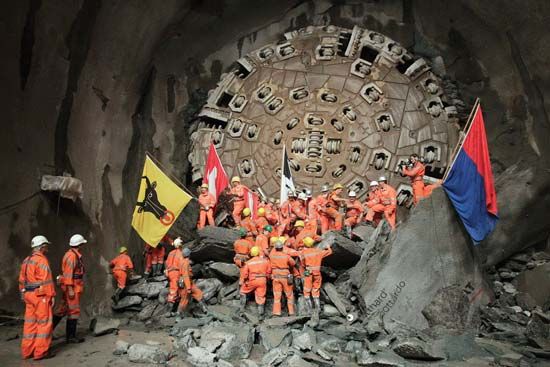
The highest peak in the range is Mt. Leone, reaching 11,657 feet (3,553 meters). The region is characterized by significant river valleys, including those of the Rhône and Rhine, and is traversed by notable mountain passes such as the St. Gotthard and San Bernardino. Additionally, the Gotthard Base Tunnel, the world’s longest and deepest railway tunnel, facilitates transit through this mountainous area.1
What are the major rivers that originate in the Alps?
The Alps serve as a major European watershed, acting as the source for several of the continent’s most significant rivers. These waterways are vital for transport, industry, and ecology, ultimately draining into the North, Mediterranean, Adriatic, and Black seas.3
The major rivers originating in the Alps include:
- Rhône River: Originating from the Rhône Glacier in the Swiss Alps, it flows through Lake Geneva and eventually reaches the Mediterranean Sea.34
- Rhine River: This major industrial artery begins in the Swiss Alps and flows north through several countries before emptying into the North Sea.35
- Po River: Rising in the Cottian Alps of Italy, it flows eastward across the fertile Po Valley to the Adriatic Sea.36
- Danube River: While the main stem does not originate in the high Alps, the range is the source of numerous major tributaries—such as the Inn, Lech, Isar, Salzach, Enns, Mur, Drau, and Sava—that feed into the Danube as it flows toward the Black Sea.37
How do mountain passes like the St. Gotthard influence travel in Europe?
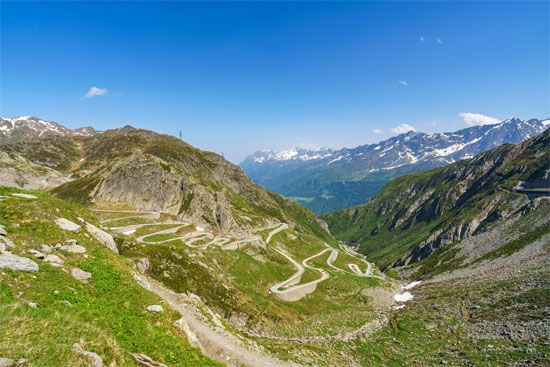
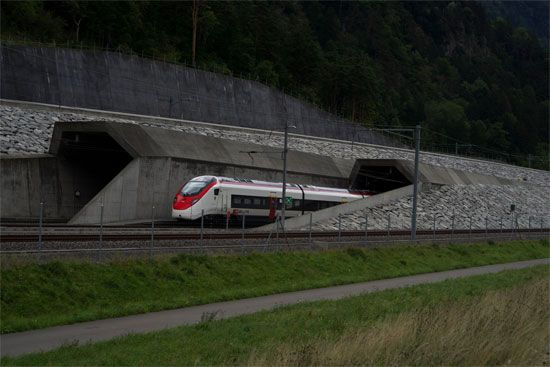
Mountain passes like the St. Gotthard Pass have historically served as vital communication and trade links across the rugged Alps, transforming from simple paths into critical arteries for European transit. By connecting northern and southern Europe, these routes—such as the St. Gotthard and Brenner Pass—have been essential for the movement of people and goods since Roman times.9101112
The evolution of these passes reflects advancements in transportation technology:
- Railways and Tunnels: The construction of tunnels, including the historic St. Gotthard Tunnel and the Simplon Tunnel, allowed for year-round transit, overcoming the isolation once imposed by the mountains.912
- Modern Infrastructure: The St. Gotthard Road Tunnel and the Gotthard Base Tunnel represent the pinnacle of this development, providing high-speed, high-capacity links that significantly reduce travel times and shift freight from road to rail.101312
While these routes are vital for the economy, the resulting increase in traffic has also contributed to environmental concerns, including air and noise pollution in Alpine valleys.912
What are some other mountain ranges that make up the Alps?
The Alps are a vast mountain system divided into three primary segments—Western, Central, and Eastern—each containing numerous distinct ranges and massifs.
Western Alps
These ranges trend north from the Mediterranean coast through France and Italy toward Switzerland. Notable features include:
- Maritime Alps: Located near the Mediterranean, characterized by arid limestone.
- Mercantour Massif: Known for its crystalline peaks.
- Mont Blanc Massif: Home to the highest peak in the Alps.
Central Alps
Occupying the region between the Great St. Bernard Pass and the Splügen Pass, this area contains many of the highest peaks in the system, including the Matterhorn and the Monte Rosa Massif. It also features crystalline massifs such as the Aare and Gotthard in Switzerland.
Eastern Alps
This segment includes a diverse array of ranges extending toward Austria, Germany, Italy, and Slovenia:
- Rhaetian Alps: Located in Switzerland and extending into the Ötztal Alps.
- Dolomites: Famous for their unique limestone formations in Italy.
- Bavarian Alps: Situated in southern Germany and western Austria.
- Tauern Mountains: A major crystalline range in Austria.
- Julian Alps: Located in northeastern Italy and northern Slovenia.
- Dinaric Alps: Extending along the western edge of the Balkan Peninsula.
Sources
- Lepontine Alps — Encyclopædia Britannica
- Lepontine Alps — Merriam-Webster
- Alps — Encyclopædia Britannica
- Rhine River — Encyclopædia Britannica
- Alps - Physiography — Encyclopædia Britannica
- Po River — Encyclopædia Britannica
- Europe - Hydrology — Encyclopædia Britannica
- Rhône River - Physiography — Encyclopædia Britannica
- St. Gotthard Pass — Encyclopædia Britannica
- Gotthard Base Tunnel — Encyclopædia Britannica
- tunnels and underground excavations - Canal and railroad tunnels — Encyclopædia Britannica
- Alps - Transportation — Encyclopædia Britannica
- Brenner Pass — Encyclopædia Britannica
- Switzerland - Transportation and telecommunications — Encyclopædia Britannica
- Saint Gotthard — Merriam-Webster
- France - Pyrenees , Jura, and Alps — Encyclopædia Britannica
- Italy - Mountain ranges — Encyclopædia Britannica
- Switzerland - Relief and drainage — Encyclopædia Britannica
- Ötztal Alps — Encyclopædia Britannica
Published on · 3 min read