Jungle
A jungle is a tropical forest characterized by luxuriant, tangled, and often impenetrable vegetation. While the term is popularly associated with the tropics…
What is jungle?
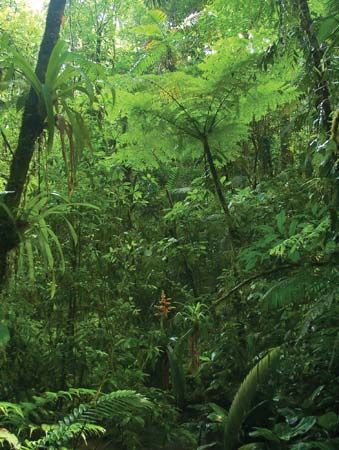
A jungle is a tropical forest characterized by luxuriant, tangled, and often impenetrable vegetation. While the term is popularly associated with the tropics and frequently used interchangeably with rainforest, it specifically describes areas of dense undergrowth.1
Many environments commonly envisioned as jungles are actually monsoon forests. These regions experience a marked dry season and are dominated by deciduous trees, such as teak, alongside thickets of bamboo and dense ground-level vegetation. In contrast, true tropical rainforests often feature a more open forest floor than the popular image of a jungle suggests, as the high canopy filters sunlight and limits the growth of dense understory plants.2
Jungle environments are typically teeming with wildlife, supporting a highly vertical stratification of species that have adapted to climbing, swinging, or navigating the complex forest layers.12
How does the canopy layer affect the amount of sunlight reaching the forest floor?
The canopy layer acts as a primary filter for solar radiation, significantly regulating the amount of light that reaches the forest floor. In a full-canopied forest, the foliage absorbs between 60 and 90 percent of available sunlight, primarily to fuel photosynthesis within the leaves.3
In a tropical rainforest, this process is particularly intense due to the complex, multi-layered structure of the vegetation. As a result, only about 1 percent of the sunlight received at the top of the canopy reaches the ground level. This creates a gloomy, stable microclimate on the forest floor, where the lack of light restricts the growth of most herbaceous plants and shrubs.45
Because light is a limiting factor, the forest floor is often bare of living plants, save for shade-tolerant species like ferns or gingers. Tree seedlings and saplings that exist in this deep shade often struggle to grow until a gap in the canopy—caused by tree death or storm damage—allows more solar radiation to reach the surface, triggering a period of rapid growth and competition.4
What are some examples of animals that have adapted to live specifically in the canopy?
Animals that inhabit the forest canopy have evolved specialized physical and behavioral adaptations to navigate, feed, and survive in the treetops, often without needing to descend to the forest floor.6
Mammals
- Primates: Many monkeys use the canopy as a three-dimensional highway, utilizing interlacing branches and lianas to move through the forest.7
- Rodents: Flying squirrels are well-adapted to life in the canopy, using specialized movements to navigate between trees.6
- Marsupials: In regions like Australia and New Guinea, tree kangaroos, cuscuses, and opossums are specialized canopy dwellers.8
Birds
- Climbing Specialists: Parrots possess zygodactylous feet (two toes forward, two back) to aid in climbing, and they often use their bills for additional support.2
- Vertical Climbers: Woodpeckers and nuthatches use strong feet and stiffened tail feathers to brace themselves against tree trunks as they ascend.2
Reptiles
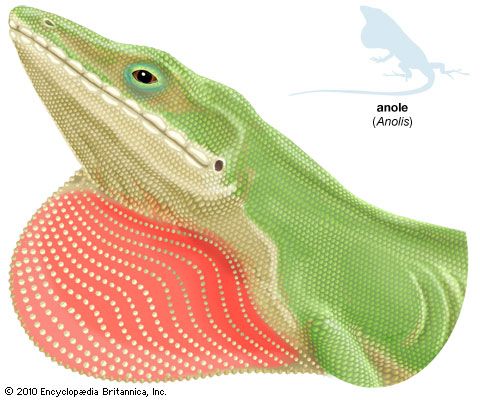
- Clinging Adaptations: Many geckos and anoles have specialized footpads with microscopic hooks that allow them to grip smooth surfaces.9
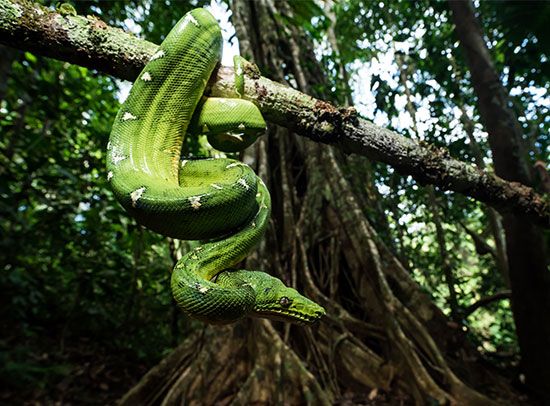
- Prehensile Tails: Chameleons, boas, and pythons use prehensile tails to grasp branches, providing stability in the canopy.9
- Bridging: Vine snakes are uniquely adapted to extend their bodies across gaps between branches, acting like a bridge.9
Why is the soil in many tropical forests considered to be low in fertility?
The soil in many tropical rainforests is typically deep but inherently low in fertility due to several interconnected environmental factors.5
- Leaching: Because tropical rainforests experience high levels of annual rainfall, there is a nearly permanent surplus of water that moves downward through the soil profile. This process, known as leaching, washes essential mineral nutrients out of the soil and into streams and rivers, leaving the remaining soil relatively infertile.5
- Nutrient Cycling: A large proportion of available mineral nutrients is not stored in the soil itself but is instead bound up within the living vegetation. Most plant roots are concentrated in the uppermost soil layers, where they quickly absorb nutrients released from the decomposition of fallen leaves and other organic litter.5
- Weathering: The hot, moist climate promotes intense chemical weathering of the underlying rock. This leads to the development of deep, reddish soils—often classified as Oxisols or Ultisols—that are rich in insoluble iron and aluminum oxides but lack the easily weathered silicates and essential nutrients needed for high agricultural productivity.51112
Sources
- jungle — Encyclopædia Britannica
- Rainforest — Encyclopædia Britannica
- Tropical rainforest - General structure of the rainforest — Encyclopædia Britannica
- Forest — Encyclopædia Britannica
- Tropical rainforest - Environment — Encyclopædia Britannica
- Locomotion - Climbing birds and mammals — Encyclopædia Britannica
- reptile - Clinging and climbing — Encyclopædia Britannica
- Tropical rainforest - Fauna — Encyclopædia Britannica
- primate - Forest and savanna — Encyclopædia Britannica
- primate - Distribution and abundance — Encyclopædia Britannica
- Why are rainforests so important? — Encyclopædia Britannica
- Oxisol — Encyclopædia Britannica
- Tropical rainforest - Biological productivity — Encyclopædia Britannica
- Ultisol — Encyclopædia Britannica
Published on · 3 min read