Ganges Delta
The Ganges delta is a vast, low-lying region located in the Indian state of West Bengal and the country of Bangladesh. Spanning approximately 220 miles (355…
What is Ganges delta?
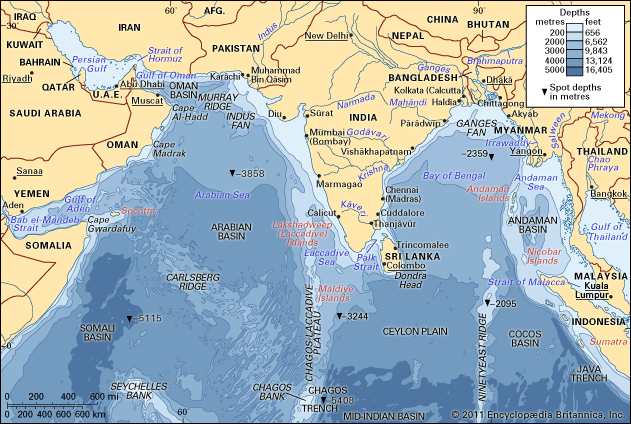
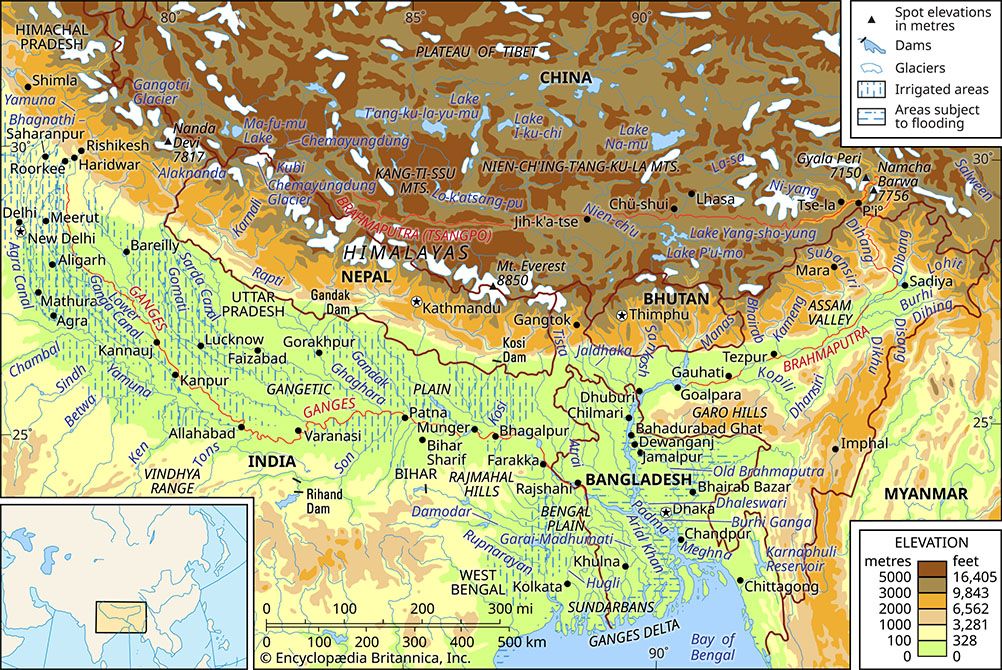
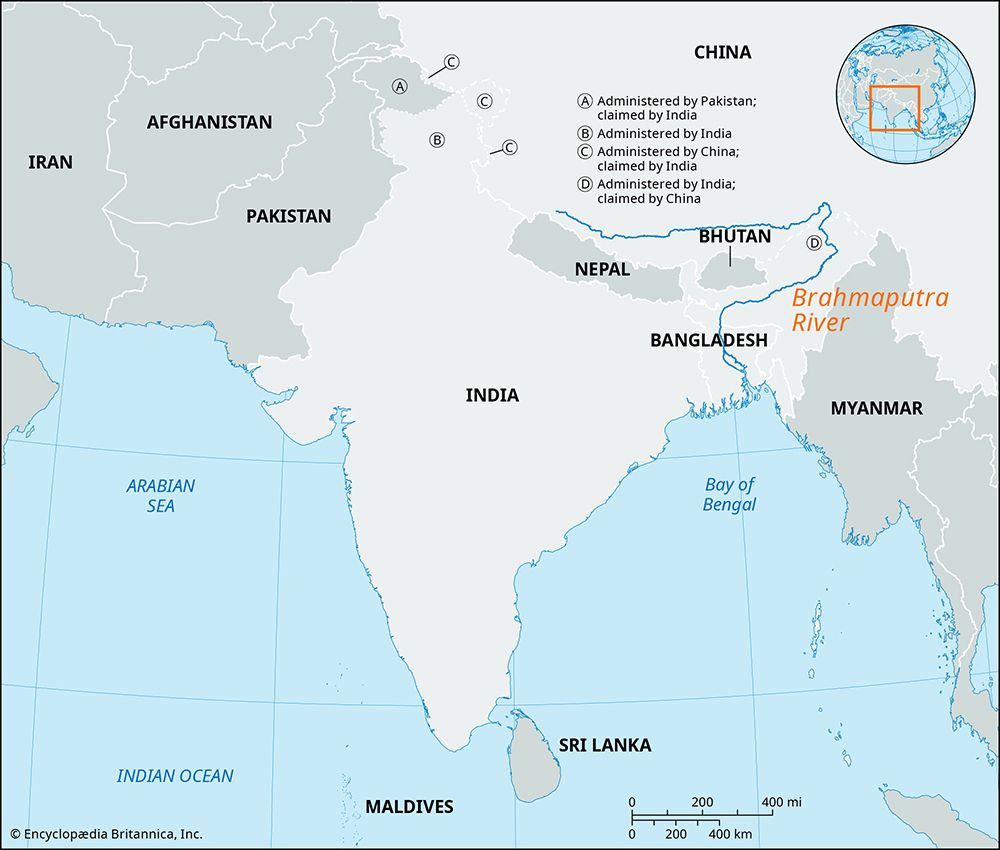
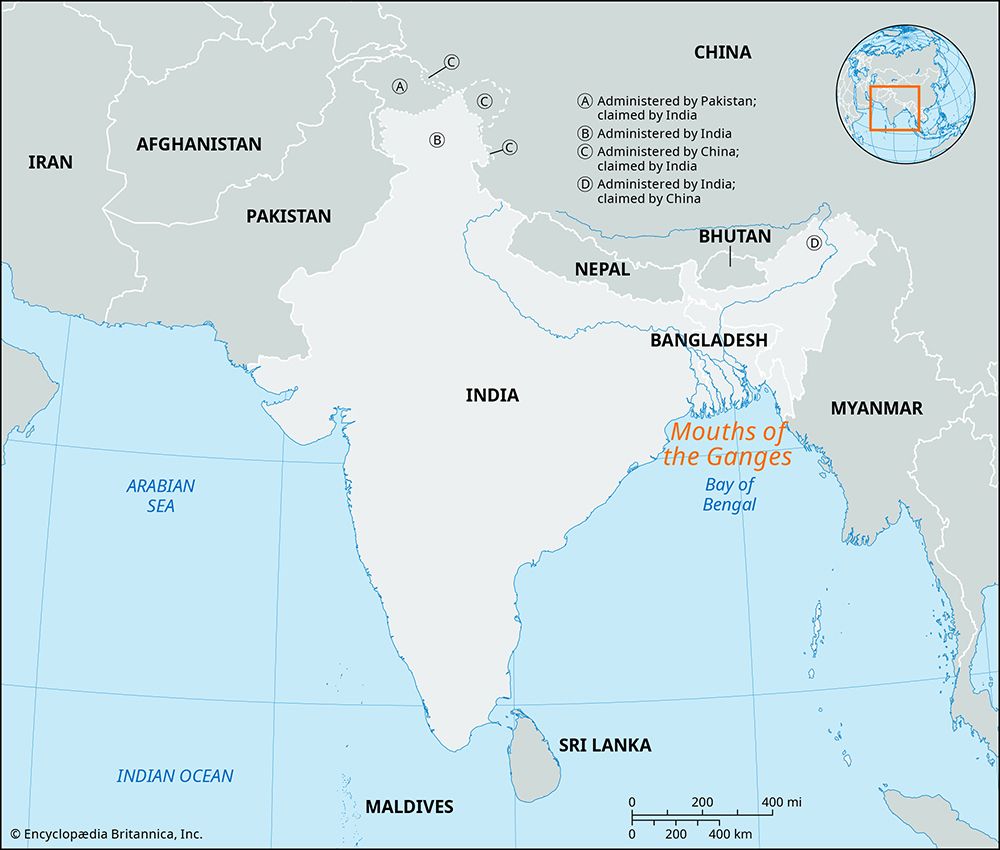
The Ganges delta is a vast, low-lying region located in the Indian state of West Bengal and the country of Bangladesh. Spanning approximately 220 miles (355 km) along the Bay of Bengal, it serves as the seaward terminus for the Ganges and Brahmaputra river systems.12
Key features of the delta include:
- Formation: It is a massive sediment deposit composed of clays, sands, and marls, shaped by tidal processes and the world’s highest combined river sediment load.3
- Geography: The region is defined by a complex network of distributary streams, including the Hugli, Padma, and Meghna rivers.13
- Ecosystem: The southern portion contains the Sundarbans, a vast expanse of tidal mangrove forests and swampland designated as a UNESCO World Heritage site.13
- Dynamics: The delta is highly active, with shifting river courses and the frequent formation of new landmasses known as chars.3
What unique wildlife lives in the Sundarbans mangrove forest?
The Sundarbans mangrove forest is a globally significant biodiversity hotspot, serving as a refuge for numerous rare and endangered species.4
Notable Wildlife
- Apex Predators: The region is most famous for its population of Bengal tigers. These are the only tigers in the world that have adapted to a semiaquatic lifestyle, navigating the tidal terrain to hunt both terrestrial and aquatic prey.45
- Aquatic Mammals: The tidal creeks are home to several dolphin species, including the Ganges river dolphin, Irrawaddy dolphin, and Indo-Pacific humpback dolphin, as well as finless porpoises.45
- Terrestrial Mammals: Common inhabitants include spotted deer, rhesus monkeys, wild boars, otters, fishing cats, and pangolins.45
- Reptiles and Amphibians: The area supports diverse reptiles, notably estuarine crocodiles, monitor lizards, Indian pythons, cobras, and various marine turtles like the olive ridley.45
- Avifauna: With over 250 species, the birdlife includes hornbills, storks, kingfishers, white ibis, and various raptors such as sea eagles and peregrine falcons.45
How do seasonal monsoons affect life for people living in the delta?
Seasonal monsoons profoundly shape life in the Ganges delta, dictating both the rhythm of daily activities and the region’s physical landscape. During the rainy season, which typically lasts from June to October, the delta receives heavy rainfall, often exceeding 60 to 100 inches annually in some areas.267
Impact on Daily Life and Infrastructure
- Flooding and Settlement: During the monsoon, much of the region is flooded to depths of three feet or more. To adapt, local residents build their homes and villages on artificially raised land to remain above the floodwaters.2
- Transportation: As the landscape transforms into a vast network of water, traditional land-based travel becomes difficult. Consequently, boats become the primary and essential means of communication and transport between settlements.2
- Agriculture: While the monsoon provides necessary water for crops, the region is also subject to the risks of extreme weather. Farmers utilize local resources like peat found in natural depressions (bils) as fertilizer, but they must also contend with the potential destruction of crops and livestock caused by severe storms.26
Environmental Hazards
The delta is particularly vulnerable to tropical cyclones that occur before the monsoon (March–May) and after it retreats (September–November). These storms can generate massive waves and high-speed winds, leading to catastrophic loss of life and property.687
What are the main differences between a river delta and an estuary?
The primary difference between a river delta and an estuary lies in the balance between sediment deposition and the influence of rising sea levels or coastal subsidence.
River Deltas
A delta is a low-lying plain formed by the accumulation of stream-borne sediments at a river’s mouth. Its existence depends on the river’s ability to deposit sediment more rapidly than waves and ocean currents can remove it. Deltas are characterized by their progradation, meaning they build outward into the water body, often creating complex landforms like distributary channels, marshes, and swamps.1112
Estuaries
In contrast, an estuary is typically a drowned coastal valley formed by a rise in sea level or tectonic subsidence, which allows marine waters to invade the mouth of a river. Rather than building outward through sediment accumulation, estuaries are often defined by the mixing of fresh river water and saline seawater. They are classified by how these waters mix, ranging from salt-wedge systems to vertically homogeneous environments.13
Sources
- Ganges delta — Encyclopædia Britannica
- Ganges River - Physiography — Encyclopædia Britannica
- Ganges River — Encyclopædia Britannica
- Sundarbans — Encyclopædia Britannica
- Sundarbans National Park — Encyclopædia Britannica
- Ganges River - Climate and hydrology — Encyclopædia Britannica
- Bay of Bengal - Climate — Encyclopædia Britannica
- Bangladesh - Climate — Encyclopædia Britannica
- Ganges River - Irrigation — Encyclopædia Britannica
- Ganges River - Navigation — Encyclopædia Britannica
- estuary — Merriam-Webster
- delta — Encyclopædia Britannica
- river - Deltas — Encyclopædia Britannica
- river - Origin and classification — Encyclopædia Britannica
- river - Sedimentation in estuaries — Encyclopædia Britannica
Published on · 3 min read