Laelia
Laelia is a genus of orchids within the family Orchidaceae, comprising approximately 25 species native to semitropical and temperate regions of Mexico and…
What is Laelia?
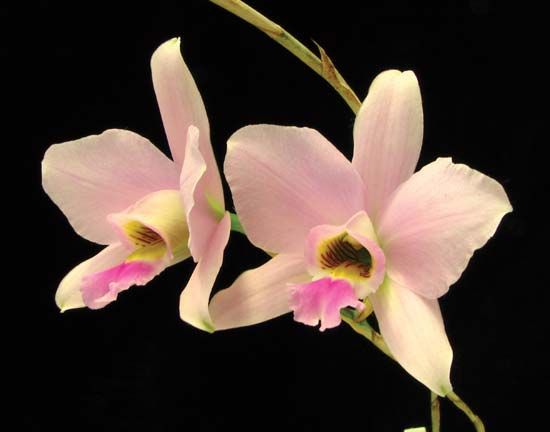
Laelia is a genus of orchids within the family Orchidaceae, comprising approximately 25 species native to semitropical and temperate regions of Mexico and Central America.1
These plants are primarily epiphytic, meaning they grow supported by other plants and utilize aerial roots to absorb moisture from the air. They are characterized by pseudobulbs—swollen stems—that typically bear one or two waxy leaves. During their spring or autumn blooming seasons, they produce racemes featuring up to eight attractively colored flowers.1
In the commercial flower trade, many Laelia species are valued for their ability to be crossed with other genera, such as Cattleya, to create unique hybrid orchids1. The name is believed to be derived from the Roman statesman Caius Laelius.2
What does it mean for a plant to be epiphytic?
An epiphyte is any plant that grows upon another plant or object solely for physical support, rather than for nourishment. Often referred to as “air plants,” they do not have an attachment to the ground or any other direct nutrient source.34
It is important to distinguish epiphytes from parasitic plants. Unlike parasites, which use specialized organs called haustoria to extract water and nutrients from a host, epiphytes use their host plants merely as a structure on which to grow. They do not harm the supporting plant.354
Epiphytes primarily obtain water from rain and atmospheric moisture, often absorbing it through their roots or specialized leaves. They typically acquire necessary minerals from organic debris that collects on the host plant. While most common in moist tropical forests—where this growth habit allows them to reach sunlight in dense canopies—epiphytes also include species of mosses, ferns, and orchids found in various environments.34
How do orchids differ from other types of flowering plants?
Orchids are distinguished from other flowering plants primarily by a unique combination of structural characteristics rather than any single feature exclusive to the family Orchidaceae. While individual traits—such as the fusion of stamens and pistil into a central column or the presence of pollen masses called pollinia—can be found in other plant groups, their specific organization in orchids is distinct.67
Key differences include:
- Seed Development: Unlike most angiosperms, which undergo double fertilization to produce an endosperm that nourishes the developing embryo, orchid seeds lack endosperm entirely. Because they contain only an undifferentiated embryo, they require a symbiotic fungus (mycorrhiza) to provide nutrients for germination and early growth.89
- Pollination Mechanics: Orchids have evolved highly specialized floral structures, such as the labellum, which acts as a landing platform for pollinators. Many species have abandoned the use of pollen as a protein-rich food source for insects, relying instead on nectar or complex deceptive attractants to ensure precise pollen deposition.7
What are pseudobulbs and why do orchids have them?
A pseudobulb is a solid, bulbous enlargement of the stem found in many orchid species. While these structures vary in form, they are essentially thickened stem bases that can consist of one or several internodes.1112
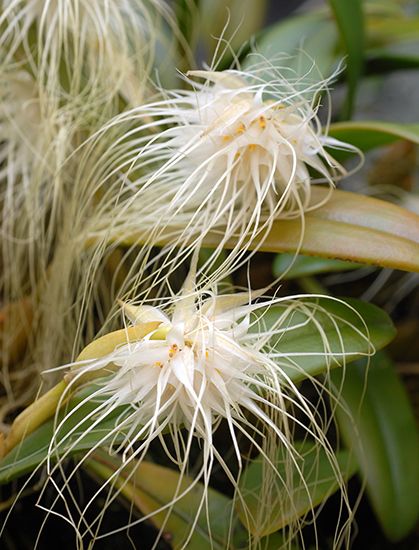
Orchids, particularly epiphytic varieties, possess these structures as an evolutionary adaptation to their environment. Because epiphytes grow on other plants rather than in the ground, they lack a constant, reliable source of water and nutrients from the soil. Pseudobulbs function as storage organs, allowing the plant to conserve water and nutrients to survive periods of drought or scarcity. This storage capability is a key feature that supports the growth of diverse orchid genera, such as Bulbophyllum, in varied and sometimes challenging climates.1213
Sources
- Laelia — Encyclopædia Britannica
- laelia — Merriam-Webster
- epiphyte — Encyclopædia Britannica
- Did you know? — Merriam-Webster
- parasitic plant — Encyclopædia Britannica
- orchid - Structural diversity — Encyclopædia Britannica
- orchid - Seeds — Encyclopædia Britannica
- Botanical Sex: 9 Alluring Adaptations — Encyclopædia Britannica
- orchid - Pollination — Encyclopædia Britannica
- orchid - Natural history — Encyclopædia Britannica
- pseudobulb — Merriam-Webster
- orchid - Growth forms — Encyclopædia Britannica
- Bulbophyllum — Encyclopædia Britannica
Published on · 3 min read