Chondrostean
Chondrostean fish, represented today by sturgeons and paddlefishes, exhibit specific reproductive behaviors and life cycles centered on migration and…
How do chondrostean fish reproduce, and what are their life cycles like?
Chondrostean fish, represented today by sturgeons and paddlefishes, exhibit specific reproductive behaviors and life cycles centered on migration and spawning in freshwater environments.12
Reproduction and Migration
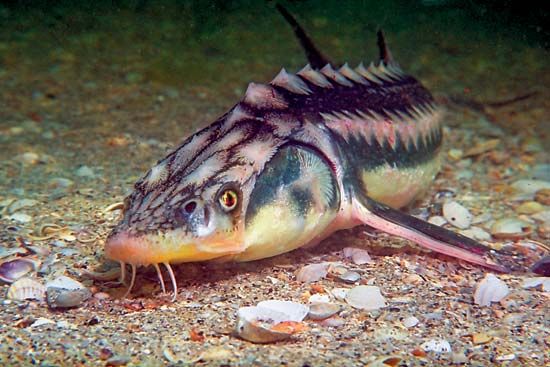
- Sturgeons: These fish typically ascend rivers during the spring or summer to reach their spawning grounds. They often migrate in large shoals toward rivers or the shores of freshwater lakes. While many species are migratory, some, such as those in the genus Scaphirhynchus, are entirely freshwater and migrate only to habitual spawning sites.2
- Paddlefishes: These fish reach sexual maturity at seven or eight years of age and spawn during spring floods.2
Life Cycle
- Development: Both groups produce small, numerous eggs. In paddlefishes, larvae hatch in approximately two weeks and initially feed on a large yolk sac. The characteristic paddle-shaped snout is not present at birth but begins to develop after two or three weeks.2
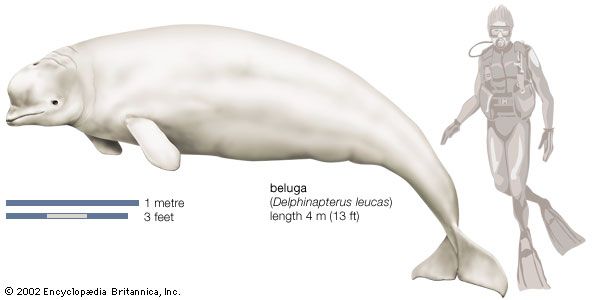
- Growth and Longevity: Young chondrosteans generally experience rapid growth. Once maturity is reached, growth rates slow significantly. Some species are notably long-lived; for example, the beluga (Huso huso) can live for 200 to 300 years.2
How do chondrostean fish differ from other types of fish, such as teleosts?
Chondrostean fish, such as sturgeons and paddlefishes, are considered the most primitive of the ray-finned fishes. They differ significantly from teleosts—the modern bony fishes—in several key anatomical and functional areas.145
Key Differences
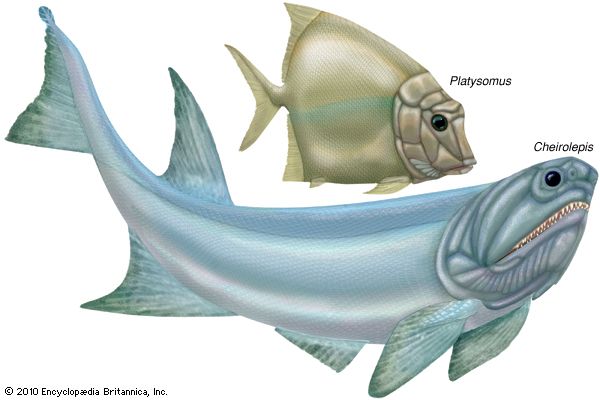
- Tail Structure: Chondrosteans possess a heterocercal tail, where the vertebral axis turns upward into the tail fin. In contrast, teleosts have evolved a true homocercal tail, which provides greater swimming efficiency and maneuverability.45
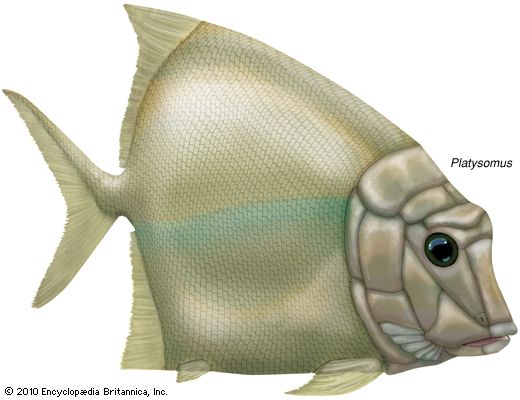
- Scales: Many primitive chondrosteans were covered in thick, diamond-shaped ganoid scales that abutted one another. Modern teleosts typically have thinner, overlapping scales.45
- Jaw and Feeding: Chondrosteans generally have a less powerful biting mechanism compared to more advanced groups. Their upper jaws are often firmly bound to the cheek, whereas teleosts have developed highly efficient, mobile, and often protractile mouths that allow for specialized feeding.45
- Swimming Efficiency: Teleosts represent the culmination of evolutionary trends toward maximum swimming efficiency. Through improvements in fin structure, tail shape, and gill-ventilating apparatus, teleosts have achieved a level of functional performance that largely replaced the earlier, less maneuverable chondrostean body plans.5
How do scientists study and classify chondrostean fish?
Scientists study and classify chondrostean fish—a group of primitive ray-finned bony fishes—primarily through comparative anatomy and the analysis of fossil records. Because this group is considered paraphyletic—meaning it does not include all descendants of a common ancestor—its classification remains a subject of ongoing debate and complexity among taxonomists.167
Methods of Classification
- Anatomical Analysis: Researchers distinguish between different orders and species by examining specific physical traits, including dermal bone patterns, overall body shape, and the form and position of fins.6
- Comparative Osteology: Similar to studies of other bony fishes, scientists rely on the study of the skeletal system to identify evolutionary relationships.2
- Fossil Evidence: Because living chondrosteans (such as sturgeons and paddlefishes) have diverged significantly from their Paleozoic ancestors, paleontologists use fossilized remains to bridge the gap between ancient forms and modern survivors.67
The classification is considered unsettled because the group is fairly uniform, making it difficult to define clear natural boundaries between the various families.6
Are there any endangered species among chondrostean fish, and if so, why?
Many species of chondrostean fish, particularly those in the order Acipenseriformes, are currently facing severe conservation crises. The International Union for Conservation of Nature (IUCN) lists more than half of all remaining sturgeon species as critically endangered.11
Reasons for Decline
The primary threats to these ancient fishes include:
- Overfishing: Sturgeons and paddlefishes are highly valued for their flesh and their eggs, which are processed into caviar. This commercial demand has led to widespread overexploitation of wild populations.111213
- Habitat Destruction: Construction of dams has significantly impacted these fish by blocking their migration routes to traditional spawning grounds and altering the flow regimes of rivers.11
- Pollution: Water pollution in major river systems, such as the Yangtze River, has further degraded essential spawning environments, contributing to population collapses.11
The Chinese sturgeon is among the most at-risk species, having experienced a population decline of nearly 98 percent between 1973 and 2010. Additionally, the Chinese paddlefish was declared extinct in 2020, following a lack of confirmed sightings since 2003.1114
Sources
- chondrostean — Encyclopædia Britannica
- chondrostean - Reproduction and life cycle — Encyclopædia Britannica
- protacanthopterygian - Life cycle and reproduction — Encyclopædia Britannica
- chondrostean - Evolution — Encyclopædia Britannica
- fish - Actinopterygii: ray-finned fishes — Encyclopædia Britannica
- chondrostean - Ecology — Encyclopædia Britannica
- chondrostean - Distinguishing taxonomic features — Encyclopædia Britannica
- protacanthopterygian - Evolutionarily important taxonomic characters — Encyclopædia Britannica
- chondrichthyan - Critical appraisal — Encyclopædia Britannica
- chondrichthyan - Evolution — Encyclopædia Britannica
- sturgeon — Encyclopædia Britannica
- chondrostean - Distribution — Encyclopædia Britannica
- paddlefish — Encyclopædia Britannica
- caviar — Encyclopædia Britannica
Published on · 4 min read