Sturgeon
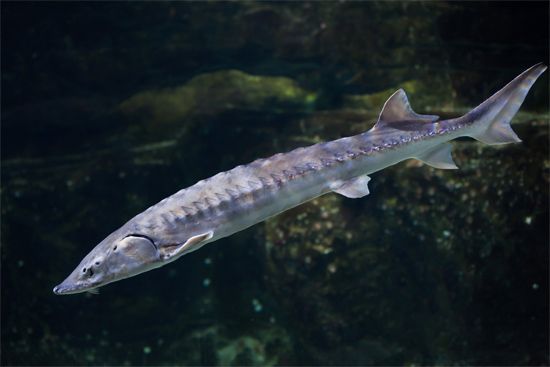
Sturgeon are essential to the production of caviar, as the term specifically refers to the salted roe (eggs) of these fish.
How are sturgeon important in the production of caviar?
Sturgeon are essential to the production of caviar, as the term specifically refers to the salted roe (eggs) of these fish.123
The production process involves removing the egg masses from freshly caught females. These masses are passed through a fine-mesh screen to separate the individual eggs while removing extraneous tissue and fat. To preserve the eggs and enhance their flavor, 4–6 percent salt is added, a process sometimes referred to as malossol for higher-quality, lightly salted varieties.23
Caviar is graded based on the size of the eggs and the specific species of sturgeon from which they are harvested, such as beluga, osetrova, or sevruga. Because sturgeon populations have declined significantly due to overfishing and environmental pressures, most species are now considered critically endangered, making authentic sturgeon caviar a rare and expensive commodity. While some methods involve stripping eggs from ripe females who are then released, the industry remains heavily impacted by the precarious conservation status of these ancient fish.24
Why are many sturgeon species endangered, and what conservation efforts are in place?
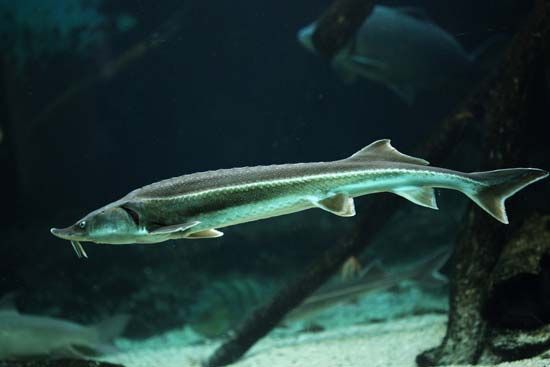
Many sturgeon species are currently classified as critically endangered due to a combination of human-driven pressures. The primary threats include:
- Overfishing: Because sturgeon are highly valued for their flesh, roe (caviar), and swim bladders, they have been historically overexploited, leading to rapid population declines.35
- Habitat Destruction: The construction of dams has significantly impacted sturgeon by blocking their access to traditional spawning grounds and altering the flow regimes of rivers necessary for reproduction.3
- Pollution: Water pollution in major spawning environments, such as the Yangtze River, has further degraded the health and reproductive success of these fish.3
- Ecological Competition: In some regions, such as the Caspian Sea, the introduction of invasive species—like comb jellyfish—has disrupted the food web by consuming the zooplankton that sturgeon rely on.6
While the International Union for Conservation of Nature (IUCN) monitors these populations, conservation efforts are challenged by the species’ slow maturation and specific environmental requirements. Current practices often focus on regulating commercial fisheries and managing water quality, though the status of many species remains precarious, with some, like the Chinese sturgeon, facing potential extinction.32
What are some of the largest sturgeon species, and how big can they grow?
Sturgeons are known for their impressive size, with many species reaching lengths of 2–3 metres (7–10 feet) as a common occurrence. Among the various species, some stand out for their exceptional growth:3
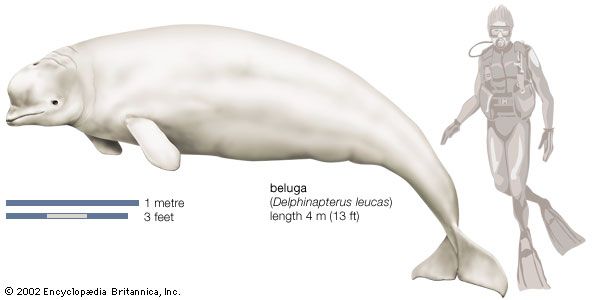
- Beluga (Huso huso): Widely considered the largest freshwater fish in the world, the beluga can reach lengths of up to 8 metres (26.2 feet) and weigh as much as 3.2 metric tons (3.5 short tons).37
- White Sturgeon (Acipenser transmontanus): As the largest sturgeon species in North America, it can grow to approximately 11 feet in length and weigh over 820 kg (1,800 pounds), or more than half a ton.38
- Atlantic Sturgeon (Acipenser oxyrhynchus): This species can reach lengths of up to 12 feet and weigh around 800 pounds.9
- Chinese Sturgeon (A. sinensis): This species is capable of growing to more than 4 metres (13 feet) in length.3
While these maximum sizes are remarkable, it is important to note that such extreme dimensions are far less common today due to the critically endangered status of many populations.3
How have sturgeon adapted to both freshwater and marine environments?
Most sturgeon species are anadromous, meaning they spend the majority of their lives in marine or brackish environments but migrate into rivers or freshwater lakes to spawn. This lifestyle requires them to be euryhaline, or capable of tolerating a wide range of external salt concentrations.9311
To survive these transitions, sturgeons rely on osmoregulation—the physiological process of maintaining a constant internal salt and water balance despite external changes. This is primarily managed through the kidneys and gills:1112
- In Freshwater: Sturgeons face the constant influx of water through their skin and the loss of salts. To compensate, they produce large quantities of dilute urine to excrete excess water and use special cells in their gills to actively absorb salts from the surrounding water.1112
- In Marine Environments: They face the opposite challenge of water loss and salt influx. To maintain hydration, they drink seawater and use specialized “chloride cells” in their gills to excrete excess salts, while their kidneys conserve water by producing very little urine.1112
Sources
- Did you know? — Merriam-Webster
- caviar — Encyclopædia Britannica
- sturgeon — Encyclopædia Britannica
- roe — Encyclopædia Britannica
- Caspian seal: Top Questions — Encyclopædia Britannica
- chondrostean - Distribution — Encyclopædia Britannica
- white sturgeon — Merriam-Webster
- chondrostean - Size range — Encyclopædia Britannica
- chondrostean - Reproduction and life cycle — Encyclopædia Britannica
- Atlantic sturgeon — Merriam-Webster
- Biosphere - Salinity — Encyclopædia Britannica
- fish - Excretory organs — Encyclopædia Britannica
Published on · 4 min read