Lake Tahoe
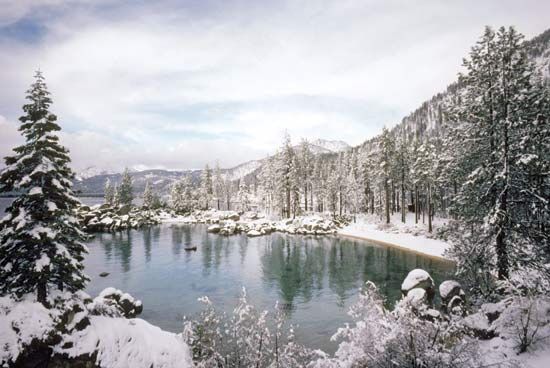
Lake Tahoe is a large, freshwater lake situated in a fault basin within the northern Sierra Nevada mountains, straddling the border between California and…
What is Lake Tahoe?
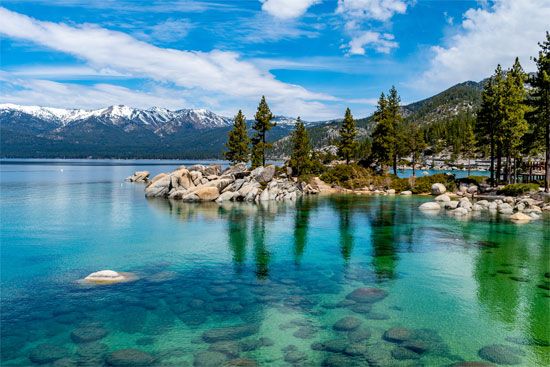
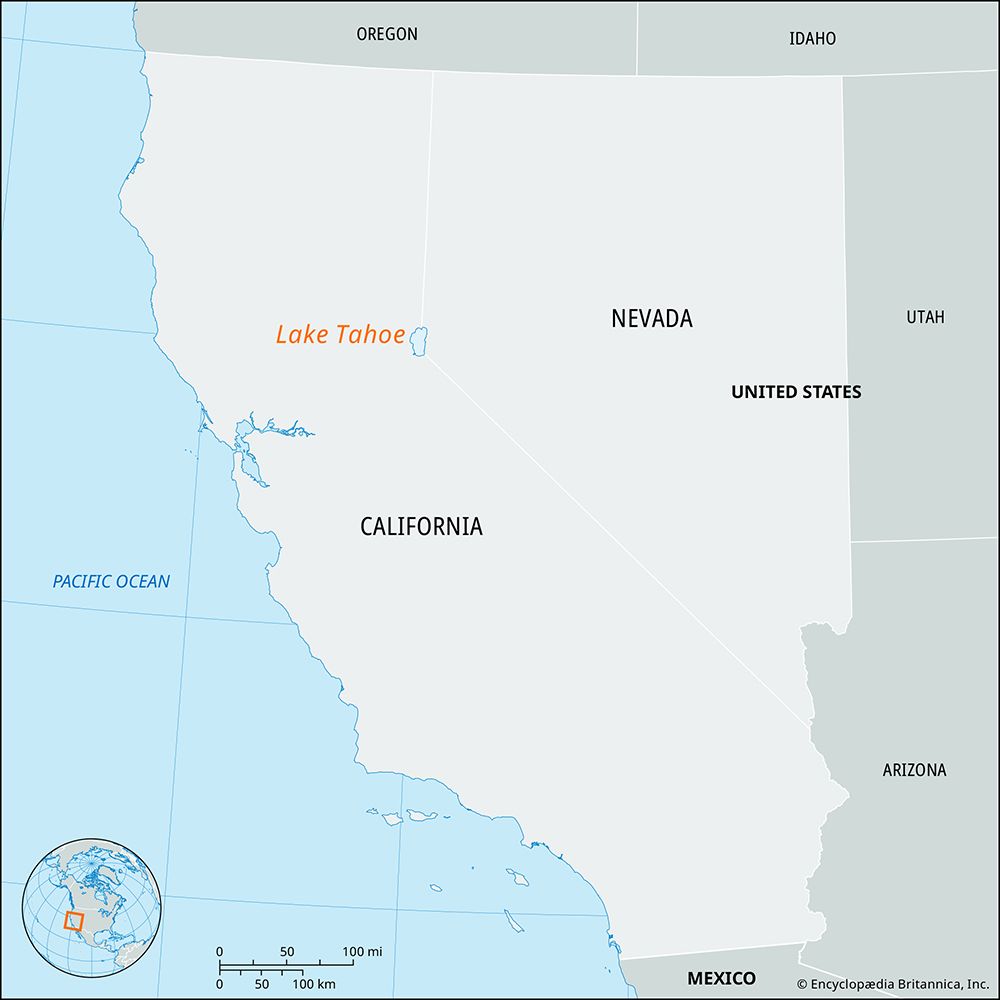
Lake Tahoe is a large, freshwater lake situated in a fault basin within the northern Sierra Nevada mountains, straddling the border between California and Nevada in the United States.12
The lake spans 22 miles (35 km) north-south and 12 miles (19 km) east-west, covering an area of 193 square miles (500 square km). It sits at an elevation of 6,229 feet (1,899 meters) above sea level and reaches a maximum depth of 1,640 feet (500 meters). Fed by numerous small streams, the lake is drained by the Truckee River, which provides water for the Newlands Irrigation Project.1
First visited by explorer John C. Frémont in 1844, the lake derives its name from a Washoe Indian word meaning “big water”. Today, the lake and its surrounding national forests are popular tourist destinations.1
How do fault-block lakes differ from volcanic crater lakes?
Fault-block lakes and volcanic crater lakes differ primarily in the geological processes that create their basins.
Fault-Block Lakes
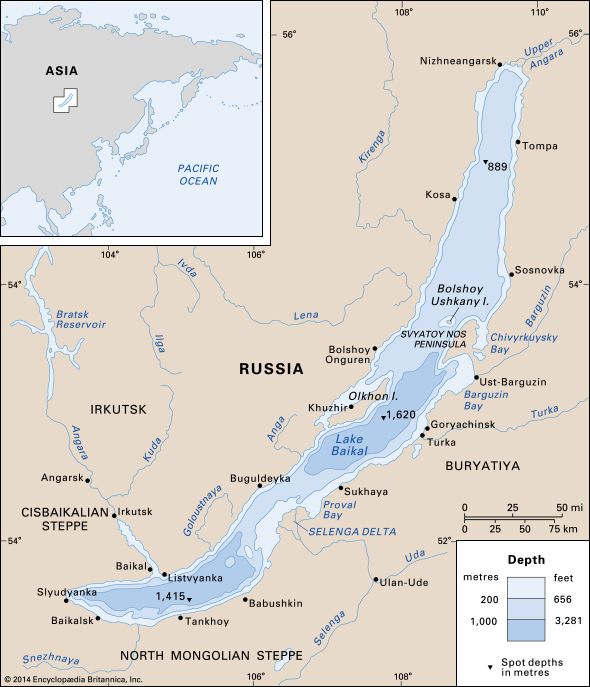
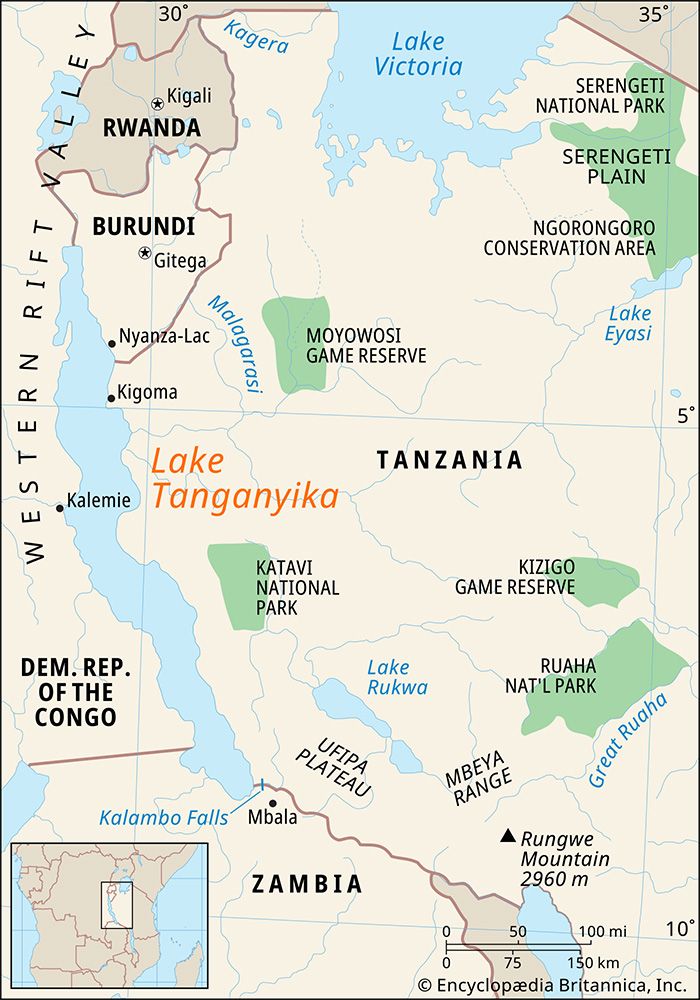
These basins are formed by tectonism, specifically the movement of the Earth’s crust. They often occupy depressions created by faulting, such as grabens—downdropped blocks of the crust—or tilted fault blocks. Because these basins are tied to large-scale structural shifts, they can be among the oldest and deepest lakes in the world, such as Lake Baikal and Lake Tanganyika.2
Volcanic Crater Lakes
These basins result from volcanic activity. They may occupy:
- Craters: Formed by explosions or the collapse of magma chamber roofs.
- Maars: Broad, low-relief volcanic craters caused by explosions.2
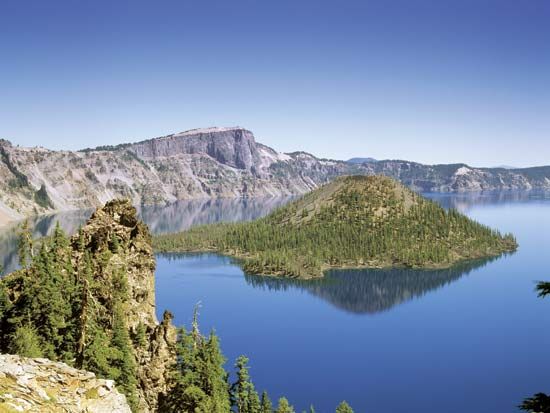
- Calderas: Large, bowl-shaped depressions formed when a volcanic cone collapses after its underlying magma reservoir is emptied by eruptions. Crater Lake is a classic example of a caldera lake.23
While most are purely volcanic, some basins are “volcano-tectonic,” meaning their shape is influenced by both volcanic collapse and preexisting tectonic faults, as seen in Lake Toba.23
What are some other famous lakes in the Sierra Nevada mountain range?
Beyond Lake Tahoe, the Sierra Nevada mountain range contains hundreds of smaller lakes, many of which are located in high-altitude regions characterized by granite terrain and smooth-walled canyons.1
Notable lakes in the region include:
- Mono Lake: A saline lake situated on the eastern flank of the Sierra Nevada.14
- Owens Lake: Also located on the eastern side of the range, this lake has faced significant environmental challenges due to agricultural development.1
- Glacial Lakes: The range is dotted with thousands of small lakes formed by Pleistocene Epoch glaciation. These lakes are found throughout the Alpine and subalpine landscapes, particularly within areas like Yosemite National Park, where glacial erosion created spectacular features such as cirques.5
While Lake Tahoe remains the largest and deepest alpine lake in the range, these other water bodies highlight the diverse geological and environmental history of the Sierra Nevada.15
How does the Truckee River system impact the surrounding environment?
The Truckee River system is a vital hydrological link in the Sierra Nevada, serving as the primary outlet for Lake Tahoe and flowing approximately 120 miles northeast into Pyramid Lake. Its impact on the surrounding environment is multifaceted:18
- Agricultural Support: The river is essential for human development in the region, supplying water for the Newlands Irrigation Project in Nevada. It is one of several rivers rising in the Sierra Nevada that are critical to extensive irrigation and reclamation efforts.19
- Ecological Significance: Upon reaching Pyramid Lake, the river sustains a unique ecosystem. The lake serves as a habitat for the endangered cui-ui (Chasmistes cujus) and the Lahontan cutthroat trout. Additionally, the area supports a national wildlife refuge on Anaho Island, which acts as a sanctuary for various waterfowl, including white pelicans, cormorants, and great blue herons.10
- Resource Management: As Nevada faces increasing water scarcity due to urbanization and industrial demands, the Truckee River remains a key component of the state’s limited surface water resources.9
We could dive deeper into the history of the Newlands Irrigation Project or the conservation efforts surrounding the endangered species of Pyramid Lake.
Sources
- Lake Tahoe — Encyclopædia Britannica
- lake - Basins formed by tectonism , volcanism, and landslides — Encyclopædia Britannica
- caldera — Encyclopædia Britannica
- California - Drainage — Encyclopædia Britannica
- Mono Lake — Merriam-Webster
- Yosemite National Park — Encyclopædia Britannica
- Sierra Nevada - Drainage and glaciation — Encyclopædia Britannica
- Pyramid Lake — Encyclopædia Britannica
- Truckee — Merriam-Webster
- Nevada - Drainage — Encyclopædia Britannica
Published on · 3 min read