Lake Geneva
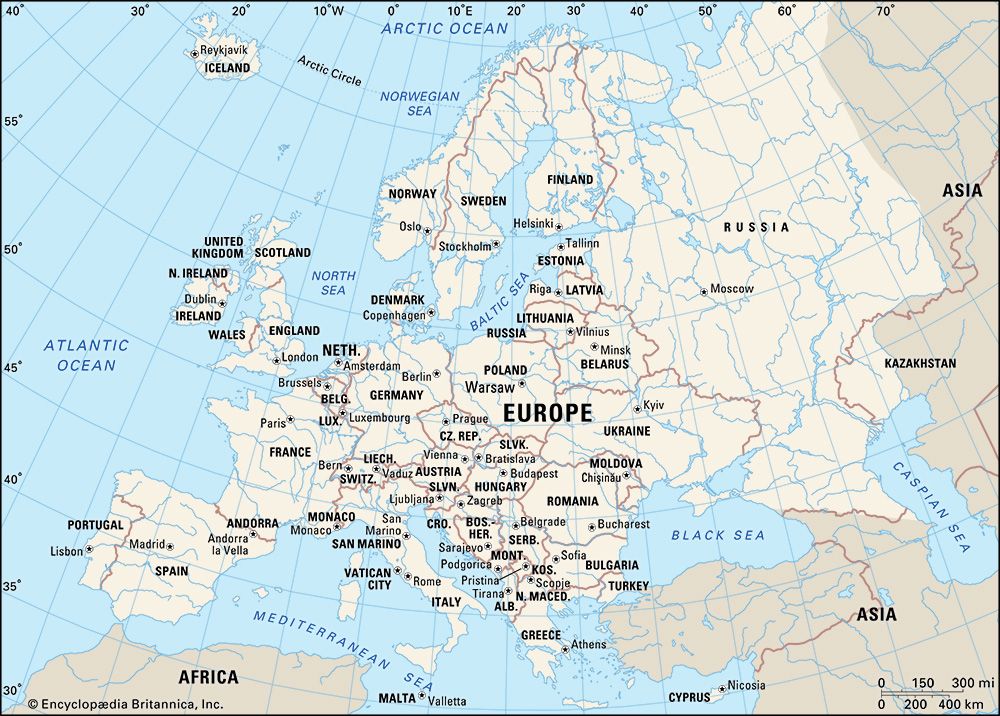
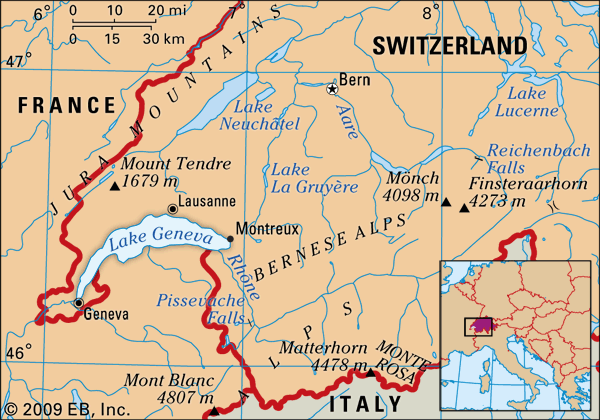
Lake Geneva, the largest Alpine lake in Europe, is a crescent-shaped body of water situated between Switzerland and France.
What are the main characteristics and dimensions of Lake Geneva?
Lake Geneva, the largest Alpine lake in Europe, is a crescent-shaped body of water situated between Switzerland and France.1
Physical Dimensions
- Area: 224 square miles (581 square km), with 134 square miles in Switzerland and 90 square miles in France.1
- Length: 45 miles (72 km).1
- Width: Maximum of 8.5 miles (13.5 km); average of 5 miles (8 km).1
- Depth: Maximum depth of 1,017 feet (310 meters); mean depth of 262 feet (80 meters).1
- Elevation: 1,220 feet (372 meters).1
Characteristics
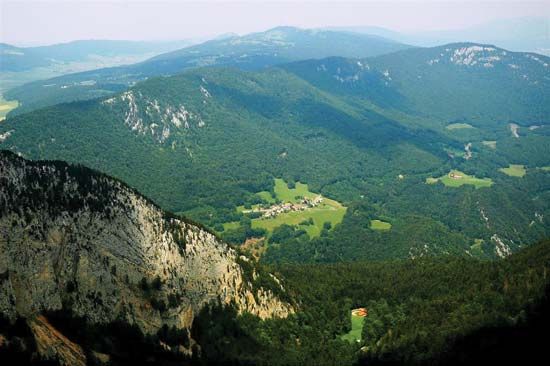
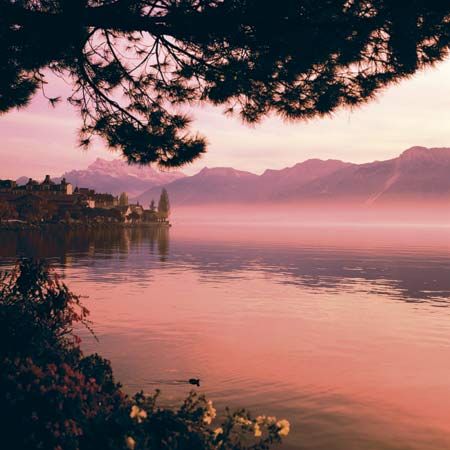
The lake is formed by the Rhône River and is divided into two sections, the Grand Lac and the Petit Lac, by the strait of Promenthoux. It is known for its blue, transparent water and rhythmic fluctuations in level known as seiches. The surrounding landscape features the Jura Mountains to the north and the Alps to the south and east.1
(Note: A smaller lake of the same name exists in Wisconsin, U.S., covering 5,262 acres.)2
How was Lake Geneva formed, and what is its geological history?
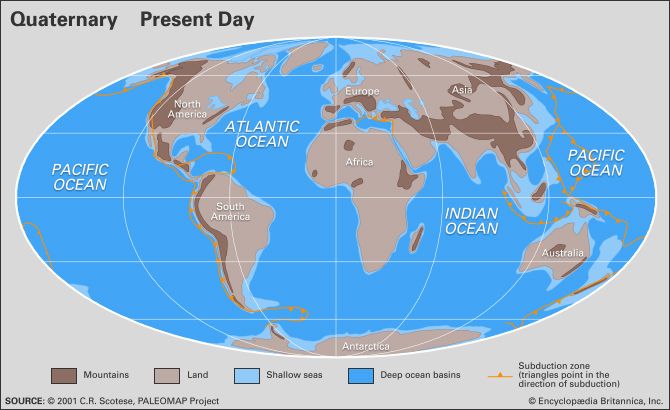
Lake Geneva was primarily shaped by the forces of Alpine glaciation during the Quaternary Period, which began approximately 2.6 million years ago.1
Geological Formation
The landscape of the region was significantly modeled by expanding ice tongues that reached depths of nearly one mile. These massive glaciers filled existing valleys and overflowed onto the surrounding plains, scouring the terrain and deepening the basins that would eventually hold water. As the climate warmed and the ice retreated, these ice-scoured depressions were left behind, forming elongated, deep lakes throughout the Alpine region.1
Geological Context
The broader geological history of the area is tied to the Alpine orogeny, a tectonic process that began roughly 65 million years ago. Powerful pressures from the south folded deep layers of rock—originally deposited in the ancient Tethys Sea—against crystalline bedrock, thrusting them upward to create the Alps3. Following this mountain-building phase, the relentless forces of erosion and subsequent glacial activity during the Quaternary Period carved the specific valleys and basins that define the modern landscape of Lake Geneva.1
What are some of the major cities and towns situated along Lake Geneva’s shores?
Lake Geneva is surrounded by several significant cities and towns that serve as major cultural, administrative, and tourist hubs. These settlements are distributed along both the Swiss and French shores of the lake.
Major Cities
- Geneva: Located at the western end of the lake where the Rhône River exits, Geneva is one of the largest cities on the lake and serves as a major international center.12
- Lausanne: Situated on the northern shore, Lausanne is another of the largest lakeside cities and has historical roots dating back to Roman settlements.12
Notable Towns and Resorts
The shores of Lake Geneva are home to numerous resorts and historic towns, many of which are known for their scenic beauty and tourism:
- Montreux: A fashionable health resort on the eastern shore in the Swiss canton of Vaud, famous for its annual Jazz Festival and the nearby Château de Chillon.16
- Vevey: Located near Montreux, this Swiss town is also situated on the northern shore and is known for its position on a small delta.12
- Thonon-les-Bains: A French spa town on the southern shore that serves as an administrative and commercial center for the Chablais region.17
- Évian-les-Bains: Another prominent French resort town located along the southern coast.1
What are some popular water activities and sports practiced on Lake Geneva?
Lake Geneva offers a variety of recreational opportunities that take advantage of its unusually blue and transparent waters. Popular water-based activities include:
- Swimming: The lake is a favored destination for swimming, particularly during the warmer months when residents and visitors utilize the various beaches and shoreline access points.1
- Sailing: Due to the lake’s expansive size and favorable conditions, sailing is a prominent pastime, with the water serving as a hub for both casual boating and competitive regattas.1
- Fishing: While the lake is noted for having a moderate population of fish—including 20 indigenous species and several introduced in the 19th century—it remains a popular location for anglers.91
Beyond these water-specific activities, the region’s geography supports a broader range of outdoor pursuits. The surrounding landscape, which rises toward the Jura Mountains and the Alps, provides excellent terrain for rock climbing and mountaineering. Additionally, the area is well-known for winter sports, including skiing and skating, which are widely practiced in the vicinity of the lake.91
Sources
- Lake Geneva — Encyclopædia Britannica
- Lake Geneva — Encyclopædia Britannica
- Alps - Geology — Encyclopædia Britannica
- Glarus Alps — Encyclopædia Britannica
- Geneva - Foundation and medieval growth — Encyclopædia Britannica
- Switzerland - Urban settlements — Encyclopædia Britannica
- Montreux — Encyclopædia Britannica
- Thonon-les-Bains — Encyclopædia Britannica
- Geneva - Cultural life — Encyclopædia Britannica
Published on · 3 min read