Lake Hāwea
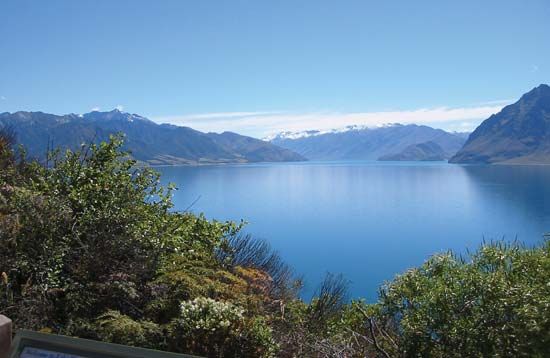
Lake Hāwea is situated at the heart of a popular resort area on the South Island of New Zealand. While the region is widely recognized as a destination for…
What are the main recreational activities and attractions associated with Lake Hāwea?
Lake Hāwea is situated at the heart of a popular resort area on the South Island of New Zealand. While the region is widely recognized as a destination for tourism and recreation, the provided search results do not specify the particular recreational activities or attractions available at the lake itself.1
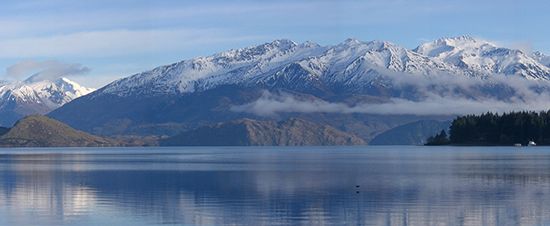
The lake is located near Lake Wānaka, separated by a narrow ridge of land known as The Neck. Both lakes are integral to the local resort region, which is known for its scenic landscape and proximity to the Southern Alps.21
What are some interesting legends or historical events associated with Lake Hāwea?
Lake Hāwea is named after a local Māori tribe, reflecting the deep cultural history of the region. While the lake is a significant geographical feature formed by a terminal moraine, there are no specific legends or historical events detailed in the available records beyond its naming and its first sighting by a European explorer, Nathanial Chalmers, in 1853.1
The lake serves as an important resource for the region, with its outlet dammed to support electricity generation for the Clutha River’s hydroelectric projects.1
We could dive deeper into the history of the Māori people or explore the geological formation of the South Island’s glacial lakes if you are interested.
How was Lake Hāwea formed, and what is its geological history?
Lake Hāwea was formed through the process of glacial activity in the west-central region of New Zealand’s South Island. The lake occupies a valley that was carved and subsequently dammed by a terminal moraine—a ridge-like accumulation of glacial debris, such as rock and till, deposited at the maximum extent of a glacier’s advance.13
The geological history of the surrounding area is complex, characterized by significant tectonic and mountain-building events. The region is part of the Southern Alps, which were uplifted during the Kaikōura Orogeny beginning approximately 23 million years ago. This orogeny, driven by the collision of the Pacific and Indian-Australian plates, created the rugged, faulted landscape that defines much of the South Island today. Over time, these mountains were subjected to intense glacial erosion, which excavated deep valleys that now host many of the region’s prominent lakes.45
How does Lake Hāwea contribute to New Zealand’s hydroelectric power generation?
Lake Hāwea plays a vital role in New Zealand’s energy infrastructure by serving as a controlled water source for downstream power generation. The lake empties into the Hāwea River, which is a tributary of the Clutha River/Mata-Au.
To manage water flow for electricity production, a dam was constructed at the lake’s outlet. This dam allows for the regulation of water levels, ensuring a consistent supply to support the Roxburgh hydroelectric project, a major power station located further downstream on the Clutha River. By controlling the discharge from Lake Hāwea, operators can optimize the water flow required to maintain the efficiency of the Roxburgh station’s storage reservoir and its overall power output.14
Sources
- Lake Hāwea — Encyclopædia Britannica
- Lake Wānaka — Encyclopædia Britannica
- terminal moraine — Merriam-Webster
- Clutha River/Mata-Au — Encyclopædia Britannica
- Otago — Encyclopædia Britannica
- New Zealand - Relief of New Zealand — Encyclopædia Britannica
- Lake Pukaki — Encyclopædia Britannica
- moraine — Encyclopædia Britannica
- Lake Te Anau — Encyclopædia Britannica
Published on · 2 min read