Lake Hefner
Lake Hefner is a storage reservoir located in northwestern Oklahoma City, United States, which serves as a primary source of domestic water for the…
What is Lake Hefner?
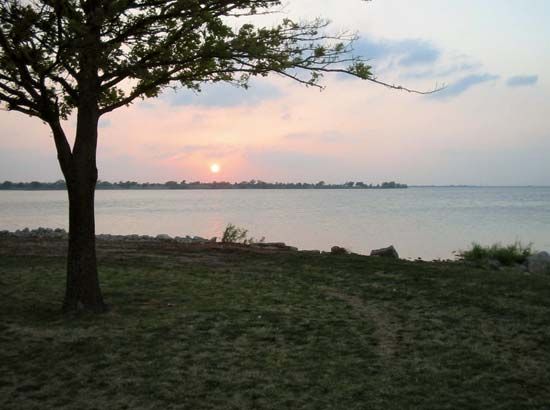
Lake Hefner is a storage reservoir located in northwestern Oklahoma City, United States, which serves as a primary source of domestic water for the metropolitan area.1
Completed in 1947, the reservoir is fed by the North Canadian River and the Canton Reservoir in Blaine County. It covers a surface area of approximately 4 square miles (10 square km) and reaches a maximum depth of about 94 feet (29 metres). Additionally, the lake is linked to Lake Overholser, another local reservoir, via a narrow canal situated at its southwest corner.1
How do reservoirs help manage city water supplies?
Reservoirs are essential components of water supply systems that manage municipal water by balancing supply and demand. Because natural river flows vary significantly due to weather, reservoirs impound water during periods of high flow to prevent flooding and store it for release during droughts or low-flow conditions2.2
These systems function in several ways:
- Storage and Reliability: Conservation reservoirs ensure a dependable supply by capturing runoff from a watershed for use when natural discharge is insufficient.2
- Pressure and Demand Management: Smaller, elevated reservoirs located within cities help maintain adequate water pressure in pipelines. They satisfy peak hourly demands and provide critical reserves for emergencies, such as fire control or pump failures.3
- Quality Control: Intake structures in large reservoirs often feature multilevel ports, allowing operators to withdraw water from the depth that offers the highest quality at any given time.2
- Multipurpose Utility: Many modern reservoirs are designed to serve multiple functions simultaneously, including hydroelectric power generation, irrigation, and recreation, alongside municipal supply.32
What are the main rivers that flow through Oklahoma?
The drainage pattern of Oklahoma is primarily defined by two major river systems: the Arkansas River and the Red River, along with their various tributaries.6
The Arkansas River System
The Arkansas River flows through Oklahoma, serving as a vital waterway that supports transportation and industry, particularly through the Arkansas River Navigation System. Its main tributaries within the state include:78
- Canadian River: A significant stream that flows eastward across the state, passing near Oklahoma City before joining the Arkansas River.79
- North Canadian River: A primary tributary of the Canadian River.9
- Cimarron River: One of the major rivers feeding into the Arkansas system.7
- Verdigris River: Known for its role in the state’s navigation system.7
- Grand River: Another key contributor to the Arkansas drainage basin.7
- Salt Fork: A tributary that joins the Arkansas River in Oklahoma.7
The Red River System
The Red River forms the southern boundary between Oklahoma and Texas. Its principal tributaries in the region include:10
What recreational activities are popular at Lake Hefner?
Sorry, the Britannica knowledge base does not contain information regarding the specific recreational activities available at Lake Hefner.
Sources
- Lake Hefner — Encyclopædia Britannica
- reservoir — Encyclopædia Britannica
- water supply system - Water treatment — Encyclopædia Britannica
- water supply system - Additional treatment — Encyclopædia Britannica
- water supply system - Surface water sources — Encyclopædia Britannica
- Oklahoma - Drainage — Encyclopædia Britannica
- Arkansas River — Encyclopædia Britannica
- Canadian River — Encyclopædia Britannica
- Red River — Encyclopædia Britannica
- Oklahoma - Transportation — Encyclopædia Britannica
- Oklahoma - Relief — Encyclopædia Britannica
Published on · 2 min read