Teshekpuk Lake
Climate change has significantly impacted Teshekpuk Lake and its surrounding wetland complex, which is considered one of the most important in the Arctic.…
How has climate change affected Teshekpuk Lake and its ecosystem?
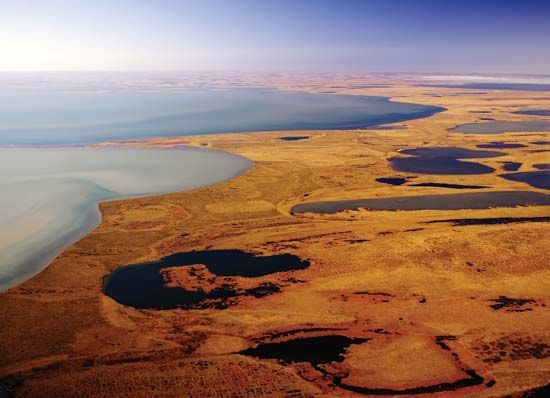
Climate change has significantly impacted Teshekpuk Lake and its surrounding wetland complex, which is considered one of the most important in the Arctic. Climatologists and ecologists have linked these environmental shifts to global warming1.
Key impacts include:
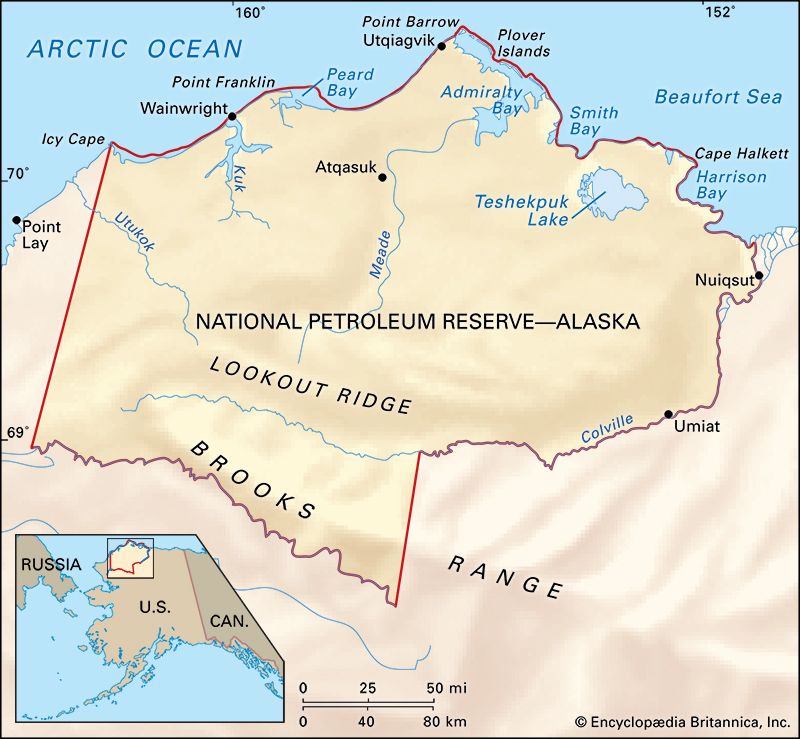
- Shoreline Erosion: The thin strip of land separating the lake from the Beaufort Sea is eroding due to increased wave activity and rising sea levels. This process accelerated between 1985 and 2005 as the protective band of sea ice began melting earlier in the summer.1
- Saltwater Contamination: As erosion continues, saltwater has penetrated inland, reaching up to 0.5 miles in some areas by the early 21st century. There is ongoing concern that this contamination will foul the habitats essential for caribou and migratory birds, such as geese and brants.1
These changes reflect broader trends observed across the Arctic, including the degradation of permafrost and shifting ice patterns.12
How does Teshekpuk Lake contribute to the local wildlife, especially migratory birds?
Teshekpuk Lake serves as a vital sanctuary for wildlife, particularly during the summer months. Its deep waters and surrounding wetlands provide essential protection and habitat for a dense concentration of species.1
The lake is especially significant for migratory birds, supporting large populations that rely on the area for breeding and molting:
- Greater White-fronted Geese: The lake provides a refuge for as many as 35,000 of these geese.1
- Pacific Black Brants: The area hosts approximately 37,000 brants, representing 20–30 percent of their total Pacific population.1
- Shorebirds: The surrounding wetlands offer critical habitat for various migratory shorebirds, including the spectacled eider.1
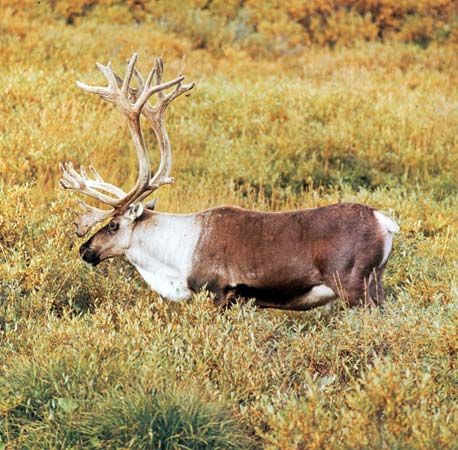
Ecologists consider this region to be the most important wetland complex in the Arctic due to its role in sustaining these migratory birds, as well as providing calving grounds for a herd of nearly 70,000 caribou and habitat for lemmings.1
What role does Teshekpuk Lake play in the broader Arctic ecosystem?
Teshekpuk Lake is a critical component of the Arctic ecosystem, recognized by many ecologists as the most important wetland complex in the region. As the world’s largest thermokarst lake, it is uniquely recharged by water from melting permafrost, anchoring a landscape that supports a vast array of wildlife.1
The lake functions as a vital summer sanctuary, providing deep-water protection for tens of thousands of migratory birds, including greater white-fronted geese and Pacific black brants. Its surrounding wetlands are equally essential, serving as a primary calving ground for a herd of nearly 70,000 caribou and providing habitat for lemmings and various shorebirds like the spectacled eider.1
Beyond its biological significance, the lake is a focal point for environmental study regarding global warming. Its vulnerability to shoreline erosion and saltwater intrusion highlights the fragility of Arctic ecosystems in the face of changing climate patterns.1
How was Teshekpuk Lake formed, and what is its geological history?
Teshekpuk Lake is classified as a thermokarst lake, a geological feature formed by the melting of permafrost. It is considered the largest lake of this type in the world. Its formation and ongoing existence are tied to the unique conditions of the Arctic landscape, where permanently frozen ground prevents standard underground drainage. As the surrounding permafrost melts, the resulting water recharges the lake, maintaining its surface area of approximately 320 square miles (830 square km).1
The region surrounding the lake is geologically complex, characterized by the North Slope of Alaska. This area features tundra-covered terrain underlain by permafrost, where only a shallow surface layer thaws during the brief summer. While the broader Arctic foothills contain folded and faulted sedimentary rocks dating back to the Paleozoic and Cretaceous periods, the lake itself is defined by the dynamic, ice-rich nature of its immediate environment.34
Sources
- Teshekpuk Lake — Encyclopædia Britannica
- Arctic National Wildlife Refuge — Encyclopædia Britannica
- Alaskan mountains - Physiography of the northern ranges — Encyclopædia Britannica
- Arctic - Drainage and soils — Encyclopædia Britannica
Published on · 3 min read