Lake Ilopango
Lake Ilopango is a lake located in south-central El Salvador, situated on the borders of the San Salvador, La Paz, and Cuscatlán departments. It occupies the…
What is Lake Ilopango?
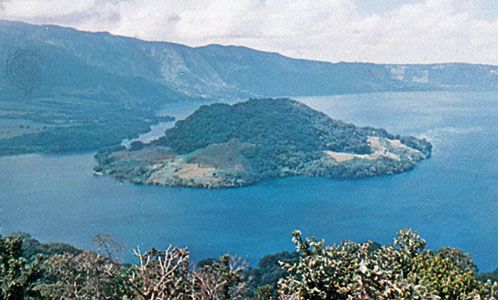
Lake Ilopango is a lake located in south-central El Salvador, situated on the borders of the San Salvador, La Paz, and Cuscatlán departments. It occupies the crater of an extinct volcano at an altitude of 1,450 feet (442 meters) and covers an area of 40 square miles (100 square kilometers).1
In 1880, a rise in water levels led to the formation of a natural drainage channel, the Río Jiboa, which resulted in the creation of a volcanic island in the center of the lake known as Ilopango Volcano. The lake experienced another significant water rise in 1928, which caused damage to shoreline properties. Today, the area is a popular tourist destination, with activities primarily concentrated around the towns of Asino and Ilopango on the western shore.1
How do volcanic craters turn into lakes?
Volcanic craters and depressions become lakes when they fill with water, a process driven by various forms of volcanic activity. While some lakes occupy unmodified cinder cones, these are rare; most volcanic lake basins form through more complex geological events.2
Mechanisms of Formation
- Caldera Collapse: Many large volcanic lakes form within calderas, which are bowl-shaped depressions created when the roof of an underground magma chamber collapses after being emptied by massive eruptions. Crater Lake is a classic example of this process.23
- Maars: These are craters formed by explosions that occur when volcanic activity interacts with non-volcanic material. These depressions often fill with water to create distinct, circular lakes.2
- Lava Flows: Lakes can also form when lava flows interrupt existing drainage patterns, effectively damming water in a valley or depression. Additionally, some basins arise from the collapse of the interior of a large lava flow, such as Lake Mývatn in Iceland.2
Over time, these basins may be further modified by secondary volcanic activity, such as the formation of small cones on the crater floor, or by tectonic movements.23
What are some other famous volcanic lakes in the world?
Beyond Lake Ilopango, there are several other notable volcanic lakes around the world, many of which occupy massive calderas formed by the collapse of volcanic structures:
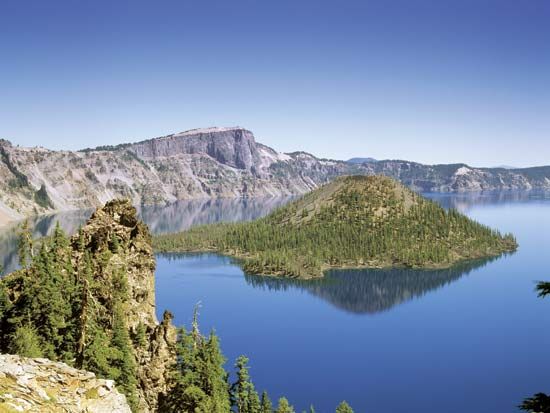
- Crater Lake: Located in Oregon, U.S., this is the deepest lake in the United States. It formed within the caldera of the collapsed Mount Mazama approximately 7,700 years ago and is renowned for its intense blue color and clarity.43
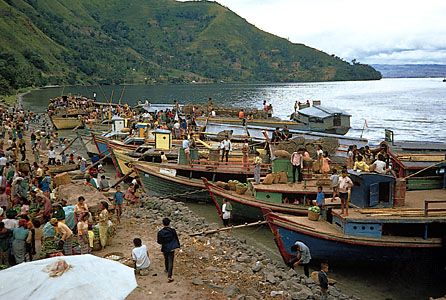
- Lake Toba: Situated in Sumatra, Indonesia, this lake occupies the world’s largest caldera. Its basin was created by a massive volcanic eruption between 71,000 and 74,000 years ago, an event so significant that some scientists believe it caused a global climate shift.563
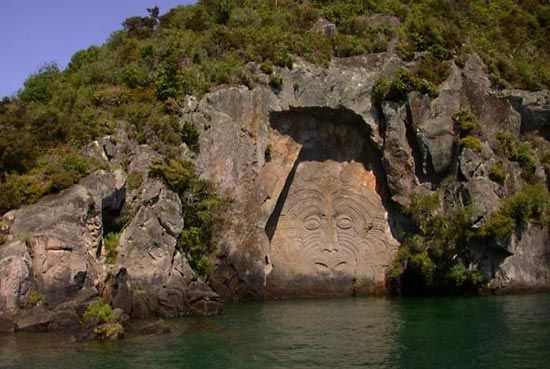
- Lake Taupō: As the largest lake in New Zealand, it sits on a volcanic plateau in the North Island. The lake occupies a large caldera formed by cataclysmic eruptions approximately 1,800 years ago and is surrounded by geothermal springs.75
- Lake Mývatn: Located in Iceland, this lake formed in a basin created by the collapse of the interior of a large lava flow, illustrating how volcanic activity can modify landscapes beyond simple crater formation.3
How do volcanic eruptions affect the surrounding environment?
Volcanic eruptions significantly impact the surrounding environment through both immediate, destructive hazards and long-term geological and climatic changes.
Immediate Environmental Hazards
Volcanic activity presents a wide array of immediate dangers to the landscape and life:
- Pyroclastic Flows: These fluidized mixtures of hot rock fragments, gases, and air are among the most destructive volcanic phenomena. Moving at speeds up to 160 km (100 miles) per hour with temperatures reaching 700 °C (1,300 °F), they incinerate and sweep away nearly everything in their path.1112
- Ash Falls: Continued explosive jetting can blanket large areas in ash. While not typically fatal to humans directly, heavy accumulation can cause roof collapses and widespread crop failure, potentially leading to famine.13
- Other Hazards: Eruptions may also trigger lava flows, toxic gas clouds, tsunamis, and mudflows, all of which cause significant property and environmental damage.14
Long-Term Effects
Volcanism also plays a constructive role in Earth’s evolution:
- Soil Enrichment: Over time, the weathering of volcanic ash creates nutrient-rich, loamy soils that are among the most fertile in the world, supporting dense populations and agriculture.1315
- Climatic Influence: Large eruptions can inject sulfur dioxide and aerosols into the stratosphere. These particles can form haze layers that reduce solar radiation, occasionally leading to temporary global cooling, such as the “year without a summer” following the 1815 eruption of Mount Tambora.1516
Sources
- Lake Ilopango — Encyclopædia Britannica
- lake - Basins formed by tectonism , volcanism, and landslides — Encyclopædia Britannica
- caldera — Encyclopædia Britannica
- Lake Taupō — Encyclopædia Britannica
- Crater Lake — Encyclopædia Britannica
- Lake Toba — Encyclopædia Britannica
- Mount Toba — Encyclopædia Britannica
- Philippines - Relief — Encyclopædia Britannica
- volcano - Major types — Encyclopædia Britannica
- volcano - Determinants of size and shape — Encyclopædia Britannica
- volcano - Ash falls — Encyclopædia Britannica
- volcano - Long-term environmental effects — Encyclopædia Britannica
- Climate change - Volcanic activity — Encyclopædia Britannica
- volcano - Pyroclastic flows — Encyclopædia Britannica
- pyroclastic flow — Encyclopædia Britannica
- volcano - Lava , gas, and other hazards — Encyclopædia Britannica
Published on · 3 min read