Lake Mar Chiquita
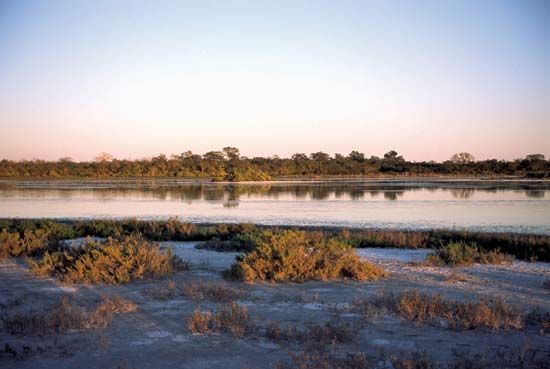
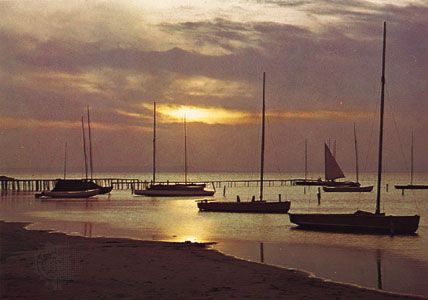
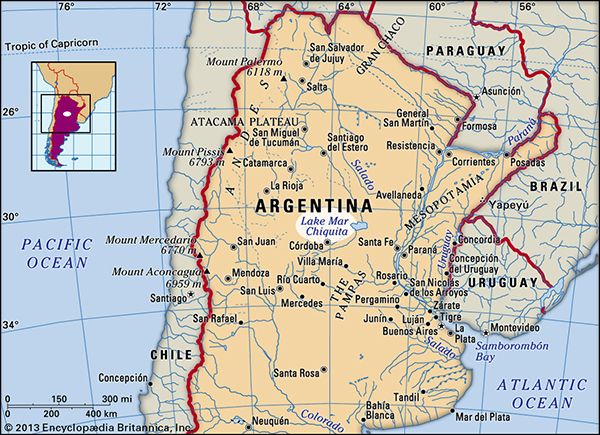
Lake Mar Chiquita is a large, saline lake located in the north-central Argentina province of Córdoba. Situated at the southern edge of the Gran Chaco, the…
What is Lake Mar Chiquita?
Lake Mar Chiquita is a large, saline lake located in the north-central Argentina province of Córdoba1. Situated at the southern edge of the Gran Chaco, the lake spans approximately 775 square miles (2,000 square km), measuring about 45 miles long and 15 miles wide.1
The lake is fed by the Dulce, Primero, and Segundo rivers during the flood season, but it lacks an eastern outlet, which contributes to its saline nature. The landscape includes several small islands, such as El Médano, and is bordered by vast saline marshes to the north. Additionally, the health resort of Miramar is located on the lake’s southern shore.1
Why is the water in Lake Mar Chiquita salty?
Lake Mar Chiquita is a closed, or endorheic, lake, which is the primary reason for its high salinity. While the lake receives water from the Dulce, Primero, and Segundo rivers, it lacks an eastern outlet to discharge that water.123
In such closed systems, water is lost only through evaporation. Because evaporation removes only pure water while leaving behind the dissolved minerals and salts carried in by the inflowing rivers, the concentration of salt in the remaining water increases over time. This process, combined with the lake’s location in a region where climatic conditions favor high evaporation rates, results in the high salt content that earned the lake its name, which translates to “Little Sea”.453
What kind of wildlife lives in the lake’s saline marshes?
Sorry, the Britannica knowledge base does not contain this information.
How do the rivers feeding the lake affect its size?
The size of Lake Mar Chiquita is significantly influenced by the seasonal flow of its primary tributaries. The lake is fed by the Dulce River from the north and the Primero and Segundo rivers from the southwest.1
These rivers provide the bulk of the lake’s water supply, particularly during the flood season. Because the lake is an endorheic basin—meaning it has no outlet to the east—the volume of water delivered by these rivers directly dictates the lake’s surface area and depth. During periods of high discharge, the lake expands, while reduced flow leads to a contraction in size as water is lost primarily through evaporation.1
Sources
- Lake Mar Chiquita — Encyclopædia Britannica
- lake - Water output — Encyclopædia Britannica
- Inland water ecosystem - Saline lakes — Encyclopædia Britannica
- Argentina - Drainage — Encyclopædia Britannica
- salinity — Encyclopædia Britannica
Published on · 2 min read