Lake Natron
Lake Natron is a lake located in northern Tanzania near the border with Kenya. Situated within the East African Rift System, it measures approximately 35…
What is Lake Natron?
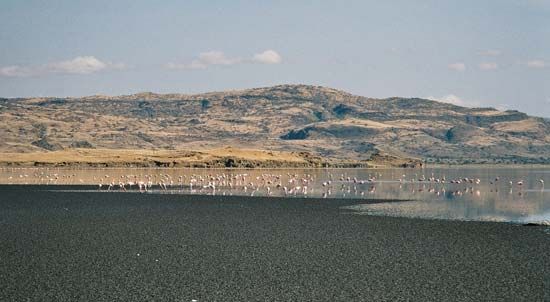
Lake Natron is a lake located in northern Tanzania near the border with Kenya. Situated within the East African Rift System, it measures approximately 35 miles long and 15 miles wide.12
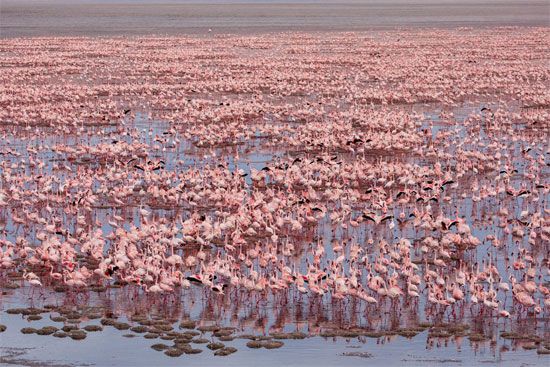
The lake is characterized by its deposits of salt, soda, and magnesite. Its warm waters serve as a vital breeding ground for Rift Valley flamingos. The area is also significant for paleoanthropology; near the lake at Peninj, researchers discovered the “Natron mandible,” a well-preserved fossilized jaw belonging to the hominid species Australopithecus boisei. Additionally, the Gelai volcano stands at the lake’s southeastern edge.12
How does the East African Rift System shape the landscape?
The East African Rift System is a massive geological feature that has fundamentally reshaped the African landscape over the past 30 million years as the African and Arabian plates have pulled apart. This process of continental rifting creates deep valleys and dramatic shifts in terrain through several key mechanisms:3
- Valley Formation: The upwelling of magma causes the crust to uplift and stretch, leading to the collapse of continental blocks into deep, fjordlike rift valleys. These valleys often sit 2,000 to 3,000 feet below the adjacent plateaus, with some escarpments dropping more than 9,000 feet.34
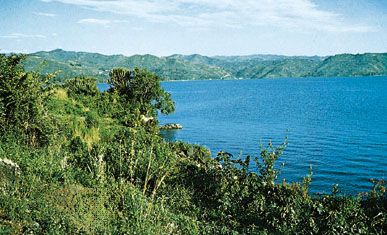
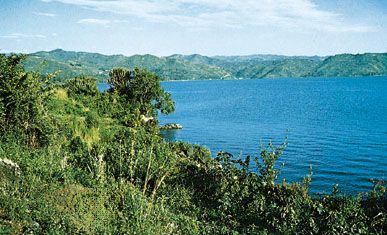
- Volcanism: Extensive volcanic activity has accompanied the rifting, producing iconic peaks such as Kilimanjaro and Mount Kenya. In some areas, volcanic eruptions have blocked natural drainage, creating or altering lakes like Lake Kivu.34
- Hydrological Changes: The rift’s formation has diverted rivers and created a series of deep, often saline lakes. Tectonic movements have even caused the reversal of river drainage patterns, such as those that once flowed westward but were redirected by the rising shoulders of the Western Rift Valley.54
What makes the water in Lake Natron so alkaline?
The high alkalinity of Lake Natron is primarily due to the presence of significant deposits of salt, soda, and magnesite within the lake basin. Similar to other soda lakes in the East African Rift System, the lake receives a continuous supply of sodium carbonate—commonly known as natron—from alkaline waters of deep-seated origin.17
Furthermore, the lake is situated in a hot, dry environment characterized by high rates of evaporation. As water evaporates, these mineral salts become concentrated in the remaining solution, leading to the highly alkaline conditions that define the lake’s chemistry.74
Why is the Peninj mandible significant to human evolution?
The Peninj mandible is a significant fossil in the study of human evolution because it provides an almost perfectly preserved jaw of the hominin species Paranthropus boisei. Discovered in 1964 near Lake Natron in Tanzania, the specimen features a complete set of adult teeth, offering critical anatomical evidence of the species’ robust jaw structure, which includes small incisors and canines paired with large premolars and molars.8
Beyond the fossil itself, the Peninj site is vital for understanding early hominin behavior. Approximately 120 Stone Age artifacts, including hand axes and cleavers associated with the Acheulean industry, were unearthed in the vicinity. While the mandible dates to roughly 1.5 million years ago, the presence of these tools near such a significant paleoanthropological site helps researchers map the technological and evolutionary landscape of the region.8
Sources
- Lake Natron — Encyclopædia Britannica
- Natron, Lake — Merriam-Webster
- East African Rift System — Encyclopædia Britannica
- East African lakes - Geology, climate, and hydrology — Encyclopædia Britannica
- Africa - Relief — Encyclopædia Britannica
- plate tectonics - Continental rifting — Encyclopædia Britannica
- thermonatrite — Encyclopædia Britannica
- Peninj mandible — Encyclopædia Britannica
Published on · 3 min read