Lake Kivu
Lake Kivu plays a significant role in shaping the local environment of the Western Rift in East Africa. Unlike the hot, dry conditions found in…
How does Lake Kivu influence the local climate and weather patterns in the region?
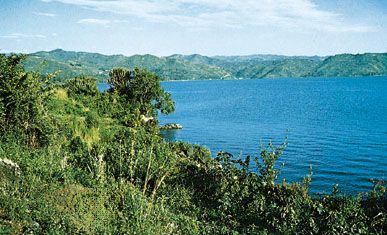
Lake Kivu plays a significant role in shaping the local environment of the Western Rift in East Africa. Unlike the hot, dry conditions found in lower-altitude inland troughs, the region surrounding Lake Kivu experiences more humid conditions. This increased humidity is primarily driven by moist air moving into the area from the Congo basin.12
Generally, large bodies of water exert a modifying influence on local climate by storing heat during warmer periods and releasing it more gradually during cooler ones. This process typically results in a stabilizing effect on the local atmosphere, often leading to milder temperatures compared to surrounding landmasses. While large lakes can also trigger localized weather phenomena such as sudden storms or, in some latitudes, lake-effect precipitation, the specific climatic profile of the Kivu region is most notably defined by its elevated, humid character within the Western Rift.3412
What is the ecological significance of Lake Kivu in the African Great Lakes region?
The ecological significance of Lake Kivu is defined by its unique geological history, its specific biological limitations, and its chemical composition. Situated within the Western Rift, the lake was historically connected to the Nile drainage system before volcanic activity in the Virunga Mountains blocked its northern outflow and reversed its drainage toward Lake Tanganyika.16
Ecologically, Lake Kivu is characterized by the following features:
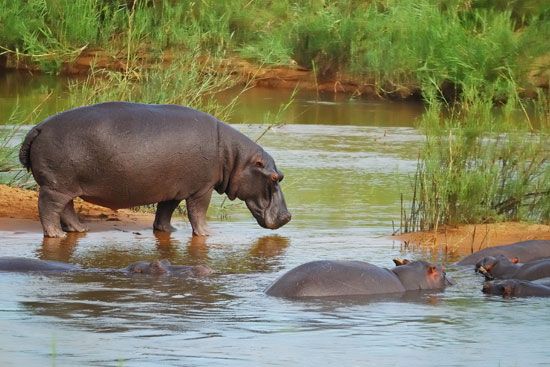
- Limited Biodiversity: Compared to other African Great Lakes, Lake Kivu has a relatively poor and unvaried fish population. It lacks certain widespread aquatic species, such as the crocodile and the hippopotamus, which are deterred by the lake’s geography and the cool mountain torrents of its outflow rivers.13
- Biological Desertification: A critical aspect of the lake’s ecology is that 99 percent of its volume is permanently deoxygenated. This deep-water zone constitutes a biological desert, rendering the majority of the lake’s depth uninhabitable for most aquatic life.6
- Chemical Composition: The deep waters of Lake Kivu contain lethal concentrations of hydrogen sulfide and vast volumes of dissolved methane. While these gases present significant environmental and safety considerations, they also represent a potential energy resource for the densely populated surrounding region.16
What types of fish species are found in Lake Kivu, and how do they adapt to its unique environment?
Lake Kivu possesses a fish population that is notably limited in both variety and abundance compared to other African Great Lakes. The lake’s unique and challenging environment significantly restricts the types of species that can survive there.81
Environmental Constraints
The primary factor limiting fish life in Lake Kivu is its chemical and physical composition:
- Deoxygenation: Approximately 99 percent of the lake’s volume is permanently deoxygenated, creating a biological desert that renders the vast majority of its depth uninhabitable for aquatic life.16
- Toxic Gases: The deep waters contain lethal concentrations of hydrogen sulfide and vast quantities of dissolved methane, which further restrict the habitable zones for fish.16
- Geographic Isolation: The lake is sheltered from the migration of various species by its geography, including falls in its outflow river and the presence of cool mountain torrents, which act as barriers to the spread of certain reptiles and fish found elsewhere in the region.1
Because of these extreme conditions, the lake does not support the diverse, endemic fish communities—such as the extensive Cichlidae populations—found in neighboring lakes.1
Where is Lake Kivu located, and what countries border it?
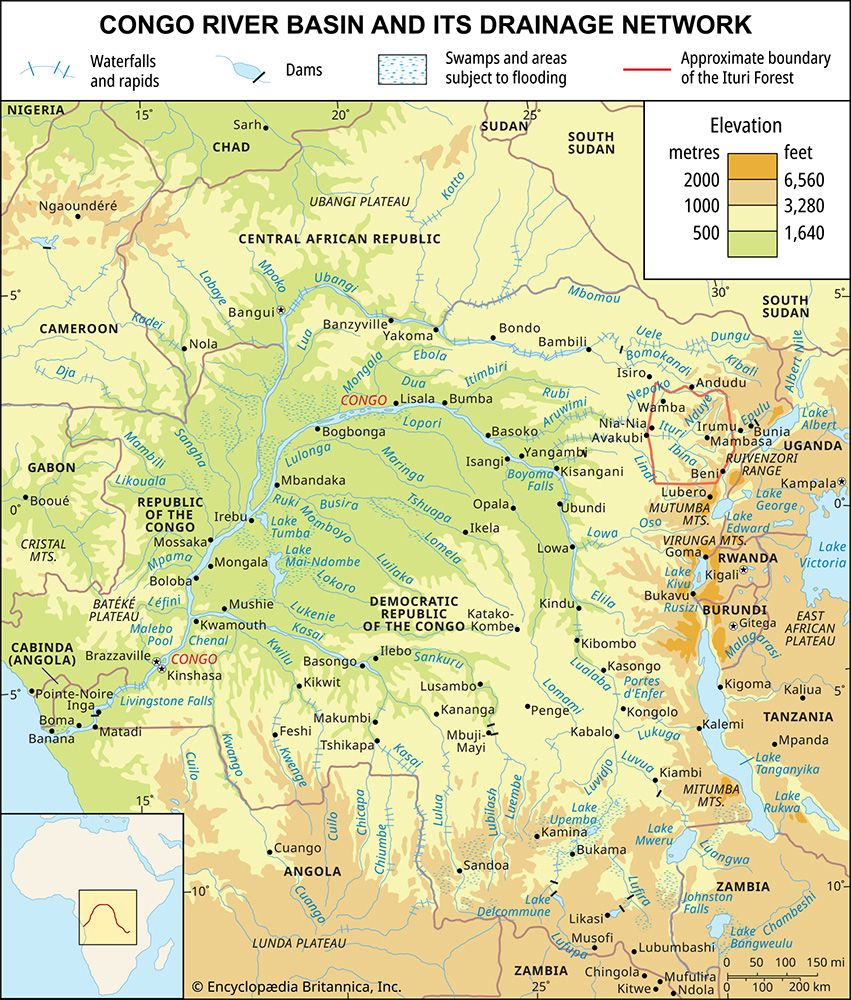
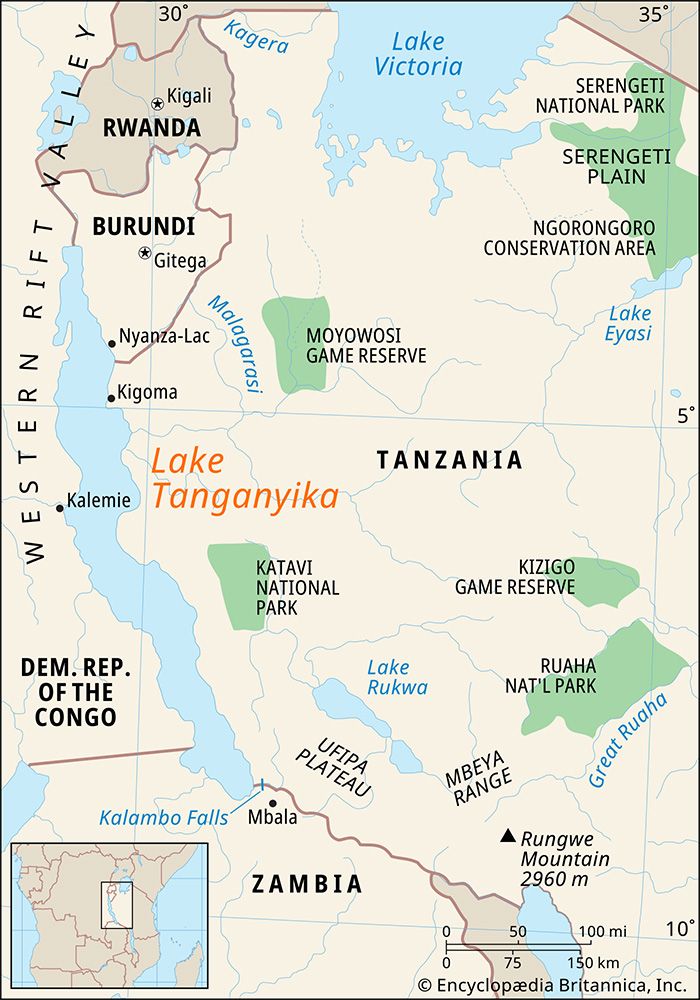
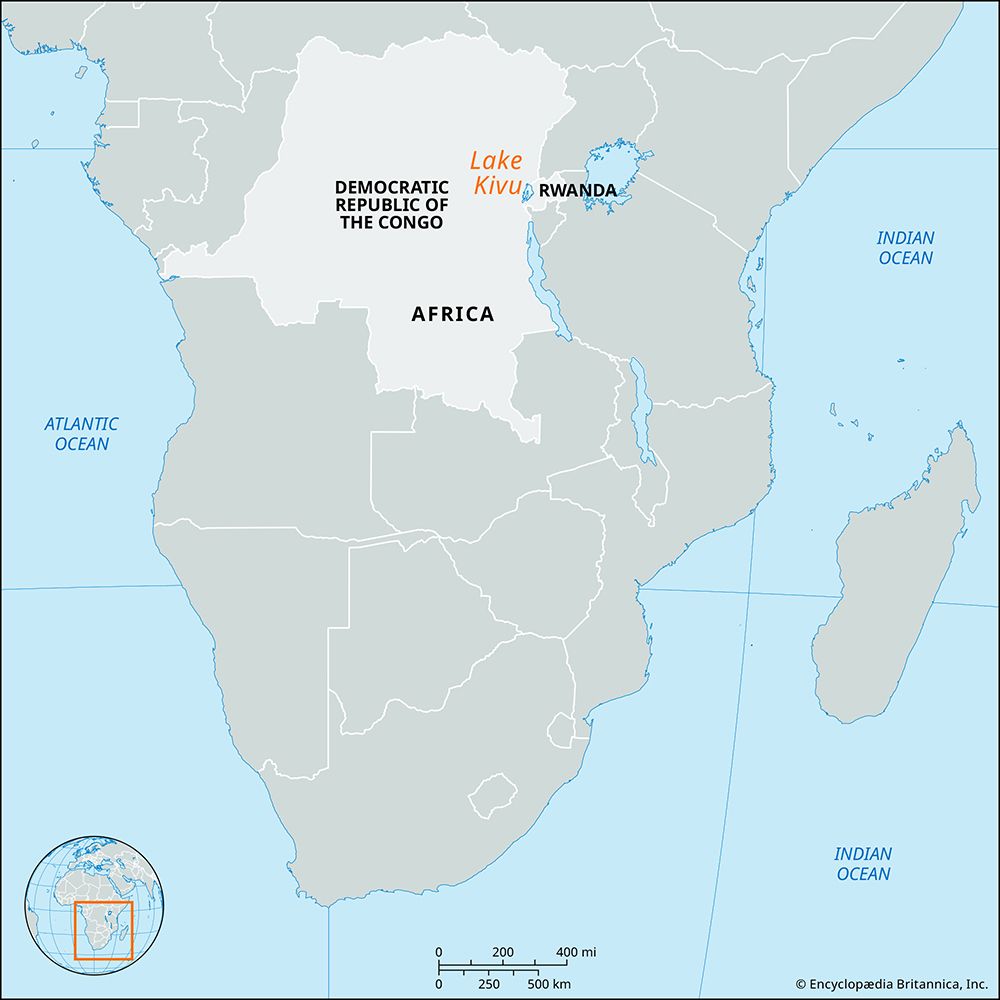
Lake Kivu is located in East Africa within a structural trough of the Earth. It is situated between the Democratic Republic of the Congo to the west and Rwanda to the east.19
Sources
- Lake Kivu — Encyclopædia Britannica
- East African lakes: Top Questions — Encyclopædia Britannica
- East African lakes - Geology, climate, and hydrology — Encyclopædia Britannica
- lake - Problems and effects — Encyclopædia Britannica
- Great Lakes - Hydrology and climate — Encyclopædia Britannica
- East African lakes - Plant and animal life — Encyclopædia Britannica
- lacustrine ecosystem — Encyclopædia Britannica
- East African lakes - Resource exploitation — Encyclopædia Britannica
- Rwanda - Land — Encyclopædia Britannica
Published on · 3 min read