Paleoanthropology
Several key fossil sites worldwide have been instrumental in shaping our understanding of human evolution. These locations provide critical evidence…
What are some of the key fossil sites around the world that have contributed to our understanding of human evolution?
Several key fossil sites worldwide have been instrumental in shaping our understanding of human evolution. These locations provide critical evidence regarding the origins, anatomy, and dispersal of early hominins:
- Olduvai Gorge, Tanzania: Often called the “Cradle of Mankind,” this site offers a continuous record of human evolution spanning the last two million years, including significant finds of Homo habilis and Paranthropus boisei.1
- Hadar, Ethiopia: Famous for the discovery of “Lucy,” a 40-percent-complete skeleton of Australopithecus afarensis, which provided evidence that bipedalism preceded increased brain size.2
- Lake Turkana, Kenya: The Koobi Fora site is one of the world’s richest sources of hominin remains, representing multiple species of Homo and australopiths.3
- Sterkfontein, South Africa: Part of the “Cradle of Humankind,” these caves have yielded numerous Australopithecus africanus fossils, including the nearly complete “Little Foot” skeleton.4
- Dmanisi, Georgia: One of the most ancient human habitation sites in Eurasia, providing crucial evidence for the early dispersal of Homo erectus out of Africa.56
- Laetoli, Tanzania: Renowned for its 3.56-million-year-old volcanic ash trails containing remarkably humanlike footprints.7
- Zhoukoudian, China: Historically significant for the discovery of “Peking man,” which helped establish the presence of Homo erectus in Asia.8
What challenges do paleoanthropologists face when studying human evolution?
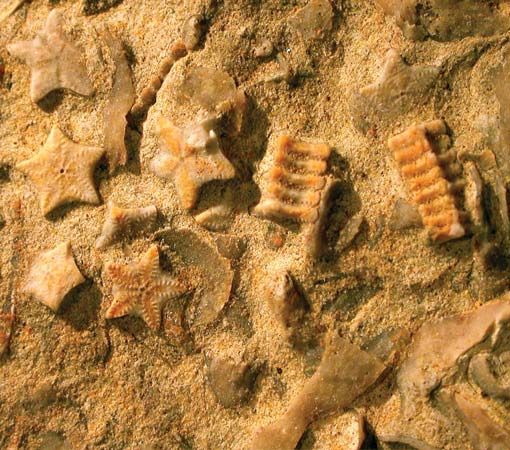
Paleoanthropologists face significant challenges in reconstructing the history of human evolution, primarily due to the nature of the fossil record. Because fossilization is a rare event, only a tiny fraction of past organisms are preserved, and even fewer are recovered and studied.9
Key challenges include:
- Interpreting Fossil Significance: Beyond simply describing remains, researchers must evaluate the significance of specific traits. This involves moving away from outdated concepts like orthogenesis toward understanding adaptive radiation and parallel evolution.10
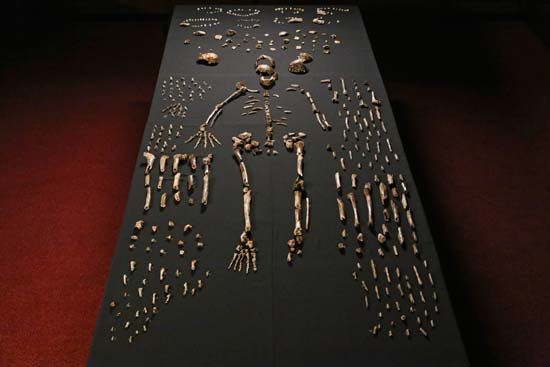
- Taxonomic Classification: Distinguishing between species can be difficult. For example, debates persist regarding whether Neanderthals and modern humans were distinct biological species or if they interbred, as evidenced by DNA analysis. Similarly, species with a mix of primitive and modern features, such as Homo naledi, complicate efforts to place them accurately on the evolutionary timeline.1112
- Dating and Chronology: Establishing precise dates for fossils requires complex radiometric dating techniques. Inaccurate dating can lead to confusion regarding the coexistence of different hominin species.12
- Multidisciplinary Complexity: The field requires integrating expertise from archaeology, molecular biology, primatology, and the physical sciences to interpret both skeletal remains and artifacts.1310
What can paleoanthropology tell us about the development of human culture and behavior?
Paleoanthropology provides essential insights into the development of human culture and behavior by analyzing the archaeological record and biological evidence. While many aspects of early human life remain elusive, researchers have identified several key milestones:
Tool Use and Subsistence
The development of stone tools, such as the Oldowan and Acheulean industries, marks a significant intellectual advancement. These artifacts demonstrate that early hominins, such as Homo habilis, possessed the cognitive ability to fashion tools for specific purposes, such as butchering animal carcasses. While early hominins were likely scavengers, the use of tools allowed them to access animal products, which was a critical step in their survival.1415
The Control of Fire
The mastery of fire was a transformative event in human history. Beyond providing warmth and protection, fire enabled the cooking of food, which improved nutrition and fertility. It also served as a tool for hunting, clearing land, and eventually, the development of complex technologies like pottery and metallurgy.1615
Language and Symbolic Thought
The origins of language and symbolic behavior are among the most challenging questions in the field. While some researchers look for evidence of speech in cranial features, these interpretations are often debated. However, the presence of symbolically mediated artifacts—such as shell beads and personal ornaments—indicates that early humans were capable of complex, abstract thought long before the development of writing.1417
Social Structure and Cognition
Paleoanthropology suggests that early human social structures were likely shaped by a balance of competitive and cooperative behaviors, similar to other social animals. The emergence of language eventually allowed for the coordination of effort on a scale impossible for other primates, facilitating more organized and efficient societies.1815
Who are some of the most important early hominid species discovered by paleoanthropologists?
Paleoanthropologists have identified numerous hominid species that provide insight into the complex “family bush” of human evolution. Rather than a linear progression, human history is characterized by a process of experimentation, with various species emerging, competing, and often going extinct.20
Some of the most significant early hominid species include:
- Sahelanthropus tchadensis: Dating to 7–6 million years ago, this is one of the earliest candidates for hominin status. It features a mix of ape-sized braincases and hominin-like dental traits, though its status as a direct ancestor to modern humans is debated.20
- Ardipithecus ramidus: Known through the famous specimen “Ardi,” this species (dated to about 4.4 million years ago) shows evidence of bipedalism while retaining features for climbing trees.20
- Australopithecus afarensis: Including the famous “Lucy,” this species lived about 3.2 million years ago. It possessed a more humanlike pelvis and knee joint, indicating upright walking.20
- Homo habilis: Known as “handy man,” this species (2.4–1.5 million years ago) is considered one of the earliest members of the genus Homo. Its discovery was a turning point, as it showed increased cranial capacity and the use of stone tools.21
- Homo erectus: Flourishing from 1.9 million to about 200,000 years ago, this species was likely the first to control fire and dispersed widely across Africa, Europe, and Asia.2223
- Neanderthals (H. neanderthalensis): Inhabiting Eurasia until about 24,000 years ago, they are the best-known archaic human group. Genetic evidence suggests they interbred with modern humans, challenging the idea that they were a completely distinct biological species.2425
- Homo naledi: A more recent discovery from South Africa, this species exhibits a unique mix of primitive (small brain) and modern (humanlike skeleton) features.26
Sources
- Homo erectus - European fossils — Encyclopædia Britannica
- 11 Caves That Made History - Sterkfontein Caves — Encyclopædia Britannica
- Dmanisi — Encyclopædia Britannica
- Hadar — Encyclopædia Britannica
- Olduvai Gorge — Encyclopædia Britannica
- Lake Turkana remains — Encyclopædia Britannica
- Laetoli — Encyclopædia Britannica
- Homo erectus - Other Asian fossils — Encyclopædia Britannica
- paleoanthropology — Encyclopædia Britannica
- Anthropology - Paleoanthropology — Encyclopædia Britannica
- Neanderthal - Neanderthal classification — Encyclopædia Britannica
- Measuring the Reign of Homo naledi — Encyclopædia Britannica
- evolution - The fossil record — Encyclopædia Britannica
- Homo habilis - Behavioral inferences — Encyclopædia Britannica
- fire — Encyclopædia Britannica
- human evolution - Speech and symbolic intelligence — Encyclopædia Britannica
- Central Africa - Early toolmakers — Encyclopædia Britannica
- Animal social behavior - General characteristics — Encyclopædia Britannica
- evolutionary psychology - History and background — Encyclopædia Britannica
- Paleolithic Period: Top Questions — Encyclopædia Britannica
- Homo habilis — Encyclopædia Britannica
- Homo sapiens - Origin — Encyclopædia Britannica
- Australopithecus - Quality of the fossil record — Encyclopædia Britannica
- Australopithecus - Transition to Homo — Encyclopædia Britannica
- Homo erectus — Encyclopædia Britannica
- Neanderthal — Encyclopædia Britannica
Published on · 4 min read