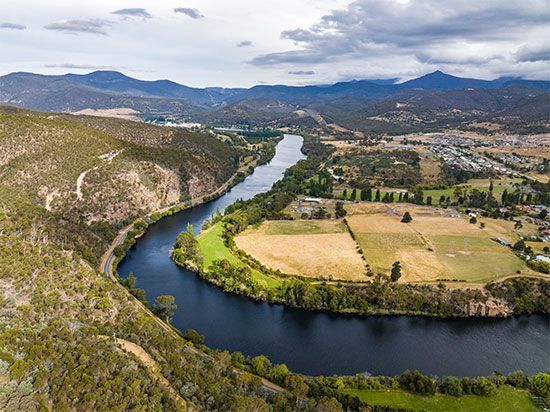
Lake Saint Clair
Lake Saint Clair is a popular destination for summer recreation. While specific activities are not detailed in the provided records, the lake's expansive…
What recreational activities are popular at Lake Saint Clair?
Lake Saint Clair is a popular destination for summer recreation. While specific activities are not detailed in the provided records, the lake’s expansive, shallow basin and its location between Michigan and Ontario make it a well-known regional hub for outdoor leisure during the warmer months.12
What role does Lake Saint Clair play in Tasmania’s hydroelectric power generation?
Lake Saint Clair plays a vital role in Tasmania’s renewable energy infrastructure by serving as a primary water source for the Tarraleah hydroelectric-power station. As the source of the west arm of the River Derwent, the lake contributes to the broader network of power stations located throughout the River Derwent valley, which collectively supply the majority of the state’s energy needs.345
While many other lakes in Tasmania, such as Lake King William, were created as artificial reservoirs specifically for hydroelectric development, Lake Saint Clair is a natural piedmont lake that has been integrated into the state’s extensive hydroelectric system. This system leverages the rugged terrain and heavy, well-distributed precipitation of central and western Tasmania to maintain a consistent supply of renewable energy.365
What is the size and depth of Lake Saint Clair?
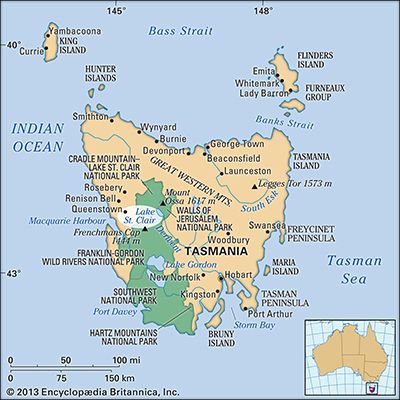
Lake Saint Clair is a natural lake located in west-central Tasmania, Australia. Its physical dimensions are as follows:
- Area: 11 square miles (28 square km)3
- Dimensions: 9 miles by 1 mile (14.5 by 1.6 km)3
- Maximum Depth: Approaches 700 feet (215 metres) on the western side, which distinguishes it as Australia’s deepest lake3
The lake sits at an elevation of 2,417 feet (737 metres) and occupies a valley that was historically carved by glacial activity and subsequently dammed by a moraine.3
How does Lake Saint Clair contribute to Tasmania’s water resources and ecosystem?
Lake Saint Clair serves as a critical component of Tasmania’s water resources, primarily acting as the source of the west arm of the River Derwent. This connection integrates the lake into a significant regional drainage system that supports both agricultural irrigation and hydroelectric power generation, with its waters utilized by the Tarraleah hydroelectric-power station.
Regarding its ecosystem, the lake is situated within the Cradle Mountain–Lake St. Clair National Park, which is part of the Tasmanian Wilderness UNESCO World Heritage site. The lake itself occupies a deep valley formed by glacial activity and is dammed by a moraine, creating a unique natural environment that supports the biodiversity of the surrounding protected wilderness area.35
Sources
- Lake Saint Clair — Encyclopædia Britannica
- Saint Clair, Lake — Merriam-Webster
- Lake Saint Clair — Encyclopædia Britannica
- River Derwent — Encyclopædia Britannica
- Tasmania - Drainage — Encyclopædia Britannica
- Tasmania - Resources and power — Encyclopædia Britannica
- Cradle Mountain — Encyclopædia Britannica
- Great Lakes - Hydrology and climate — Encyclopædia Britannica
Published on · 2 min read