River Derwent
The name "River Derwent" refers to several distinct watercourses in England and Australia.
What is River Derwent?
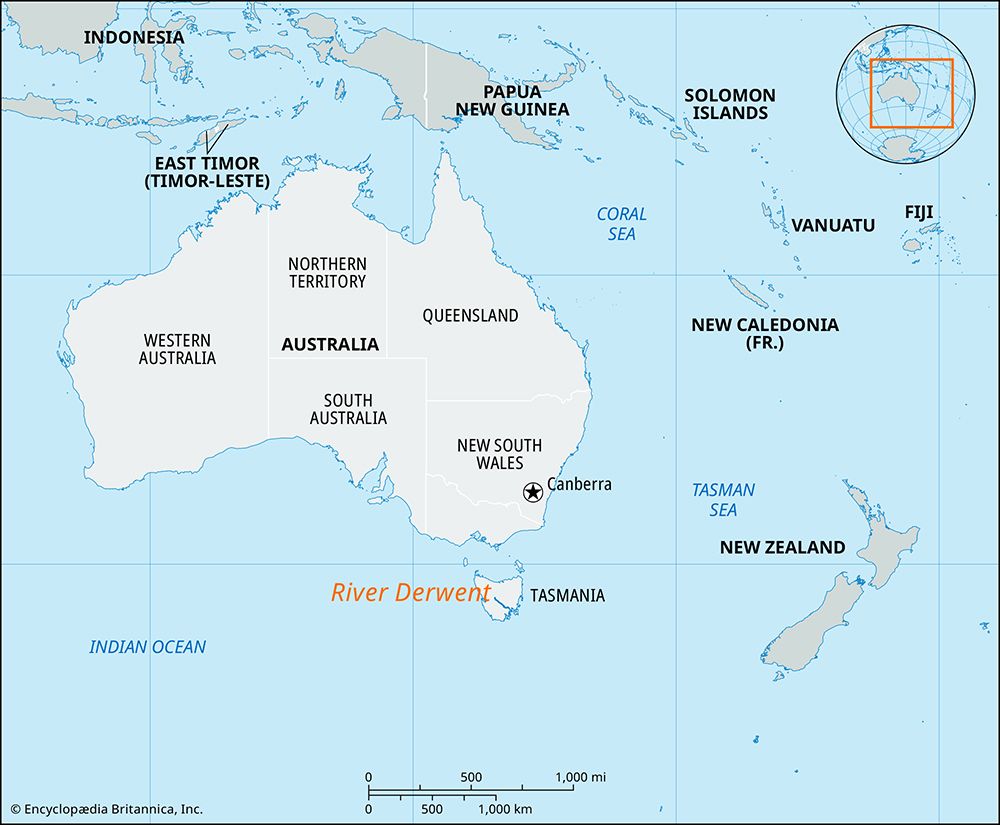
The name “River Derwent” refers to several distinct watercourses in England and Australia.
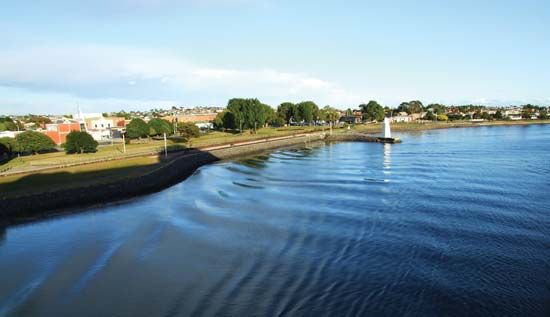
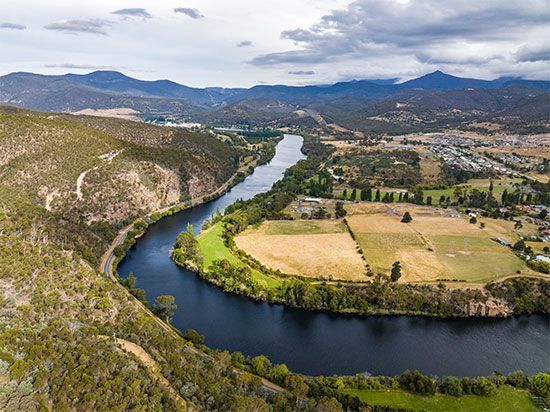
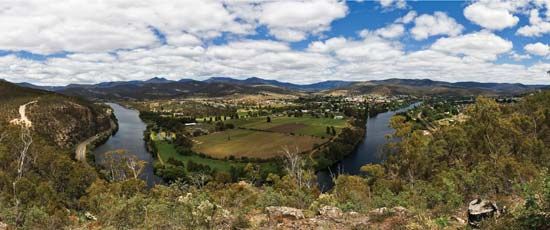
- River Derwent (Tasmania, Australia): This river rises in Lake St. Clair and flows 113 miles southeast into Storm Bay. Its estuary serves as a deepwater port for the city of Hobart, and its upper tributaries are vital for hydropower generation.1
- River Derwent (North Yorkshire, England): This 57-mile river flows through a unique course of gorges and vales, shaped by ice sheet blockages during the glacial period. Its name is derived from a Celtic term meaning “river where oak trees grow abundantly”.2
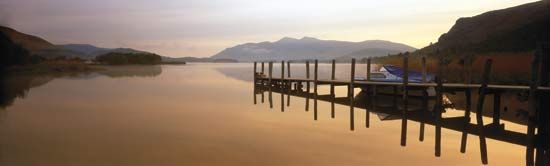
- River Derwent (Cumbria, England): This river flows through the Lake District, feeding into Derwent Water, a prominent lake near the town of Keswick.3
How do glaciers shape the path of a river?
Glaciers significantly alter the path and character of rivers through both direct physical displacement and the modification of sediment loads.
Drainage Derangement and Diversion
Continental ice sheets can completely displace existing fluvial systems. As glaciers advance, they may block pre-existing drainage routes, forcing rivers to find new paths. In mountainous regions, glaciers can breach preglacial divides, creating new drainage lines that persist even after the ice has melted. This process often results in “anomalous” river courses that cut through major relief barriers. Furthermore, the deposition of till sheets can conceal original topography, providing entirely new slopes for postglacial streams to follow.4
Sedimentation and Channel Patterns
Glaciers influence river morphology by altering the balance between sediment load and water discharge:
- Braided Channels: During glaciation, rivers draining meltwater from glacier margins are often overwhelmed by massive quantities of coarse sediment. This forces the river to adopt a braided-channel pattern to manage the debris.56
- Valley Filling: As rivers emerge from ice margins, they deposit thick sequences of glacial outwash, causing the valley floor to aggrade.56
- Terrace Formation: When glacial conditions transition to interglacial periods, the reduction in sediment load often causes rivers to entrench into these previously deposited fills, leaving behind river terraces along the valley sides.56
Catastrophic Flooding
Glaciers can also act as temporary dams, creating large proglacial or subglacial lakes. The sudden failure of these ice dams can trigger catastrophic floods, such as jökulhlaups, which can carve new channels, waterfalls, and deep grooves into the bedrock, permanently altering the landscape.5
What is the significance of the Lake District in England?
The Lake District is a renowned scenic region and national park in Cumbria, England, celebrated for its dramatic landscape of mountains and glacial lakes. Its significance spans geological, cultural, and historical dimensions:
- Geological Importance: The region features a unique dome-like structure shaped by intense glacial action. Glaciers deepened valleys and carved out the rock basins that now hold major lakes, such as Windermere, and created numerous “hanging valleys” with waterfalls.9
- Cultural and Literary Legacy: The district is famously associated with the Lake poets, including William Wordsworth, Samuel Taylor Coleridge, and Robert Southey. The landscape served as a profound source of creative inspiration for these writers, as well as for children’s author Beatrix Potter. Beatrix Potter.10
- Economic and Social Evolution: Historically, the area transitioned from early agriculture and Cistercian wool production to industrial activities like mining and quarrying. Today, it is a major tourist destination, with its status as a national park (established in 1951) helping to preserve its distinctive character amidst modern demands for recreation and water resources.9
How is hydropower generated from river systems?
Hydroelectric power is generated by converting the potential energy of falling or fast-flowing water into mechanical energy and subsequently into electricity.12
The Generation Process
Most hydroelectric systems utilize a dam to impound a river, creating a reservoir that stores water at a higher elevation. This elevation difference, known as the head, is critical because the potential power is directly proportional to it.12
- Intake: Water is directed from the reservoir into large pipes or tunnels called penstocks, which lead the water downward to a lower elevation.12
- Turbines: As the water exits the penstocks, its force causes turbines to rotate. Various designs, such as Francis, Pelton, or Kaplan turbines, are used depending on the specific flow and head conditions.1213
- Electricity Production: The rotating turbines drive generators, which convert the mechanical energy into electricity. Transformers then increase the voltage for efficient long-distance transmission.12
To manage fluctuating demand, some facilities use pumped-storage systems, which pump water back to an elevated reservoir during off-peak hours to be reused when demand is high.12
Sources
- River Derwent — Encyclopædia Britannica
- River Derwent — Encyclopædia Britannica
- Derwent Water — Encyclopædia Britannica
- Pleistocene Epoch - Fluvial environments — Encyclopædia Britannica
- river - Non-fluvial invasion and deposition — Encyclopædia Britannica
- river - Origin of river terraces — Encyclopædia Britannica
- ice in lakes and rivers - Ice buildups — Encyclopædia Britannica
- glacier - Flow of the ice sheets — Encyclopædia Britannica
- Lake District — Encyclopædia Britannica
- Lake poet — Encyclopædia Britannica
- South Lakeland — Encyclopædia Britannica
- Did you know? — Merriam-Webster
- hydroelectric power — Encyclopædia Britannica
- turbine - History of water turbine technology — Encyclopædia Britannica
- turbine - Output and speed control — Encyclopædia Britannica
Published on · 3 min read