Lake Superior
Lake Superior, the largest of the Great Lakes, offers a wealth of recreational opportunities and scenic attractions across its diverse shoreline in the…
What are some popular recreational activities and tourist attractions around Lake Superior?
Lake Superior, the largest of the Great Lakes, offers a wealth of recreational opportunities and scenic attractions across its diverse shoreline in the United States and Canada.
Popular Recreational Activities
Outdoor enthusiasts flock to the region for a variety of activities, including:
- Water Sports: Boating, kayaking, diving, and swimming are popular, particularly in areas like the Apostle Islands National Lakeshore.
- Hiking and Exploration: The region features extensive trail systems, such as the North Country National Scenic Trail, which traverses Pictured Rocks National Lakeshore.
- Fishing and Hunting: Sportfishing and seasonal hunting are foundational to the regional recreation industry.12
Notable Tourist Attractions
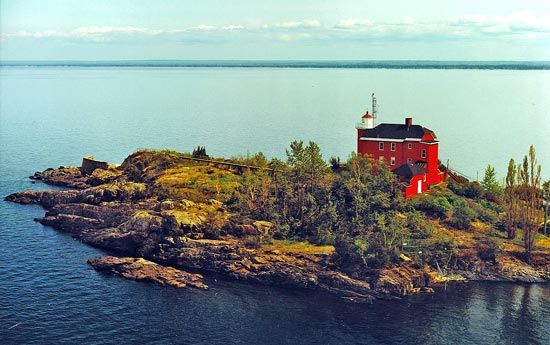
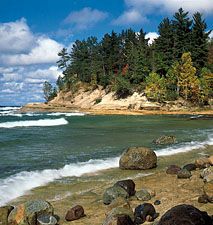
- National Lakeshores: Pictured Rocks is famous for its colorful sandstone cliffs and dunes, while the Apostle Islands are noted for their sea caves, lighthouses, and historic brownstone quarries.34
- Provincial Parks: Lake Superior Provincial Park in Ontario is renowned for its rugged granite hills and ancient Agawa pictographs.5
- Historic Sites: Visitors can explore maritime history at museums, such as the one in Grand Marais, or visit historic light stations.43
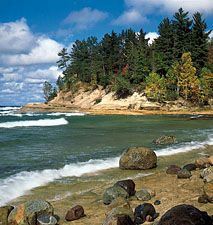
How does Lake Superior impact the climate and weather of the surrounding region?
Lake Superior, like other large bodies of water, significantly modifies the climate of its surrounding region due to its ability to store and release heat. Because water loses heat more gradually than land, the lake acts as a thermal buffer, cooling the air passing over it during the summer and warming it during the winter.67
This process results in milder seasonal temperatures than would otherwise be expected in the region. However, the lake also influences local weather patterns through moisture exchange:
- Lake-Effect Snow: During winter, cold air moving over the relatively warmer lake water picks up moisture and heat. This creates unstable air masses that produce heavy, localized snowfall known as “snowbelts” along the lake’s downwind shores.67
- Atmospheric Stability: In the summer, the cooling effect of the lake stabilizes the air mass, whereas winter heating tends to decrease stability, contributing to the formation of these snowbelts.6
- Severe Storms: Particularly in late fall and early winter, the lake can generate severe storms with gale-force winds and high waves.7
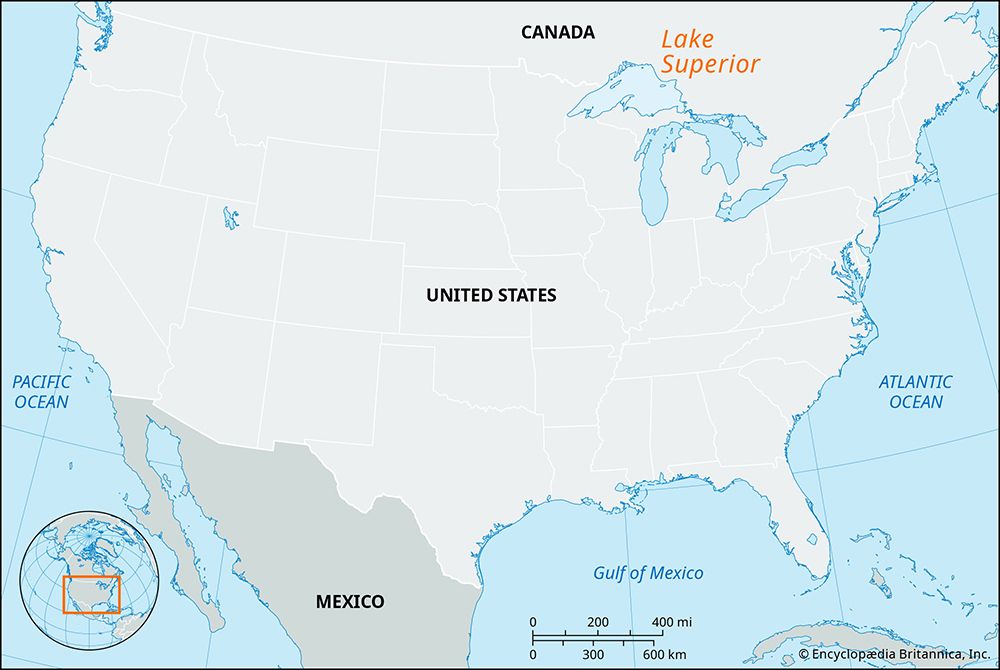
How deep is Lake Superior, and how does its depth affect its characteristics?
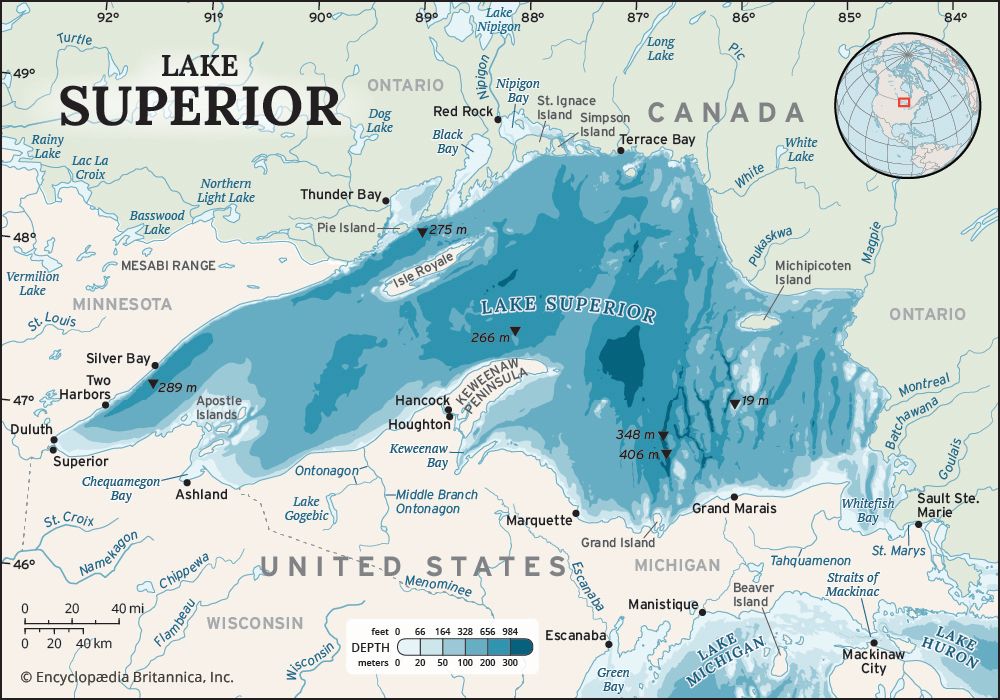
Lake Superior is the deepest of the Great Lakes, with a maximum depth of 1,332 feet (406 metres) and a mean depth of 483 feet (147 metres).83
Its immense depth and volume significantly influence its characteristics:
- Retention Time: Due to its massive size relative to its watershed, Lake Superior has a water retention time of 191 years, meaning it would take nearly two centuries to empty the lake at its current discharge rate.83
- Stable Water Levels: The lake’s depth and the nature of its outlet contribute to remarkable stability; long-term fluctuations in water levels are generally less than 1 yard (1 metre), which is lower than any other Great Lake.3
- Thermal Properties: The lake’s great volume allows it to store and release vast quantities of heat, which moderates the climate of the surrounding region by cooling summers and warming winters.9
- Chemical Composition: Unlike the other Great Lakes, which saw significant increases in chemical concentrations during the 20th century, Lake Superior has remained largely resistant to these changes, maintaining lower levels of nutrients and minerals.9
What are some of the major human activities and industries associated with Lake Superior?
Lake Superior serves as a vital economic hub, supporting a diverse range of industries and human activities that have evolved significantly over time.
Mining and Resource Extraction
The region is historically and currently significant for its mineral wealth. While high-grade iron ore deposits have been depleted, the area remains a major source of iron through the efficient processing of low-grade taconite ores.11 Historically, the Keweenaw Peninsula was a major copper producer, and other minerals such as nickel and silver have also been extracted from the surrounding districts. Additionally, the timber industry remains an important economic pillar, supported by both federal and state management of the basin’s extensive forests.117
Shipping and Transportation
Lake Superior is a critical link in the St. Lawrence Seaway, facilitating the movement of bulk commodities like grain, iron ore, coal, and limestone. Major ports, such as the shared harbor of Duluth and Superior, serve as essential shipping points for these goods.12131411
Energy and Infrastructure
The lake provides a crucial water supply for municipalities and industries. Its waters are utilized for cooling in coal- and nuclear-powered generating plants, and diversions from the Hudson Bay watershed are used to support hydroelectric power generation.7311
Tourism and Recreation
The regional economy is bolstered by a thriving recreation industry. Seasonal activities such as sportfishing—targeting species like lake trout and salmon—along with hunting, boating, and tourism, are central to the region’s economic health.1115
Sources
- Apostle Islands National Lakeshore — Encyclopædia Britannica
- Lake Superior Provincial Park — Encyclopædia Britannica
- Lake Superior — Encyclopædia Britannica
- Pictured Rocks National Lakeshore — Encyclopædia Britannica
- Michigan - Sports and recreation — Encyclopædia Britannica
- lake - Problems and effects — Encyclopædia Britannica
- Great Lakes - Hydrology and climate — Encyclopædia Britannica
- Great Lakes - Physiography of Great Lakes — Encyclopædia Britannica
- lake - Heat transfer — Encyclopædia Britannica
- lake - Vertical mixing and overturn — Encyclopædia Britannica
- Great Lakes - Resources — Encyclopædia Britannica
- Superior — Encyclopædia Britannica
- Great Lakes - Industry and transportation — Encyclopædia Britannica
- St. Lawrence River - The economy — Encyclopædia Britannica
- Great Lakes - Fishing and recreation — Encyclopædia Britannica
Published on · 4 min read