Leaf-cutter Bee
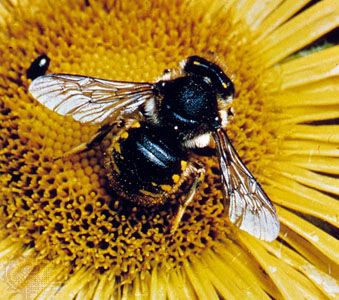
A leaf-cutter bee (family Megachilidae), particularly of the genus Megachile, is a type of solitary bee known for its unique nesting and pollen-collecting…
What is leaf-cutter bee?
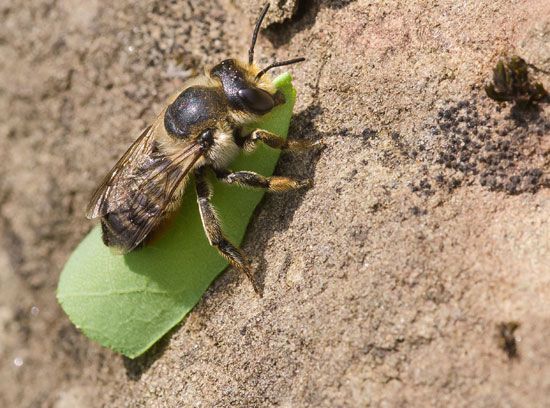
A leaf-cutter bee (family Megachilidae), particularly of the genus Megachile, is a type of solitary bee known for its unique nesting and pollen-collecting behaviors. Unlike many other bees that carry pollen on their hind legs, leaf-cutter bees collect it on their abdomens.12
These bees are named for their habit of cutting precise, circular or oval pieces from the edges of leaves or petals. A solitary female uses these leaf fragments to line her nest, which she constructs in hollow plant stalks, cavities in wood, or soil.12
Beyond their nesting habits, these insects are highly effective pollinators. For instance, they are efficient at pollinating alfalfa because, unlike honeybees, they are not deterred by the flower’s explosive mechanism that releases a cloud of pollen.3
How do leaf-cutter bees differ from honeybees?
Leaf-cutter bees and honeybees differ significantly in their social structure, nesting habits, and physical methods of collecting pollen.
Social Structure and Nesting
- Social vs. Solitary: Honeybees are social insects that live in colonies with a queen, workers, and drones. In contrast, leaf-cutter bees are solitary; each female works alone to construct and provision her own nest.145
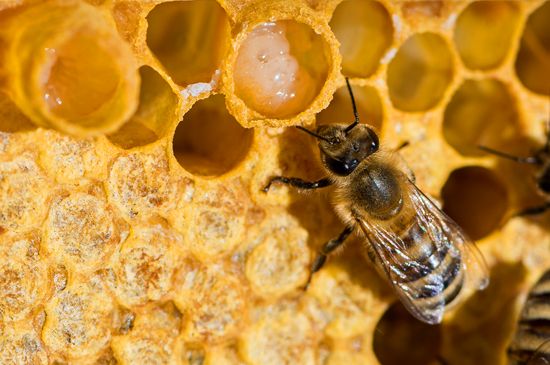
- Nest Construction: Honeybees typically build wax combs within a hive. Leaf-cutter bees nest in soil, hollow plant stalks, or wood cavities. They are named for their unique behavior of cutting circular pieces from leaves or petals to line their nests and protect their brood.51
Pollen Collection
- Pollen-Carrying Organs: Honeybees possess specialized structures on their hind legs called pollen baskets (corbiculae) to transport pollen. Leaf-cutter bees lack these baskets; instead, they carry pollen using a scopa—a mass of long hairs—located on the underside of their abdomen.65
- Provisioning: Honeybees feed their young progressively throughout their development. Solitary leaf-cutter bees provide all the necessary food for their larvae at once before sealing the nest cell.4
Why are leaf-cutter bees important for pollinating alfalfa?
Leaf-cutter bees (Megachile) are highly effective pollinators of alfalfa because of their unique interaction with the plant’s floral structure.
Alfalfa flowers possess an “explosive” mechanism that releases a cloud of pollen when triggered. Many insects, including honeybees, are deterred by this sudden release and often avoid the flower or learn to bypass the mechanism, which limits their effectiveness as pollinators. In contrast, leaf-cutter bees are not afraid to trigger this mechanism, ensuring that the flower is properly tripped and pollinated during their visit.2
What are the benefits of being a solitary bee?
Most bee species are solitary, meaning they do not live in colonies or rely on a complex caste system like honeybees or bumblebees. This lifestyle offers several distinct characteristics:7
- Independence: In solitary species, there are no castes. Each female is responsible for her own nest-making and provisioning, meaning she does not rely on or provide for a larger colony.7
- Efficiency in Nesting: Solitary bees often nest in diverse environments, such as burrows in the ground, wood, or the pith of twigs and canes. Some species exhibit specialized behaviors, such as building chimneys or turrets at their nest entrances.7
- Provisioning Strategy: Unlike social bees that feed their young progressively, solitary bees provide all the food—pollen and nectar—required for a larva to complete its development before sealing the nest cell.7
- Specialization: Many solitary bees are highly adapted to specific flowers. While some are polylectic (gathering pollen from many sources), others are oligolectic, collecting pollen only from specific families or colors of flowers, which can make them exceptionally efficient pollinators for those plants.7
Sources
- leaf-cutter bee — Encyclopædia Britannica
- pollination - Bees — Encyclopædia Britannica
- leaf-cutting bee — Merriam-Webster
- 8 Buzzworthy Types of Bees — Encyclopædia Britannica
- bee — Encyclopædia Britannica
- Hymenoptera - Special adaptations — Encyclopædia Britannica
- How long do queen bees live? — Encyclopædia Britannica
- Why are bees important? — Encyclopædia Britannica
- Animal social behavior - Social interactions involving cooperative breeding and eusociality — Encyclopædia Britannica
- What Would Happen If All the Bees Died? — Encyclopædia Britannica
Published on · 3 min read