Bumblebee
Bumblebees are highly developed social insects that rely on complex communication to maintain their colonies, which feature clearly established castes and a…
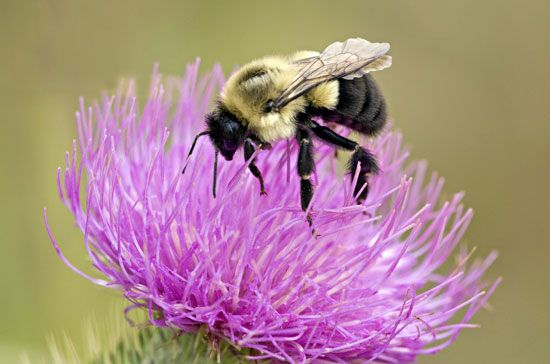
How do bumblebees communicate within their colonies?
Bumblebees are highly developed social insects that rely on complex communication to maintain their colonies, which feature clearly established castes and a division of labor. Like other social Hymenoptera, they utilize pheromones—endogenous chemicals secreted in minute amounts—to transmit messages and coordinate colony activities.123
Communication within these colonies is largely mediated by smell. Bees use these chemical signals to:
- Recognize Colony Members: Guards at the nest entrance use their sense of smell to identify individuals, as each colony possesses its own specific odor.4
- Signal Danger: When threatened, bees can secrete alarm substances that notify other colony members to be on the alert.43
- Regulate Social Organization: Pheromones act as regulators for the colony, influencing behavior and development among the different castes.2
While the social organization of bumblebees is highly developed, they share these fundamental chemical communication methods with other social insects like ants and honeybees to ensure the survival and cohesion of the family community.413
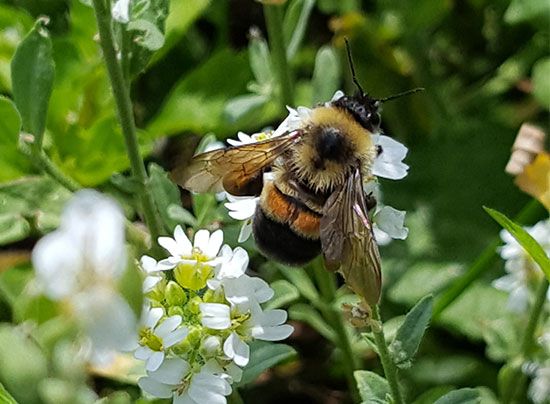
What is ‘buzz pollination,’ and why are bumblebees particularly good at it?
Buzz pollination, also known as sonication or floral vibration, is a specialized pollination strategy used by certain plants—such as blueberries and tomatoes—that hold their pollen within specialized anthers. These plants only release their pollen when they are subjected to a specific vibration frequency, which acts as a mechanism to limit access to their pollen and reduce inbreeding.67
Bumblebees are particularly effective at this because they possess the unique ability to vibrate their flight muscles within their thorax to produce the necessary “buzz” frequency. While many other insects, including honeybees, are unable to perform this action, bumblebees and certain solitary bees can successfully trigger the release of pollen from these flowers.67
Interestingly, because this process is so specific, plant breeders often simulate the vibration of a bee using electric toothbrushes or specialized vibrators to ensure fruit set in crops that require sonication.67
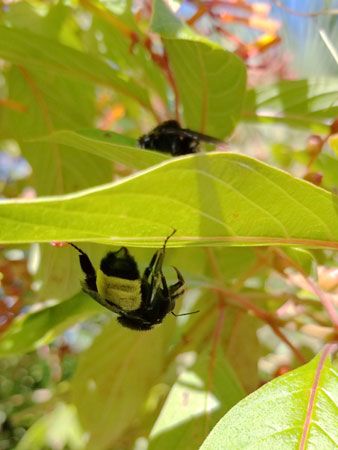
How do bumblebees build and maintain their nests?
Bumblebee colonies are established and maintained through a seasonal cycle led by a solitary queen. Unlike honeybees, which maintain perennial hives, bumblebee colonies are typically annual, with the entire colony—including the original queen—dying out in the fall.92
Nest Establishment
In the spring, a queen that has survived the winter in hibernation emerges to find a suitable nesting site. Bumblebees commonly nest in the ground, often repurposing deserted bird or mouse nests. Once a location is secured, the queen begins the process of laying eggs and raising the first brood herself.910
Colony Maintenance and Growth
The initial brood typically consists of four to eight female worker bees. Once these workers emerge as adults, they assume the responsibilities of the colony, including:
- Foraging: Collecting pollen and nectar to feed the developing larvae.9
- Brood Care: Tending to the hive and rearing subsequent generations.9
As the workers take over these duties, the queen retires to focus exclusively on egg-laying. The colony continues to grow throughout the summer, eventually reaching a population of 50 to 600 bees. In late summer, the colony produces males and new queens, which eventually leave to mate and begin the cycle anew.92
What role do bumblebees play in pollination and why are they important for ecosystems?
Bumblebees (genus Bombus) are among the most efficient and important pollinators in the world, playing a vital role in both natural ecosystems and human agriculture.1213
Role in Pollination
As social insects, bumblebees possess physical and behavioral adaptations that make them highly effective at transferring pollen. Their robust, hairy bodies are well-suited for collecting pollen, and they are equipped with special pollen baskets on their legs to transport it back to their nests. Because they are generalists, they forage on a wide variety of flowering plants, facilitating cross-pollination as they move between flowers to collect nectar and pollen.13814
Importance for Ecosystems
Bumblebees are essential for maintaining biodiversity and the health of intricate ecosystems. Their contributions include:12
- Plant Reproduction: Many wild plants rely on bumblebees for successful reproduction. Without them, these plants would struggle to produce seeds and fruits, leading to a decline in plant populations and habitat composition.1215
- Supporting Food Webs: The plants pollinated by bumblebees provide food and shelter for a wide range of wildlife. Furthermore, bumblebees themselves serve as a food source for other organisms, such as bee-eater birds.1215
- Agricultural Productivity: Bumblebees are critical for the pollination of numerous fruit and vegetable crops, such as blueberries and apples. Their presence increases crop yields and improves the quality of produce, which is essential for human food systems.1215
Because bumblebee populations are currently in decline due to factors like habitat loss, insecticide use, and global warming, their conservation is a critical environmental priority.15
Sources
- Hymenoptera - Chemical — Encyclopædia Britannica
- Hymenoptera - Social forms — Encyclopædia Britannica
- Hormone - Pheromones — Encyclopædia Britannica
- pheromone — Encyclopædia Britannica
- bee — Encyclopædia Britannica
- Why Do Bees Buzz? — Encyclopædia Britannica
- Botanical Sex: 9 Alluring Adaptations — Encyclopædia Britannica
- 8 Buzzworthy Types of Bees — Encyclopædia Britannica
- western honeybee - Colony and life cycle — Encyclopædia Britannica
- bumblebee — Encyclopædia Britannica
- How long do queen bees live? — Encyclopædia Britannica
- Why are bees important? — Encyclopædia Britannica
- What Would Happen If All the Bees Died? — Encyclopædia Britannica
- major types of pollinators - Bees — Encyclopædia Britannica
- pollination - Bees — Encyclopædia Britannica
Published on · 4 min read