Lebanon Mountains
The Lebanon Mountains have been central to the history and cultural identity of Lebanon, serving as both a refuge and a defining geographic feature. Their…
How have the Lebanon Mountains played a role in the history and culture of Lebanon?
The Lebanon Mountains have been central to the history and cultural identity of Lebanon, serving as both a refuge and a defining geographic feature. Their rugged, isolated terrain provided a sanctuary for various communities, most notably the Maronites, who settled in the northern mountains to preserve their religious and cultural autonomy against external pressures.12
Historically, the mountains fostered a unique social structure. During the Ottoman period, Mount Lebanon functioned as a semiautonomous region where feudal families of notables—both Christian and Druze—exerted local control. This isolation allowed the region to maintain distinct customs and political systems, even as European influence grew through trade and missionary education.31
Geographically, the range’s snow-clad peaks are believed to be the origin of the country’s name, as laban is Aramaic for “white”. The mountains also shaped the economy; while the limestone soil is thin, underground springs enabled cultivation, and the region became famous for its Cedars of Lebanon and silk production.43
What are some of the notable peaks and natural features found in the Lebanon Mountains?
The Lebanon Mountains are a prominent limestone and sandstone range that define much of the country’s landscape. Notable peaks and natural features include:
- Qurnat as-Sawdāʾ: At 10,131 feet (3,088 meters), this is the highest peak in the range and in all of Lebanon, located in the northern section of the mountains.173
- Mount Sannine: Situated northeast of Beirut, this peak reaches an elevation of 8,842 feet (2,695 meters).3
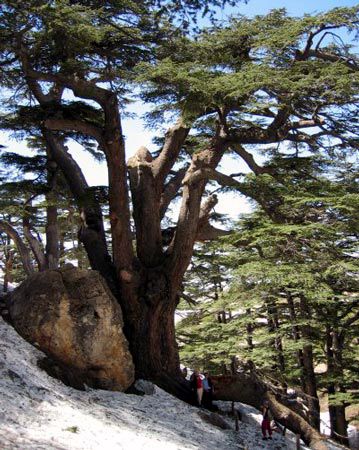
- Cedars of Lebanon: Renowned groves of these ancient evergreen conifers grow on the western flanks of the mountains, particularly in the shadow of Qurnat as-Sawdāʾ near Bsharrī.138
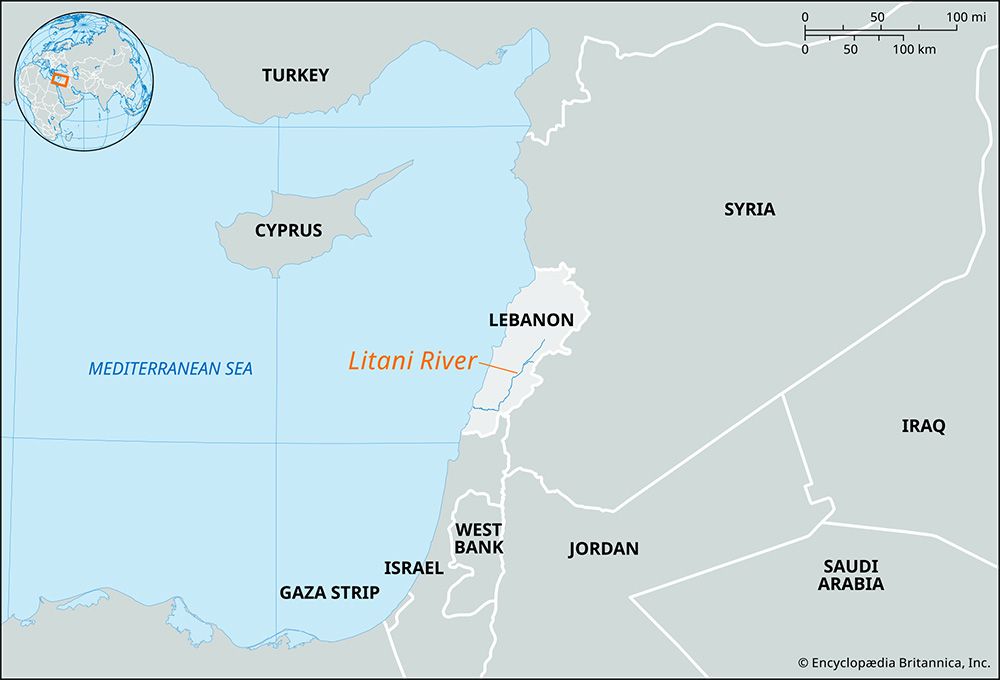
- Gorges and Drainage: The range is characterized by deep, narrow gorges, including a 900-foot-deep gorge carved by the Nahr al-Lītānī in the south.13
- Underground Springs: Despite the thin, porous soil, the mountains are rich in underground springs that facilitate irrigation and agriculture on the slopes.1
What types of flora and fauna can be found in the Lebanon Mountain ecosystem?
The ecosystem of the Lebanon Mountains is characterized by a mix of resilient Mediterranean vegetation and diverse wildlife, though much of the original forest cover has been reduced over centuries due to human activity.1
Flora
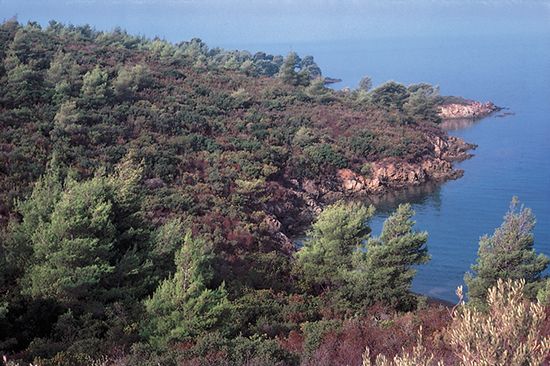
While the region was once heavily forested, surviving natural vegetation consists primarily of Mediterranean vegetation such as brush and low-growing trees. Common species include:
- Trees: Oaks, pines, cypresses, firs, junipers, and carobs.1
- Cedars: The iconic cedar of Lebanon (Cedrus libani) remains the most famous botanical feature, with protected groves found on the western flanks of the mountains.12311
- Cultivated Crops: On the lower and middle slopes, irrigation from underground springs supports the growth of olives, apricots, and apples.12
Fauna
Large wild animals are now rare in the mountains, though bears are occasionally sighted. The ecosystem supports a variety of smaller mammals and a rich diversity of bird life:1
- Mammals: Deer, wildcats, hedgehogs, squirrels, martens, dormice, and hares.1
- Birds: The mountains are home to raptors such as eagles, buzzards, kites, falcons, and hawks. Other common birds include owls, kingfishers, cuckoos, and woodpeckers. Additionally, the region serves as a stopover for numerous migratory birds, including flamingos, pelicans, and herons.1
What is the geographical location and extent of the Lebanon Mountains?
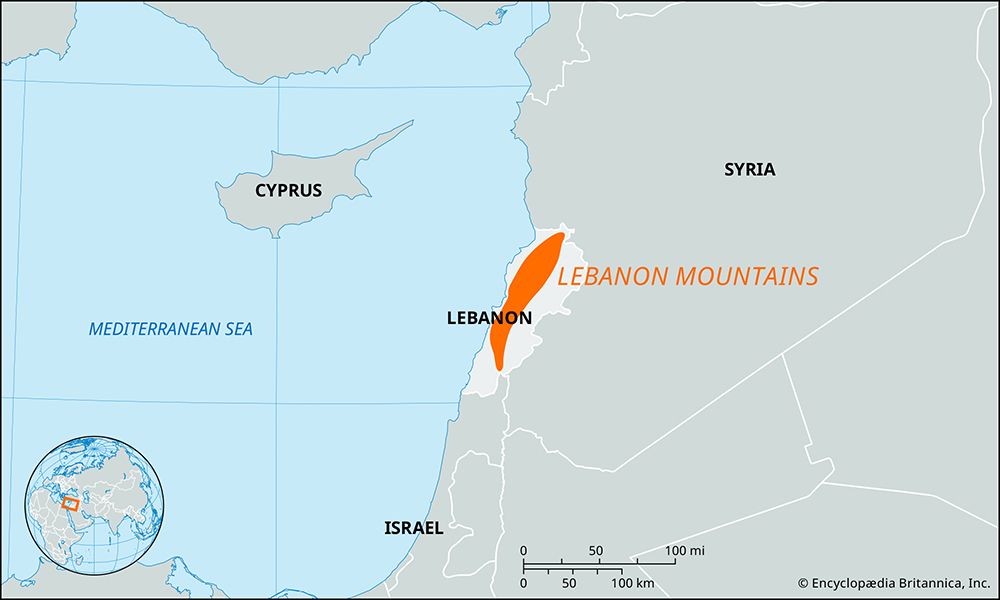
The Lebanon Mountains, also known as Jabal Lubnān, form a prominent limestone and sandstone ridge that runs parallel to the Mediterranean coast of Lebanon.13
Geographical Extent
- Length and Width: The range extends approximately 100 to 150 miles (160 to 240 km) in length and varies in width from 6 to 35 miles (10 to 56 km).13
- Orientation: It is situated west of the Bekaa Valley and runs the length of the country, with northern outliers reaching into Syria.15
- Topography: The range rises steeply from the narrow coastal plain and is characterized by deep, narrow gorges. It is divided by the pass of Ḍahr al-Baydar, which separates the loftier northern section from the lower southern reaches. In the south, the range branches into the Shūf Mountains before transitioning into the hills of Galilee.31
Sources
- Lebanon Mountains — Encyclopædia Britannica
- Lebanon - Ottoman period — Encyclopædia Britannica
- Lebanon - Relief — Encyclopædia Britannica
- Maronite church — Encyclopædia Britannica
- Lebanon Mountains — Merriam-Webster
- Lebanon - Lebanon in the Middle Ages — Encyclopædia Britannica
- Qurnat al-Sawdāʾ — Encyclopædia Britannica
- Lebanon - Drainage — Encyclopædia Britannica
- Lebanon - Climate of Lebanon — Encyclopædia Britannica
- Lebanon cedar — Merriam-Webster
- Cedar — Encyclopædia Britannica
- Lebanon - Plant and animal life — Encyclopædia Britannica
Published on · 3 min read