Lemming
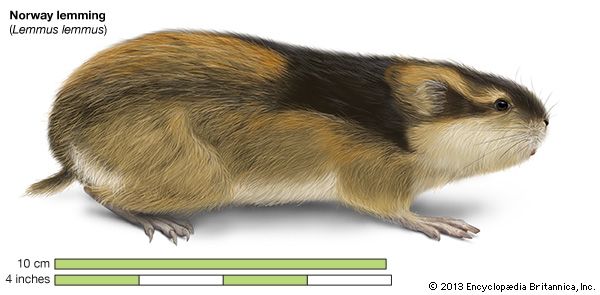
There are 20 recognized species of lemmings, which are small rodents belonging to the subfamily Arvicolinae. They are categorized into six distinct genera:
What are the different species of lemmings, and how are they distributed across the Arctic regions?
There are 20 recognized species of lemmings, which are small rodents belonging to the subfamily Arvicolinae. They are categorized into six distinct genera:
- Genus Dicrostonyx (collared lemmings): 11 species.
- Genus Lemmus (brown lemmings): 3 species.
- Genus Eolagurus (yellow steppe lemmings): 2 species.
- Genus Synaptomys (bog lemmings): 2 species.
- Genus Lagurus (steppe lemming): 1 species.
- Genus Myopus (wood lemming): 1 species.
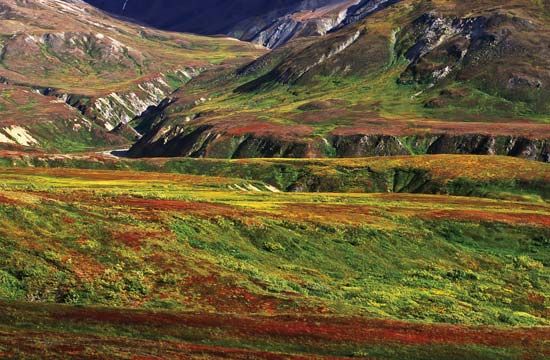
Lemmings are found exclusively in the Northern Hemisphere, inhabiting a variety of environments across North America and Eurasia. Their distribution spans steppes, semideserts, coniferous forests, and treeless alpine or arctic tundra.
In arctic regions, their distribution is heavily influenced by snow cover. Lemmings rely on the insulating layer between the ground and the snowpack to survive the winter, construct nests, and access food. Consequently, they are often found in areas where snow accumulates, as it provides protection from extreme cold and drying conditions.
What role do lemmings play in the Arctic food chain?
Lemmings are a cornerstone of the Arctic tundra food chain, serving as a primary food source for numerous predators. Because Arctic ecosystems have low species diversity, the population dynamics of lemmings exert a profound influence on the stability of the entire region.32
Predator-Prey Dynamics
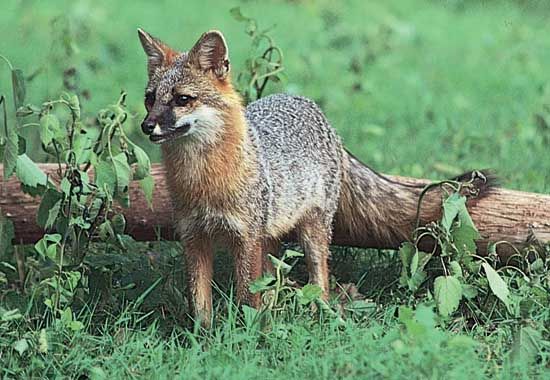
Lemmings undergo dramatic population cycles, peaking every three to five years. Their abundance directly dictates the reproductive success and survival of their predators, including snowy owls, foxes, and jaegers3.32
- During peaks: When lemming populations are high, predator numbers increase rapidly.2
- During troughs: When lemming numbers plummet, predator breeding often ceases, and populations of species like foxes drop significantly.32
Ecological Impact
Beyond their role as prey, lemmings act as ecosystem engineers. By feeding on the roots of grasses and sedges throughout the winter under the snow, they influence vegetation patterns. Furthermore, the accumulation of their feces and manure around burrows adds essential nitrogen and nutrients to the soil, which stimulates plant growth in the nutrient-limited Arctic environment.3
How do lemmings adapt to their Arctic and subarctic environments?
Lemmings have evolved several specialized adaptations to survive the harsh conditions of Arctic and subarctic environments:
- Winter Activity and Insulation: Lemmings remain active throughout the winter, living in the subnivean zone—the space between the ground and the snow layer. This layer provides essential insulation against extreme cold, allowing them to construct nests and continue foraging for roots, grasses, and sedges even in the depths of winter.31
- Seasonal Morphological Changes: The collared lemming exhibits distinct seasonal adaptations. During the winter, it molts into a white coat for camouflage and develops specialized forked digging claws to navigate through frozen ground and snow.1
- Reproductive Strategy: To compensate for high predation and environmental mortality, lemmings maintain high reproductive rates. They are capable of breeding from spring to fall, and in some cases, they may even continue to reproduce under the protective insulation of the snow layer during winter.31
- Physical Characteristics: Their bodies are short and stocky with small ears, eyes, and limbs, which helps minimize heat loss in freezing climates.1
What is the truth behind the myth of lemmings committing mass suicide?
The popular belief that lemmings commit mass suicide is a myth; these rodents do not possess an instinct to destroy themselves.41
This misconception stems from a combination of natural behavior and human interference:
- Natural Migration: Lemmings experience periodic population booms. When their numbers become unsustainably high, they migrate in search of new habitats. During these mass movements, they may attempt to cross water obstacles like rivers or lakes. While some individuals inevitably drown, this is a consequence of the migration rather than a deliberate act of suicide.41
- Staged Footage: The myth was significantly popularized by the 1958 Disney nature documentary White Wilderness. In a display of human cruelty, filmmakers staged a “death plunge” by pushing lemmings off a cliff to capture dramatic footage, misleading generations of viewers into believing the behavior was natural.4
The myth persists partly because it serves as a powerful metaphor for human conformity, often used to describe individuals who blindly follow a crowd toward catastrophe.4
Sources
- lemming — Encyclopædia Britannica
- Polar ecosystem - Development and structure of populations and communities — Encyclopædia Britannica
- Tundra - Arctic mammals — Encyclopædia Britannica
- Do Lemmings Really Commit Mass Suicide? — Encyclopædia Britannica
Published on · 3 min read