Lily of the Valley
The lily of the valley (Convallaria majalis) is a fragrant perennial herb belonging to the asparagus family (Asparagaceae). Native to Eurasia and eastern…
What is Lily of the valley?
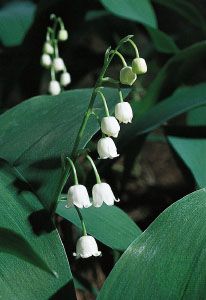
The lily of the valley (Convallaria majalis) is a fragrant perennial herb belonging to the asparagus family (Asparagaceae). Native to Eurasia and eastern North America, it is widely cultivated in temperate regions as a ground cover due to its ability to form dense mats.12
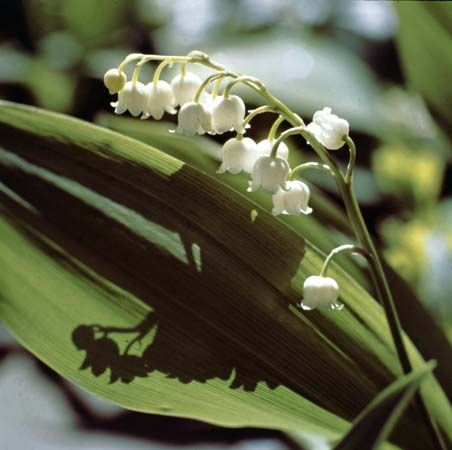
The plant is characterized by two glossy, basal leaves and a leafless stalk bearing a cluster of nodding, bell-shaped white flowers. It reproduces vegetatively through rhizomes and stolons, eventually producing a red berry as its fruit.12
It is important to note that all parts of the lily of the valley contain cardiac glycosides, making the plant poisonous to humans, pets, and other animals if ingested. Ethical gardening requires being aware of such toxic species to ensure the safety of children and animals.1
Why is the lily of the valley considered poisonous?
The lily of the valley (Convallaria majalis) is considered poisonous because all parts of the plant contain cardiac glycosides.1
These specific compounds act as cardiac toxins, which can cause irregular heartbeats in humans, pets, and other animals if ingested. Unlike true lilies (Lilium species) and daylilies, which are known to cause acute kidney failure in cats, the toxicity of lily of the valley is primarily associated with its effect on the cardiovascular system. Because these toxins pose a significant health risk, it is ethically responsible to keep this plant out of reach of children and animals to prevent accidental ingestion.14
How do rhizomes and stolons help plants spread?
Rhizomes and stolons are specialized plant structures that facilitate vegetative reproduction, allowing plants to spread asexually and create new, genetically identical individuals.56
Rhizomes
A rhizome is a horizontal, typically subterranean stem. These structures enable plants to spread by sending up new shoots from nodes along the stem. Beyond reproduction, rhizomes serve as vital storage organs for starches and proteins, which help the plant survive unfavorable conditions like drought or winter. Many plants, such as bamboo and various grasses, rely on the fragmentation of these rhizomes to expand their colonies.76
Stolons
A stolon—also known as a runner—is a slender stem that grows horizontally along the soil surface. Unlike rhizomes, stolons are generally above ground. They spread by developing roots and new vertical branches at specialized points called nodes. A classic example is the strawberry, which uses these runners to propagate by forming new plants at the nodes along the stolon.86
What does the lily of the valley symbolize in different cultures?
Sources
- lily of the valley — Encyclopædia Britannica
- lily of the valley — Merriam-Webster
- valley lily — Merriam-Webster
- Why Are Lilies Toxic to Cats? — Encyclopædia Britannica
- horticulture - Vegetative propagation — Encyclopædia Britannica
- Stolon — Encyclopædia Britannica
- Rhizome — Encyclopædia Britannica
- Angiosperm - Shoot system modifications — Encyclopædia Britannica
Published on · 2 min read